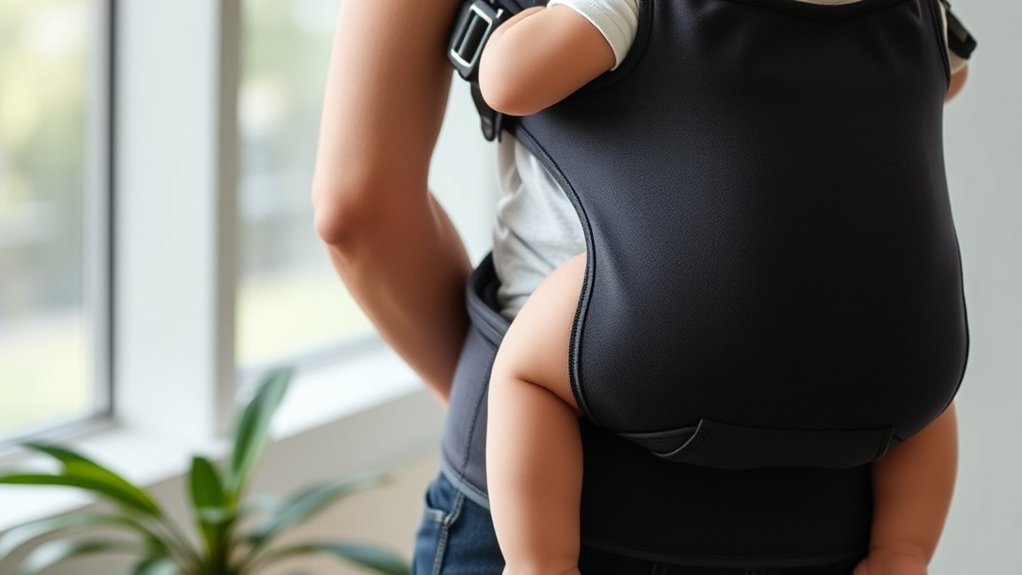
Isn’t it surprising how something as simple as carrying your baby can impact their hip development? Understanding hip-healthy carrying methods is vital for fostering your infant’s growth. Many parents have questions about the best practices and carriers to guarantee maximum support for their child’s hips. By exploring the right techniques and tools, you can play an important role in promoting their hip health and overall well-being. Let’s take a closer look at what you need to know.
What Is Hip-Healthy Carrying?
Hip-healthy carrying refers to the methods of holding and transporting infants that promote proper hip development and alignment. By practicing hip-healthy carrying, you can support your baby’s natural posture, ensuring their hips are positioned safely while they’re close to you.
Babywearing benefits extend beyond convenience; it fosters bonding and enhances your infant’s posture. When you carry your baby in a way that encourages their legs to spread apart and their knees to rise above their hips, it helps develop a strong hip joint.
Techniques like using slings or structured carriers designed for hip health allow for ergonomic positioning. By embracing these methods, you actively contribute to your child’s physical well-being while enjoying the emotional connection that babywearing fosters.
Why Is Hip Development Important for Babies?
Proper hip development is essential for babies as it lays the foundation for their mobility and overall physical health. The hip joint plays a vital role in enabling movement, supporting activities like crawling and walking.
When hips develop correctly, babies are more likely to reach important developmental milestones on time, fostering confidence in their physical abilities. Improper hip alignment or dysplasia can lead to long-term issues, including restricted movement and discomfort.
Supporting ideal hip positioning during infancy encourages healthy growth, allowing your baby to explore their environment freely. A focus on hip health not only benefits physical development but also enhances emotional well-being, empowering your child to engage fully with the world around them.
What Types of Carriers Promote Hip Health?
Choosing the right baby carrier is vital for promoting hip health in your child.
Ergonomic carriers, wraps, and slings can support the natural position of your baby’s hips, while structured carriers require careful consideration to guarantee they don’t compromise hip development.
Understanding these options helps you make informed choices that benefit your baby’s growth.
Ergonomic Baby Carriers
When selecting an ergonomic baby carrier, it’s essential to evaluate designs that support healthy hip development in infants.
Look for carriers that allow your baby’s legs to spread comfortably in a natural “M” position, which promotes ideal hip joint stability.
Structured carriers with wide, padded seats are often ideal, as they distribute weight evenly and enhance carrier safety.
Additionally, soft-structured carriers can provide the support you and your baby need while enjoying the babywearing benefits, such as bonding and hands-free convenience.
Wrap and Sling Options
Many parents find that wrap and sling options provide excellent support for hip health in infants. When choosing a wrap style, consider those that allow your baby to maintain a natural “M” position, which promotes ideal hip development.
Soft, breathable sling materials like cotton or linen help guarantee comfort for both you and your baby while allowing for proper weight distribution. These carriers encourage close contact, enhancing bonding while supporting your child’s hip joints.
Additionally, make certain that the carrier provides adequate head and neck support for younger infants. By selecting the right wrap or sling, you empower both yourself and your baby, promoting healthy physical development while enjoying the freedom of hands-free carrying.
Structured Carrier Considerations
While structured carriers can offer convenience and versatility, it’s important to select models that prioritize hip health.
Look for structured carrier features like an adjustable seat that supports your baby’s hips in a suitable “M” position, promoting proper spinal alignment. Brands such as Ergobaby and Tula provide well-researched designs that encourage healthy hip development.
Make sure the carrier allows for multiple carrying positions, including front, back, and side, to encourage natural movement and reduce strain.
Additionally, opt for carriers with padded shoulder straps and a supportive waist belt to evenly distribute your baby’s weight.
Choosing the right structured carrier can empower you to carry your child comfortably while safeguarding their hip health, allowing for freedom of movement for both you and your baby.
How to Position Your Baby for Optimal Hip Development?
To promote ideal hip development, you should guarantee your baby’s legs are positioned in a frog-like posture, with knees higher than their bottom.
Using hip-friendly carriers that offer proper support is essential for maintaining this position during carrying.
Optimal Leg Positioning
When you carry your baby, guaranteeing their legs are positioned correctly is essential for ideal hip development. Ideal leg angles promote healthy growth and prevent hip dysplasia.
To achieve this, focus on these baby positioning techniques:
- Knees higher than hips: This position helps maintain the natural curvature of the hips.
- Thighs supported: Make sure your baby’s thighs rest fully against your body for stability.
- Legs spread apart: Keep their legs in an “M” shape to support the hip joints.
- Avoid dangling legs: Confirm their feet aren’t hanging down, as this can stress the hip joints.
Hip-Friendly Carrier Types
Choosing the right carrier is essential for guaranteeing your baby’s hip development remains healthy.
Opt for carriers that support a natural, ergonomic position where your baby’s legs are spread apart and bent at the knees, resembling a seated “M” position. Soft-structured carriers and wraps often provide these carrier advantages, promoting baby comfort and ideal hip alignment.
When selecting a carrier, verify it supports your baby’s entire back and allows for a snug fit, minimizing any strain. Additionally, look for adjustable features that grow with your child, verifying this hip-healthy positioning continues as they develop.
Importance of Support
Proper support during carrying is essential for your baby’s hip development. The right positioning can greatly influence hip health, especially in the early months.
When selecting a carrier, consider these factors:
- Supportive materials: Confirm the carrier uses breathable, sturdy fabrics that maintain structure.
- Carrier design: Opt for ergonomic designs that allow your baby to sit in a natural M-position.
- Adjustability: Look for carriers that adjust easily to fit both you and your baby comfortably.
- Weight distribution: A well-designed carrier should distribute your baby’s weight evenly to reduce strain on your hips.
When Should I Start Using a Carrier?
At what age can you safely start using a carrier for your baby? Generally, you can begin using a carrier once your baby is around 4 to 6 weeks old, depending on their head and neck control. Different carrier types, such as wraps, slings, or structured carriers, can offer various support levels. Babywearing benefits include promoting bonding, calming fussy babies, and enhancing physical development.
Here’s a quick guide:
| Age Range | Carrier Type |
|---|---|
| 0-3 months | Soft wraps/slings |
| 4-6 months | Structured carriers |
| 6-12 months | Hip carriers |
| 12+ months | Backpack carriers |
| 18+ months | All types available |
Choosing the right carrier fosters a hip-healthy experience for you and your baby.
Are There Any Signs of Hip Issues to Watch For?
How can you tell if your baby might be experiencing hip issues? Observing your child’s behavior and physical development is essential.
Look for the following signs that could indicate hip pain or potential issues:
- Difficulty moving one leg compared to the other
- Unusual leg positions while sitting or crawling
- Delays in reaching developmental milestones, such as walking
- Visible discomfort or crying when moving their hips
If you notice any of these signs, it’s important to consult a healthcare professional.
Early detection can lead to better outcomes, ensuring your little one can thrive and achieve their developmental milestones without limitations.
Your baby’s hip health is critical for their overall mobility and freedom to explore the world around them.
Frequently Asked Questions
Can I Use a Carrier With a Newborn?
Yes, you can use a carrier with a newborn, but guarantee proper newborn positioning for their development. Always check carrier safety guidelines to support their hips and spine while keeping them close and secure.
How Long Can I Carry My Baby in a Carrier?
You can safely carry your baby in a carrier for about two hours at a time, ensuring you practice safe carrying methods. Regular breaks help prevent discomfort for both you and your little one.
Are There Any Age Restrictions for Hip-Healthy Carriers?
There aren’t strict age restrictions for hip-healthy carriers, but age recommendations vary by carrier types. Always verify your baby’s hips are supported, and check manufacturer guidelines to promote ideal hip development during carrying.
Can Dads Use Hip-Healthy Carriers Too?
Absolutely, dads can use hip-healthy carriers too! Engaging in dad bonding while using various carrier types not only supports your baby’s development but also fosters a strong emotional connection between you and your little one.
How Do I Clean and Maintain My Carrier?
To clean and maintain your carrier, follow these cleaning tips: handwash with mild soap, air dry, and inspect regularly. Establish a maintenance routine to guarantee longevity and safety for both you and your little one.
Conclusion
In conclusion, prioritizing hip-healthy carrying is essential for your baby’s development, ensuring they thrive like little superheroes! By choosing the right carriers and positioning your infant correctly, you’re not just preventing hip issues; you’re setting the stage for their future adventures! Remember, watch for any signs of discomfort or irregularity, and don’t hesitate to consult a healthcare professional. With your informed choices, you’re giving your child the best chance for a strong, healthy start!
