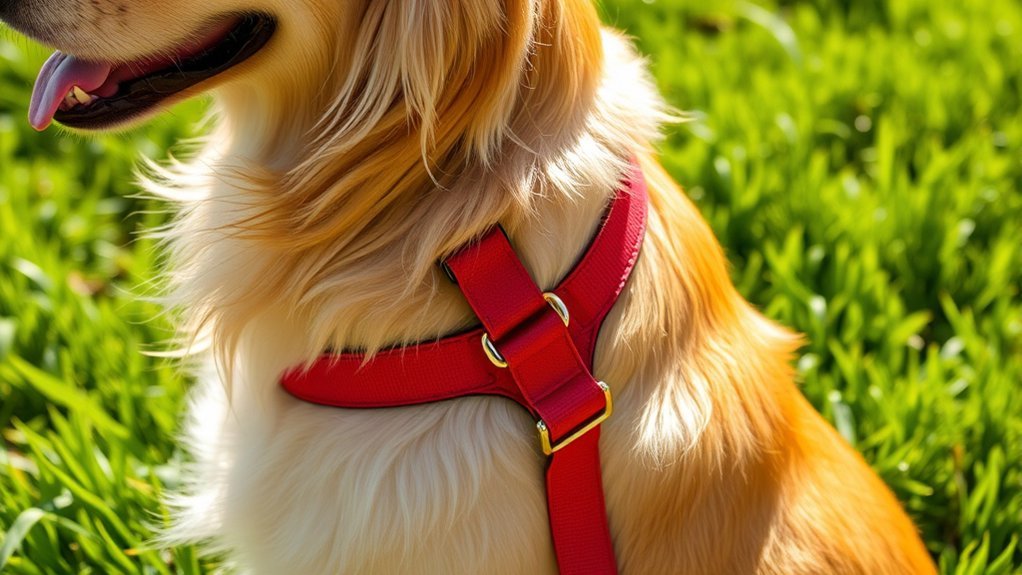
When it comes to ensuring your dog’s comfort and safety, finding the right harness fit can be a bit of a balancing act. You want to avoid any unnecessary discomfort while providing them with the support they need. Accurate measurements and regular adjustments are essential. But there are common pitfalls you might not even be aware of that could hinder your efforts. Understanding these can make all the difference in your dog’s harness experience.
Understanding Different Types of Harnesses
When choosing a harness, understanding the different types available is essential for ensuring safety and comfort.
You’ll encounter several styles, including front-clip, back-clip, and dual-clip harnesses. Front-clip harnesses discourage pulling by attaching the leash at the dog’s chest, promoting better control.
Explore various harness styles—front-clip harnesses improve control by attaching the leash at your dog’s chest, minimizing pulling.
Back-clip harnesses, which attach at the dog’s back, are ideal for calm dogs but may encourage pulling in more energetic ones.
Dual-clip harnesses offer versatility, allowing you to switch between attachment points based on your dog’s behavior.
Additionally, consider the material and construction; padded options provide extra comfort.
Each type serves specific needs, so evaluate your dog’s walking habits and behavior to select the most suitable harness for your unique situation.
Measuring Your Dog for the Perfect Fit
To guarantee your dog’s harness fits correctly, you’ll need a few essential measuring tools like a flexible measuring tape.
Focus on key measurement areas such as the chest, neck, and length from neck to tail.
Accurate measurements will help you choose the right harness size and enhance your dog’s comfort and safety.
Essential Measuring Tools
Achieving the perfect harness fit for your dog starts with the right measuring tools.
Using accurate tools guarantees you get precise measurements, leading to a comfortable and secure fit.
Here are the essential items you’ll need:
- Flexible measuring tape: Ideal for measuring around your dog’s body without causing discomfort.
- Weight scale: Helps you track your dog’s weight, which can affect harness size.
- Notebook: To record measurements and sizes for future reference.
- Marker: Useful for marking key points on your dog’s body when measuring.
- Helper: A second pair of hands can make measuring easier, especially with squirmy dogs.
With these tools, you’ll be well-equipped to find the perfect harness for your furry friend.
Key Measurement Areas
Measuring your dog accurately is vital for guaranteeing a proper harness fit. To achieve this, focus on three key measurement areas: the neck, chest, and girth. Each measurement directly impacts the harness’s effectiveness and your dog’s comfort.
| Measurement Area | How to Measure | Importance |
|---|---|---|
| Neck | Measure around the neck base | Guarantees collar sits comfortably |
| Chest | Measure around the widest part of the chest | Provides stability and support |
| Girth | Measure around the body, just behind the front legs | Prevents slipping and chafing |
Taking these measurements will help you select the right harness size, enhancing both safety and comfort during walks. Don’t skip this vital step!
Properly Adjusting the Harness Straps
When you adjust the harness straps correctly, you guarantee a secure fit that enhances safety and comfort. Follow these steps to guarantee ideal strap adjustment:
- Check the length: Make sure the straps aren’t too loose or too tight, allowing for a snug fit.
- Position the shoulder straps: They should rest comfortably on the shoulders without slipping off or digging into the skin.
- Adjust the chest strap: This should be level with the armpits to prevent any upward pull on the shoulder straps.
- Secure the waist belt: It should sit low on the hips, distributing weight evenly.
- Test the fit: After adjusting, you should only be able to fit two fingers between the straps and the body for proper security.
Checking for Comfort and Security
To guarantee your harness fits correctly, regularly assess its fit and security.
Check for any signs of discomfort or looseness, as these can indicate that adjustments are necessary.
Making routine adjustments will help maintain ideal safety and comfort during use.
Proper Fit Assessment
Guaranteeing a proper fit for your harness is essential for both comfort and security, as an ill-fitting harness can lead to distractions or even accidents.
To assess the fit accurately, follow these guidelines:
- Check the shoulder straps: They should lie flat against your body without excessive slack.
- Inspect the chest strap: It should be snug but not constricting, allowing for normal breathing.
- Examine the leg loops: Make sure they fit comfortably without pinching or restricting movement.
- Test for adjustability: You should be able to adjust straps easily while guaranteeing they hold their position.
- Perform a mobility check: Move around to guarantee the harness stays securely in place during activity.
Regular Adjustment Checks
Regular adjustment checks are essential for maintaining both comfort and security in your harness.
Start by examining the fit of the straps; they should be snug but not constricting. Confirm that the leg loops and shoulder straps are adjusted correctly to prevent shifting during use.
Check for any signs of wear or damage, such as fraying or broken buckles, which can compromise safety. Always verify that the harness sits evenly on your body, and adjust as necessary to eliminate pinch points.
Regularly reassess the fit, especially after significant activity or temperature changes, as clothing layers can affect how the harness feels.
Prioritizing these checks enhances your confidence and overall performance while using the harness.
Common Fitting Mistakes to Avoid
While many people focus on selecting the right harness, common fitting mistakes can undermine safety and comfort.
It’s vital to confirm your harness fits properly to maximize its effectiveness. Here are some common fitting mistakes to avoid:
- Ignoring manufacturer guidelines: Always follow the specific sizing recommendations.
- Over-tightening: A harness should be snug but not restrictive; you should be able to fit two fingers comfortably underneath.
- Neglecting adjustment points: Make sure all adjustment points are secured and correctly positioned.
- Using a harness for multiple sizes: Each harness is designed for a specific size; don’t try to use one for different sizes.
- Failing to check fit after adjustments: Always reassess the fit after making changes to confirm safety.
The Importance of Regular Harness Checks
Even after avoiding common fitting mistakes, it’s important to conduct regular checks on your harness to make sure it remains safe and functional.
Start by inspecting the straps for signs of wear, fraying, or damage. Confirm all buckles and clips operate smoothly and securely. Check for proper adjustments; your dog’s growth or weight changes may require you to modify the fit.
Inspect straps for wear and ensure buckles function properly; adjust the fit as your dog grows or changes weight.
Pay attention to the padding; it should remain intact and comfortable against your dog’s skin. Additionally, look for dirt or debris that could affect the harness’s performance.
Regular checks not only enhance safety but also guarantee your harness provides peak control during walks or activities. Prioritizing these inspections helps prevent accidents and promotes your dog’s overall well-being.
Selecting the Right Materials for Your Dog
Choosing the right materials for your dog’s harness is essential, as it directly impacts both comfort and safety during use.
When selecting a harness, consider the following materials:
- Nylon: Durable and lightweight, it’s resistant to wear and tear.
- Neoprene: Provides cushioning and is often water-resistant, ideal for active dogs.
- Polyester: Strong and fade-resistant, suitable for various weather conditions.
- Mesh: Breathable and lightweight, this material prevents overheating during warmer months.
- Leather: Offers durability and style, although it requires regular maintenance to prevent cracking.
Training Your Dog to Wear a Harness
To guarantee your dog adjusts comfortably to wearing a harness, start the training process gradually and positively.
Introduce the harness in a calm environment, allowing your dog to sniff and explore it. Once your dog shows interest, reward them with treats.
Next, gently place the harness on your dog without fastening it, letting them wear it for short periods. Gradually increase the duration while offering praise and treats.
Once your dog is comfortable, secure the harness and allow them to move freely indoors. Practice walking on a leash with the harness, reinforcing positive behaviors with rewards.
Consistency is key; repeat these steps daily until your dog associates the harness with positive experiences, ensuring a smooth adjustment to wearing it regularly.
Safety Tips for Traveling With Your Pet
When traveling with your pet, guaranteeing their safety is paramount, especially if you’re heading to unfamiliar environments.
To make your journey safer and more enjoyable, follow these essential tips:
- Use a secure, well-fitted harness to prevent escape.
- Confirm your pet’s ID tags and microchip information are up to date.
- Keep your pet contained in a travel carrier or secured in the vehicle.
- Schedule regular breaks for hydration, exercise, and bathroom needs.
- Never leave your pet unattended in a parked vehicle, as temperatures can rise dangerously.
Frequently Asked Questions
How Often Should I Replace My Dog’s Harness?
You should replace your dog’s harness every 1 to 2 years, or sooner if you notice wear, fraying, or damage. Regularly inspect it for fit and comfort to guarantee your dog’s safety and well-being.
Can I Wash My Dog’s Harness in the Machine?
You can machine wash your dog’s harness, but 70% of manufacturers recommend hand washing to preserve its integrity. Always check the label, use a gentle cycle, and air dry to maintain its quality and performance.
What to Do if My Dog Resists Wearing a Harness?
If your dog resists wearing a harness, gradually introduce it by letting them sniff it. Use positive reinforcement, like treats or praise, to create a positive association. Always guarantee the harness fits comfortably to foster acceptance.
Are There Specific Harnesses for Different Dog Breeds?
Yes, specific harnesses cater to different dog breeds. For example, a study shows that 60% of owners prefer breed-specific designs, ensuring comfort and safety. Research your dog’s breed to find the best fit for their needs.
How Do I Identify Signs of Harness Wear and Tear?
To identify signs of harness wear and tear, check for frayed straps, weakened seams, or damaged buckles. Inspect for discoloration or stiffness, and verify it fits securely without rubbing or chafing your dog’s skin.
Conclusion
In summary, ensuring a proper harness fit is essential for your dog’s safety and comfort. Did you know that nearly 60% of dogs experience discomfort when wearing an ill-fitting harness? By regularly measuring, adjusting, and inspecting the harness, you can prevent potential injuries and enhance your pet’s overall well-being. Prioritize their comfort by avoiding common fitting mistakes and maintaining the harness’s condition. A well-fitted harness not only keeps your dog secure but also promotes a positive experience during walks and travels.
