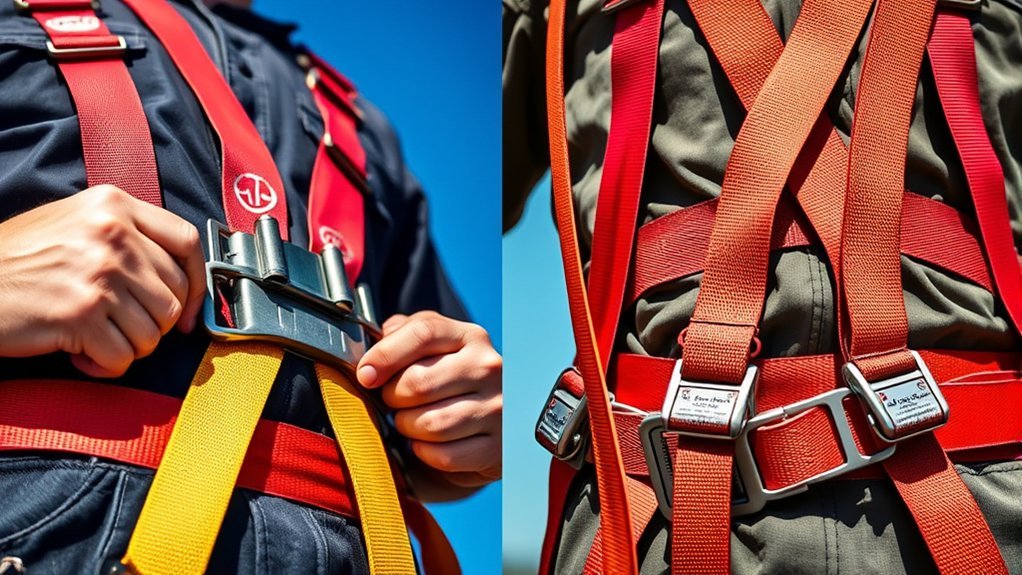
It’s interesting how many pet owners overlook harness fit, yet it’s essential for safety. You might think a loose harness is comfortable, but it can lead to escapes or injury. Getting the right fit requires attention to detail, from measuring your pet to adjusting straps correctly. Understanding the dos and don’ts of harness fitting can make all the difference. Let’s explore how to guarantee your pet is secure and comfortable on every walk.
Understanding Different Harness Types
When you’re choosing a harness, understanding the different types available can greatly impact your experience and safety.
There are several common types, including back-clip, front-clip, and dual-clip harnesses. Back-clip harnesses attach at the back, promoting comfort for relaxed leash walking but may encourage pulling. Front-clip harnesses attach at the front, helping to correct pulling behavior by guiding your pet back toward you. Dual-clip harnesses offer versatility, allowing you to switch between back and front attachment points based on your needs.
Additionally, consider specialized harnesses designed for specific activities, such as running or hiking. Each type serves a unique purpose, so evaluate your goals and your pet’s behavior to select the best option for ideal control and comfort.
Measuring Your Pet for the Perfect Fit
Achieving the perfect fit for your pet’s harness is essential for both comfort and safety. Start by measuring key areas: the neck, chest, and girth. Use a flexible measuring tape and make certain it’s snug but not tight. Record your measurements to compare with the manufacturer’s sizing chart.
| Measurement Area | How to Measure |
|---|---|
| Neck | Measure around the neck, just above the shoulders. |
| Chest | Measure around the widest part of the chest, usually just behind the front legs. |
| Girth | Measure around the body, just behind the ribcage. |
| Length | Measure from the base of the neck to the base of the tail. |
| Weight | Weigh your pet to ascertain the appropriate harness size. |
Checking Harness Size and Adjustment
To guarantee your harness fits properly, start by measuring your pet again to confirm the size.
Adjust the straps to achieve a snug fit without pinching or restricting movement.
Always check for comfort, making sure your pet can move freely and isn’t showing signs of distress.
Measuring for Proper Fit
A proper fit is essential for the effectiveness and safety of any harness. To ascertain you’re measuring correctly, follow these key steps:
- Measure your chest and waist circumference using a flexible tape measure.
- Cross-reference your measurements with the manufacturer’s sizing chart to find the appropriate size.
- Check the length of the harness by measuring from the shoulder to the waist to ascertain it accommodates your height.
- Make sure to account for clothing thickness, as this can affect the fit.
Once you’ve gathered your measurements, you can confidently select a harness that will provide the necessary support and security.
Adjusting Straps Correctly
Confirming your harness fits correctly involves adjusting the straps to match your body’s shape and size.
Start by loosening all straps before putting on the harness. Once it’s on, adjust the shoulder straps first; they should sit snugly against your shoulders without restricting movement.
Next, tighten the chest strap, making sure it lies flat against your torso. The leg straps should also be adjusted; they must be snug but not overly tight, allowing for comfortable movement.
After each adjustment, check that the harness maintains its position without slipping. Always double-check your adjustments before engaging in any activity to guarantee safety.
A properly adjusted harness greatly reduces the risk of injury while maximizing performance.
Checking for Comfort
Once you’ve adjusted the straps, checking for comfort is the next step in verifying your harness is suitable for use. A proper fit should feel secure without causing discomfort. Here’s what you should evaluate:
- Pinching: Confirm that no straps pinch or rub against your skin.
- Movement: Test the harness by moving around; it should allow full range of motion.
- Pressure Points: Identify any areas where the harness creates excessive pressure; adjust accordingly.
- Breathability: Check that the material doesn’t restrict your breathing or create excessive heat.
If you notice any discomfort during your checks, readjust the straps or consult the manufacturer’s guidelines.
Prioritize your comfort to maintain safety and effectiveness while using the harness.
Ensuring Comfort With Padding and Design
When choosing a harness, prioritize the right padding to guarantee comfort during use.
Look for adjustable design features that allow you to customize the fit to your body.
Finally, always test the harness for fit to confirm it meets your comfort and safety needs.
Choosing the Right Padding
Choosing the right padding for your harness is essential, as it directly impacts your comfort during use. Proper padding not only cushions against pressure points but also enhances overall performance.
When selecting padding, consider the following factors:
- Material: Opt for breathable, moisture-wicking materials to prevent chafing and overheating.
- Thickness: Guarantee adequate thickness without compromising mobility; too much padding can restrict movement.
- Density: Choose a density that offers both support and flexibility, catering to your specific activities.
- Shape: Look for ergonomically shaped padding that conforms to your body, providing excellent support and reducing fatigue.
Adjustable Design Features
Adjustable design features are vital for optimizing comfort and fit in your harness. Look for adjustable straps that allow you to tailor the fit to your body shape and size.
Confirm the buckles are easy to manipulate, enabling quick adjustments without compromising security. Pay attention to the placement of padding; it should be strategically located to minimize pressure points while allowing for freedom of movement.
Consider harnesses with sliding adjustments, which can help you achieve a snug fit without discomfort. Finally, check that all adjustments maintain their position during activity; this stability is essential for your safety and comfort.
Testing for Fit
To guarantee your harness fits comfortably, it’s essential to test how the padding and design interact with your body. Start by wearing the harness for a short period, allowing you to assess comfort and adjustability. Pay attention to pressure points and any chafing.
- Check that the padding conforms well to your body shape.
- Verify the harness distributes weight evenly across your shoulders and hips.
- Move around to evaluate flexibility and freedom of movement.
- Adjust straps as needed to eliminate excessive tightness or looseness.
After testing, make necessary adjustments to enhance comfort without compromising safety.
Your goal is a harness that feels secure yet unobtrusive, enabling you to focus on your activities without distractions.
Properly Securing the Harness
When you secure a harness correctly, you not only enhance safety but also improve comfort during use.
Start by ensuring the harness fits snugly around your body without pinching. Adjust the shoulder straps so they lie flat against your shoulders, allowing for a full range of motion.
Fasten the leg straps securely, ensuring they aren’t too tight; you should be able to fit two fingers between the strap and your leg. Always check that the chest buckle is positioned correctly and is tightly fastened.
Finally, perform a quick tug test on all straps and buckles to confirm they’re secure. Properly securing the harness is essential for both functionality and safety during activities.
Avoiding Common Harness Fitting Mistakes
Even with a proper securing technique in place, mistakes in fitting a harness can compromise safety and comfort.
To guarantee your pet’s harness fits correctly, pay attention to these common pitfalls:
Ensure your pet’s harness fits properly by avoiding common fitting mistakes.
- Incorrect Size: Always measure your pet before choosing a harness; sizes can vary by brand.
- Too Loose or Tight: You should be able to fit two fingers between the harness and your pet’s body; if not, adjust accordingly.
- Misalignment: Ascertain the harness sits evenly on your pet’s chest and back, avoiding twists or bunching.
- Ignoring Material Quality: Choose a harness made from durable, comfortable materials to prevent chafing or discomfort during use.
Observing Your Pet’s Behavior During Walks
As you walk your pet, pay attention to signs of comfort, such as a relaxed posture and a wagging tail.
Notice how they react to distractions—do they stay focused or become easily startled?
Finally, observe whether they pull on the leash or maintain a relaxed walking pace, as these behaviors can indicate how well the harness fits.
Signs of Comfort
Observing your pet’s behavior during walks can reveal essential signs of comfort, helping you guarantee their harness fits properly.
Watch for these key indicators that suggest your pet is comfortable in their harness:
- Relaxed Body Language: Look for a loose posture; your pet shouldn’t be tense or rigid.
- Natural Movement: Your pet should walk, run, and turn without any restrictions or awkwardness.
- Tail Position: A relaxed, wagging tail often indicates comfort and enjoyment during the walk.
- Engagement with Surroundings: If your pet is curious and interacts with the environment, it’s a good sign they feel at ease.
Reacting to Distractions
When a dog encounters distractions during walks, their reactions can reveal how well their harness fits and whether they’re comfortable.
If your dog reacts excessively, like lunging or barking, it might indicate that the harness is too tight or restrictive. A properly fitting harness should allow for natural movement.
Watch for signs of stress, such as panting or trying to escape the harness; these suggest discomfort. If your dog remains calm and focused, it’s a good sign that the harness fits well.
Observe how quickly your dog can regain focus after distractions; a swift return indicates a more comfortable fit.
Adjust the harness if necessary to guarantee it promotes a relaxed, secure walking experience for both you and your pet.
Pulling vs. Relaxed Walking
Understanding the difference between pulling and relaxed walking is essential for evaluating your dog’s comfort level in their harness. When your dog pulls on the leash, it often indicates discomfort or excitement. Conversely, relaxed walking shows a sense of ease and control.
Observe these behaviors during walks:
- Body posture: A tense body signals stress, while a loose, relaxed stance indicates comfort.
- Leash tension: A taut leash suggests pulling; a loose leash indicates a calm dog.
- Vocalizations: Excessive barking or whining may indicate frustration; quietness often means contentment.
- Focus: If your dog is constantly distracted, it may be uncomfortable; engaged and relaxed focus shows confidence.
Monitoring these factors helps guarantee your dog enjoys their walks.
Regularly Inspecting the Harness for Wear and Tear
Regular inspections of your harness for wear and tear are essential to guarantee safety and functionality.
Check the fabric for fraying or thinning areas, particularly at stress points like buckles and attachment points. Inspect the stitching; any loose threads or unraveling could compromise the harness’s integrity.
Examine the buckles for cracks or corrosion, making sure they engage and release smoothly. Look for signs of damage on the adjustment straps; they should slide easily without excessive resistance.
If you notice any abnormalities, mark them for further evaluation. Conduct these inspections routinely, at least before each use, to assure peak performance.
Knowing When to Replace the Harness
Even with diligent inspections, there comes a time when a harness needs to be replaced.
Recognizing the signs of wear guarantees your safety and effectiveness during use. Pay attention to the following indicators:
- Frayed straps: Look for any signs of fraying or broken fibers.
- Damaged buckles: Check if buckles are cracked, bent, or fail to secure properly.
- Faded color: Significant fading can indicate weakened materials due to UV exposure.
- Excessive stretch: If the harness stretches more than usual, it may no longer provide adequate support.
If you notice any of these issues, it’s time to invest in a new harness.
Prioritizing your safety and performance is essential, so don’t delay in making this critical decision.
Seeking Professional Advice if Needed
When you’re uncertain about the condition or fit of your harness, seeking professional advice can provide clarity and guarantee your safety.
Don’t hesitate to consult an experienced technician or a certified instructor. They can inspect your harness’s integrity, check for wear and tear, and assess fit based on your body type and intended use.
Consult an experienced technician or certified instructor to ensure your harness is safe, properly fitted, and well-maintained.
Bring your harness to them for a hands-on evaluation. If adjustments are needed, they can guide you on proper fitting techniques.
Additionally, they can educate you on maintenance practices to prolong the life of your equipment.
Remember, prioritizing safety is key; a well-fitted harness can prevent accidents and enhance your performance.
Always err on the side of caution when in doubt.
Frequently Asked Questions
Can I Use a Harness for Training My Pet?
Yes, you can use a harness for training your pet. It provides better control and comfort, helping them associate positive experiences with training. Make sure it fits properly to enhance effectiveness and prevent discomfort during sessions.
What Materials Are Best for a Durable Harness?
For a durable harness, choose materials like nylon or polyester, which resist wear and tear. Look for reinforced stitching and metal clips to enhance strength. These features guarantee your harness withstands daily use and remains reliable.
How Often Should I Clean My Pet’s Harness?
You should give your pet’s harness a good cleaning every couple of weeks, or more frequently if it gets muddy or smelly. Regular maintenance keeps it fresh and helps prevent skin irritation for your furry friend.
Are There Harnesses Specifically Designed for Small Breeds?
Yes, there are harnesses specifically designed for small breeds. These harnesses feature adjustable straps and lightweight materials, ensuring a secure and comfortable fit that accommodates your pet’s unique size and shape effectively. Choose wisely!
Can a Harness Help With Pulling Behavior?
Yes, a harness can help with pulling behavior by distributing pressure evenly across your dog’s body, allowing for better control. Adjust it properly, and you’ll notice improved leash manners over time, transforming walks into enjoyable experiences.
Conclusion
To sum up, fitting a harness correctly is essential for your pet’s safety and comfort. By ensuring a snug fit and regularly inspecting for wear, you create a secure environment for your furry companion. Remember, a well-fitted harness is like a second skin—it should provide freedom of movement while preventing escape. Don’t hesitate to seek professional advice if you’re unsure. Prioritizing these steps guarantees happy, safe walks for both you and your pet.
