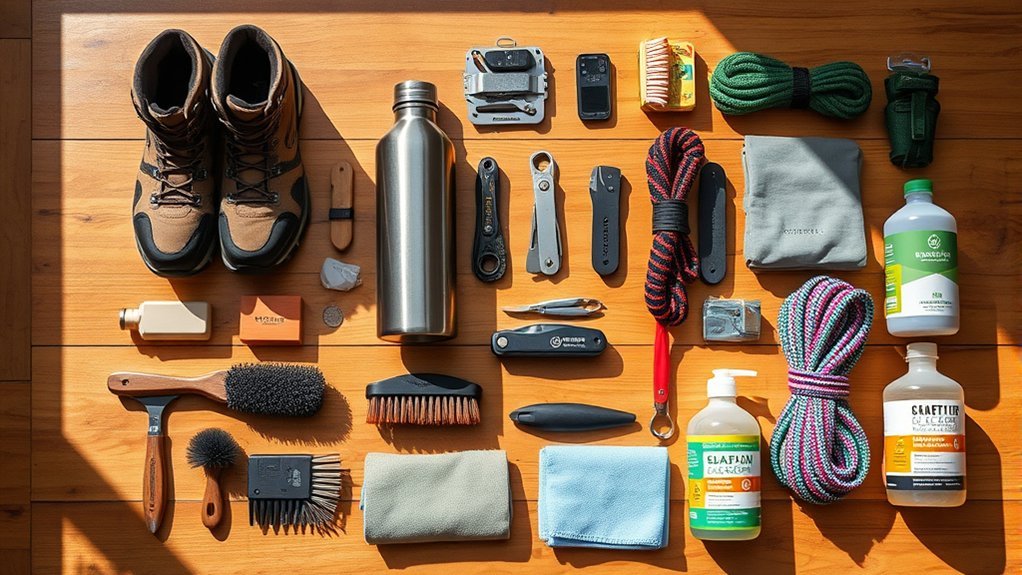
Cleaning your outdoor gear isn’t just about looks; it’s about performance and longevity. You need to inspect each piece for damage and debris before starting. A few simple supplies can make a big difference. Follow a methodical approach for each type of gear, whether it’s hiking, cycling, or camping. Understanding the right techniques will guarantee your equipment serves you well for years. Let’s explore how to tackle this essential task effectively.
Understanding the Importance of Gear Cleaning
When you think about maintaining your gear, it’s easy to overlook the importance of regular cleaning. However, neglecting this essential step can lead to deterioration, decreased performance, and even safety hazards.
Dirt, grime, and buildup can compromise the functionality of your equipment, making it less reliable when you need it most. Regular cleaning not only prolongs the lifespan of your gear but also guarantees peak performance, allowing you to explore freely and confidently.
Neglecting to clean your gear can hinder performance and reliability when you need it most. Regular maintenance is key.
By keeping your equipment in top condition, you empower yourself to tackle any challenge without the worry of malfunction. Embrace the discipline of cleaning; it’s your gateway to liberation in the great outdoors.
A little effort goes a long way in enhancing both your experience and safety.
Gathering the Right Cleaning Supplies
To effectively clean your gear, you need to gather essential cleaning tools and recommended solutions tailored to the materials you’re working with.
Don’t overlook safety gear; protecting yourself during the cleaning process is just as important as the task itself.
Let’s explore what supplies you’ll need to guarantee a thorough and safe cleaning experience.
Essential Cleaning Tools
A well-equipped cleaning kit can make all the difference in maintaining your gear’s longevity and performance.
Start by gathering soft brushes to gently remove dirt without scratching surfaces. Microfiber cloths are essential for wiping down equipment, ensuring you capture dust and moisture effectively. You’ll also need a sturdy sponge for tougher grime and a dedicated bucket for rinsing.
Don’t forget cotton swabs for those hard-to-reach areas and a pair of gloves to protect your hands during the process. Finally, consider a small, reliable toolkit to handle any necessary repairs while you clean.
With these essential tools at hand, you’ll be well-prepared to give your gear the care it deserves, ensuring it remains in top shape for your next adventure.
Recommended Cleaning Solutions
Choosing the right cleaning solutions is essential for maintaining your gear’s integrity and performance.
The right products can effectively remove dirt and grime without damaging your equipment.
Here are some recommended cleaning solutions to take into account:
- Mild soap: Gentle yet effective for most surfaces.
- Isopropyl alcohol: Great for disinfecting and removing stubborn stains.
- Vinegar: A natural option for breaking down tough residues.
- Dedicated gear cleaners: Formulated specifically for certain materials, ensuring safe cleaning.
- Water: Often your best friend for rinsing and general cleaning.
Safety Gear Considerations
When it comes to cleaning your gear, having the right safety equipment on hand protects you and enhances the cleaning process. Start by gathering essential supplies that guarantee your safety while you work. Here’s a quick reference table to help you choose the right gear:
| Safety Gear | Purpose | Recommended Type |
|---|---|---|
| Gloves | Protects hands from chemicals | Nitrile or latex |
| Goggles | Shields eyes from splashes | Anti-fog safety goggles |
| Mask | Filters harmful fumes | N95 respirator |
| Apron | Protects clothing | Chemical-resistant apron |
| Ventilation System | Reduces inhalation of toxins | Exhaust fan or open window |
These items will empower you to clean effectively while prioritizing your well-being. A safe cleaning environment lets you focus on the task at hand.
Cleaning Hiking Gear
Although hiking gear is built to withstand the rigors of the outdoors, it still requires regular cleaning to maintain its performance and longevity. Neglecting this can lead to wear and decreased efficiency.
Follow these practical steps to keep your gear in top shape:
- Inspect: Check for damage and dirt accumulation.
- Shake: Remove loose dirt and debris by shaking or brushing.
- Wash: Use mild soap and warm water; avoid harsh detergents.
- Dry: Let your gear air dry completely, away from direct sunlight.
- Store: Keep your gear in a cool, dry place to prevent mildew.
Cleaning Cycling Equipment
Just like hiking gear, your cycling equipment needs regular cleaning to perform at its best. Start by wiping down your frame and components with a damp cloth to remove dirt and grime.
For the chain, use a dedicated degreaser; let it sit for a few minutes, then scrub with a brush. Rinse thoroughly and dry before reapplying lubricant.
Don’t forget to check your brakes and gears; a quick wipe can go a long way in maintaining their responsiveness. Clean your tires with a brush to avoid debris buildup, ensuring better traction.
Finally, inspect your helmet and gloves for sweat and dirt, giving them a gentle wash. Keeping your gear clean not only enhances performance but also prolongs its lifespan.
Cleaning Camping Gear
To guarantee your camping gear lasts longer and performs reliably, regular cleaning is essential. After each trip, take the time to clean your equipment properly. Here’s how to do it effectively:
- Tent: Shake out debris, spot clean stains, and air dry completely before storing.
- Sleeping Bag: Check for dirt, follow care instructions for washing, and verify it’s fully dry to prevent mold.
- Cookware: Scrub off food residues using non-abrasive sponges and dry thoroughly to avoid rust.
- Cooler: Rinse out any spills, scrub with mild soap, and let it air out before sealing.
- Backpack: Empty pockets, wipe down surfaces, and hand wash if necessary, verifying it’s dry before storing.
Regular maintenance keeps your gear ready for your next adventure!
Maintaining Footwear and Apparel
To keep your footwear and apparel in top shape, it’s crucial to use proper washing techniques tailored to the materials.
After washing, focus on effective drying and storage practices to prevent damage and extend their lifespan.
Additionally, implementing preventative care practices will help maintain their performance and appearance over time.
Proper Washing Techniques
Although it might seem tempting to toss your footwear and apparel into the wash without a second thought, using proper washing techniques is crucial for maintaining their longevity and performance.
Follow these tips to guarantee your gear stays in top shape:
- Check Labels: Always read care labels for specific washing instructions.
- Use Gentle Detergents: Opt for a mild detergent to avoid damaging fabrics.
- Cold Water Wash: Use cold water to preserve colors and prevent shrinkage.
- Separate Colors: Wash similar colors together to avoid bleeding.
- Remove Insoles & Laces: Take out insoles and laces before washing to clean thoroughly.
Drying and Storage Tips
Once you’ve washed your footwear and apparel, how you dry and store them can greatly impact their lifespan and performance.
Always air-dry your gear in a well-ventilated space, avoiding direct sunlight which can degrade materials. If you’re drying footwear, stuff them with newspaper to absorb moisture and help maintain their shape. For apparel, hang items or lay them flat to prevent stretching.
When it comes to storage, keep your gear in a cool, dry place, away from heat sources and humidity. Use breathable storage bags or bins to prevent mildew.
Regularly check your stored items for any signs of wear or dampness. By following these steps, you’ll keep your gear in top shape, ready for your next adventure.
Preventative Care Practices
Maintaining your footwear and apparel isn’t just about cleaning; it’s about implementing preventative care practices that extend their life and enhance performance.
By taking a proactive approach, you can enjoy your gear longer and boost its functionality. Here are some essential tips:
- Regularly inspect for damage or wear and tear.
- Store properly in a cool, dry place, away from direct sunlight.
- Use protective sprays to repel water and stains.
- Rotate your footwear to allow each pair to breathe and recover.
- Repair promptly to prevent small issues from becoming major problems.
Drying and Storing Your Gear Properly
To guarantee your gear remains in top condition, drying and storing it properly is essential after each use. Start by wiping down your equipment with a clean, dry cloth to remove moisture.
For fabric gear, hang it in a well-ventilated area, avoiding direct sunlight to prevent fading. Make sure everything is completely dry before storing to prevent mold and mildew.
Utilize breathable storage bags or containers, steering clear of plastic that traps moisture. Store your gear in a cool, dry place, away from extreme temperatures.
If you’re storing gear long-term, consider adding silica gel packs to absorb any residual moisture.
Proper drying and storage not only maintain your gear’s functionality but also extend its life, giving you more freedom to explore.
Tips for Regular Maintenance and Care
After guaranteeing your gear is dry and stored correctly, it’s important to incorporate regular maintenance into your routine to keep everything in peak condition.
Here are some practical tips to enhance your gear’s longevity:
- Inspect for Damage: Regularly check for tears, frays, or cracks that could compromise performance.
- Clean After Use: Wipe down your gear to remove dirt and sweat, preventing buildup.
- Lubricate Moving Parts: Use appropriate lubricants on zippers, buckles, and hinges to guarantee smooth operation.
- Store Properly: Keep your gear away from extreme temperatures and direct sunlight to avoid deterioration.
- Follow Manufacturer Guidelines: Adhere to specific care instructions to maintain warranty and performance standards.
Frequently Asked Questions
How Often Should I Clean My Gear?
You should clean your gear after every use, especially if it’s exposed to dirt, sweat, or moisture. Regular maintenance prevents buildup, prolongs gear life, and guarantees peak performance during your adventures. Stay fresh and ready!
Can I Use Regular Soap for Cleaning?
You can use regular soap, but it’s best to choose a mild, biodegradable option. Focus on gentle cleaning, thorough rinsing, and avoiding harsh chemicals to keep your gear in top condition and extend its lifespan.
What Should I Avoid During the Cleaning Process?
Avoid using harsh chemicals, abrasive materials, or excessive moisture during cleaning. These can damage your gear’s surfaces or functionality. Stick to gentle methods, and always follow manufacturer guidelines to preserve your equipment’s integrity.
Is It Necessary to Clean New Gear?
Yes, it’s necessary to clean new gear. Studies show 70% of equipment comes with residue from manufacturing. By cleaning, you enhance performance and longevity, ensuring your gear works effectively right from the start.
How Do I Identify Specific Cleaning Needs for Different Materials?
To identify specific cleaning needs, check your gear’s material type. Fabrics like nylon need gentle detergents, while plastics often require mild soap. Always refer to care labels for detailed instructions tailored to each material’s requirements.
Conclusion
Cleaning your outdoor gear isn’t just a chore; it’s a ticket to adventure. By regularly maintaining your equipment, you’ll guarantee it performs at its best and lasts longer, saving you money in the long run. Remember to dry and store everything properly to keep mildew at bay. With these steps, you’ll have peace of mind knowing your gear is ready for whatever nature throws your way. So gear up, clean up, and get back out there!
