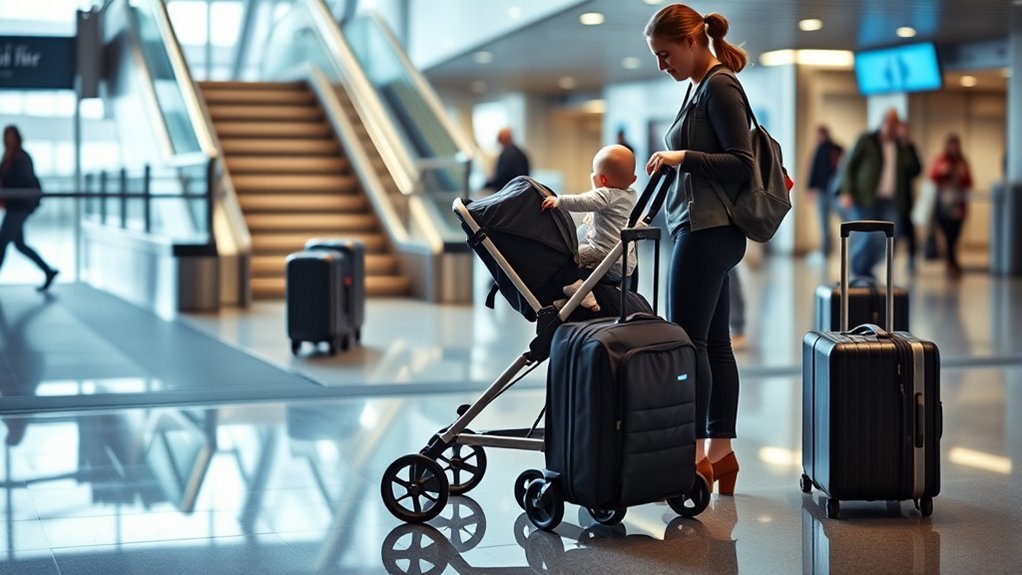
Gate checking a stroller is usually a safe, convenient way to travel with your child’s gear. You hand it over at the gate, keep it with you until boarding, and often get it back at the jet bridge, not baggage claim. Most airlines gate-check strollers for free, though rules vary. Damage is uncommon, but minor scuffs can happen, so tag it well and snap photos. Keep going to see how to do it right.
What Is Gate Checking a Stroller?
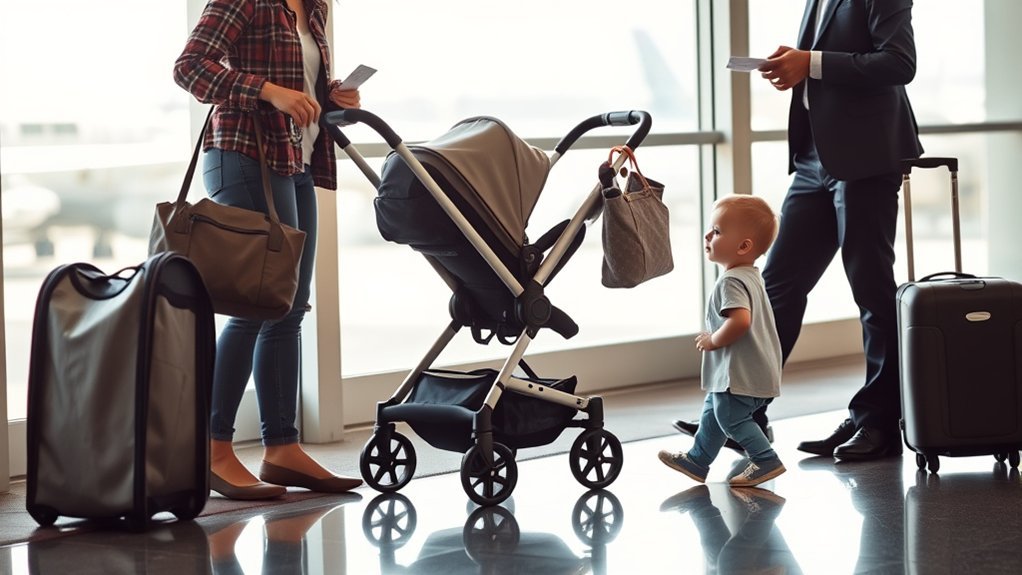
Gate checking a stroller means you keep it with you through the airport and hand it off at the boarding gate right before you get on the plane. You’ll usually receive a tag so staff can identify your stroller and return it to you after landing.
Most airlines allow you to check a stroller for free, but policies vary, especially for size and weight. You stay mobile until the last moment, which can make travel feel less restrictive and more manageable.
Most airlines allow free stroller check-in, though size and weight rules can vary.
After the flight, you’ll often get your stroller back at the jet bridge, so you can use it again quickly instead of waiting with regular baggage. If you want extra protection, use a sturdy bag before you gate check it. That simple step can help shield it during handling.
For many parents, gate checking gives you convenience, control, and a smoother airport experience.
Is Gate Checking a Stroller Safe?
Yes, gate checking a stroller is generally safe and often one of the easiest ways to travel with a little one. You keep control until boarding, and your stroller gets gate checked with tags so it returns at the jet bridge, not baggage claim. That usually means less handling, less loss, and more peace of mind.
| What you get | Why it helps |
|---|---|
| One stroller per child | Fits most family trips |
| Checked free of charge | Saves money |
| Clear gate check policies | Reduces surprises |
| Fewer damage to strollers | Limits wear and tear |
| Airline policies vary | Always verify first |
You may see minor scratches without a protective bag, but many parents find this beats regular checked baggage. Check airline policies before you fly, including size rules and one stroller per child limits. With a quick review, you can travel easier and move through the airport with more freedom.
Which Strollers Can Be Gate Checked?
Not every stroller qualifies for gate check, so it helps to know what airlines accept before you head to the airport.
When Gate Checking a Stroller, you’ll usually find that standard-sized strollers are allowed if they fold down to airline limits, often about 22 x 14 x 9 inches. If yours fits, you can often check a stroller at the gate without extra hassle.
Compact strollers may even count as carry-on items, giving you more freedom in the cabin. Full-size models usually need gate check.
Double strollers can be trickier, since they often need special handling and closer review. That’s why you should always read airline-specific guidelines before you fly.
Policies vary: some airlines permit one stroller per ticket, while others let you bring both a stroller and car seat at no extra charge.
Checking stroller eligibility early helps you move confidently and avoid surprises.
How to Gate Check a Stroller?
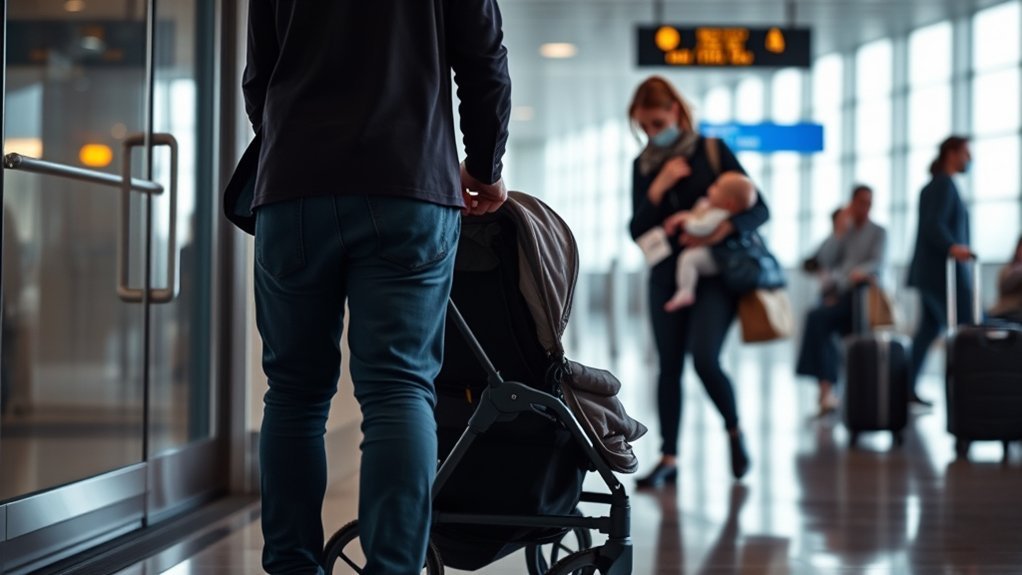
Start by cleaning your stroller and adding a luggage tag or label with your contact information so it’s easy to identify at the gate. Then check airline policies, because most allow one stroller per ticketed passenger at no extra cost. Bring the stroller through the airport, use it until boarding, and collapse it when staff ask for inspection. Tell the gate agent you want to gate check it, and attach the provided tag for identification before you board.
| Step | What you do | Why it matters |
|---|---|---|
| 1 | Clean and label the stroller | Faster identification |
| 2 | Confirm airline policies | Avoid surprises |
| 3 | Hand it over at the gate | Protect safety and simplify travel |
After landing, retrieve your stroller at the jet bridge unless the airline says otherwise. If you’re unsure, ask the gate agent before boarding. This simple process keeps you mobile, reduces stress, and helps you move freely through the airport.
What Happens to Your Stroller at TSA?
At TSA, you’ll need to take your child out of the stroller, then fold it so agents can inspect it.
They may screen it by hand, run it through an X-ray machine, and swab it for explosives if needed.
If it passes, you can use the stroller again throughout the airport until boarding.
TSA Screening Steps
When you reach TSA, you’ll need to take your child out of the stroller before heading to the security line.
These TSA screening steps keep airport navigation simple and safe. The stroller must be collapsed so it fits the security screening area, and TSA agents can inspect it without delay.
During the inspection process, they may:
- Check it by hand
- Send it through an X-ray machine
- Swab it for explosives
You can keep baby gear like diaper bags separate, which helps speed things up and gives you more freedom to move through the checkpoint.
After screening, you can use the stroller again through the airport until boarding. This routine is quick, standard, and designed to help you travel with less stress.
Folding For Inspection
Fold your stroller before it reaches TSA so it can fit through the X-ray machine or be easily inspected by hand. As parents, you’ll want to remove your child first, then collapse the stroller for inspection.
This folding for inspection helps TSA security move you along while following safety protocols. If the stroller doesn’t fit, agents can still check strollers by hand, and they may do a visual review or swab it as part of routine screening.
Keep baby gear like diaper bags and toys separate, so nothing slows you down. With a little prep, you stay free to move through the airport with less stress.
Once you clear security, your stroller is yours again, ready for the terminal until boarding time.
What Agents Check
Once your stroller reaches TSA, agents usually check it by hand or send it through the X-ray machine, and they’ll likely swab it for explosive residue as part of routine screening.
You’ll need to collapse the stroller and remove your child before security begins. To keep things moving with efficient handling, separate baby gear like car seats and diaper bags, and keep essentials close in case the process runs long.
TSA agents check for anything that could affect safety, then return your stroller so you can keep moving with accessibility and ease.
- Fold it down.
- Remove your child.
- Keep key items handy.
After screening, you can use the stroller throughout the airport until boarding, giving you freedom and flexibility.
Airline Gate-Check Policies for Strollers
Most airlines let you gate-check a stroller for free, and you can usually bring one stroller and one car seat per ticketed passenger without it counting toward your baggage limit.
You’ll still need to check each airline’s size rules, since some only allow smaller folded strollers at the gate while larger ones may need to go at the counter.
Before you fly, confirm the exact policy so you know where your stroller will be returned and avoid any surprises.
Airline Size Limits
Airline gate-check rules for strollers usually come down to size and weight, so it helps to check your carrier’s limits before you fly. Most airline size limits hover around 22 x 14 x 9 inches and a 20-pound weight limit, and anything bigger may need checked baggage handling.
When you’re gate-checking a stroller, confirm the dimensions at booking or check-in so you’re not slowed down at the airport.
- Measure folded dimensions before you leave.
- Weigh the stroller, especially if it’s sturdy.
- Ask staff if your model fits policy.
American, Delta, Southwest, JetBlue, and Alaska all support families with young children in different ways, but you should still verify the rules.
That quick check keeps your trip smoother and gives you more freedom to move.
Free Gate-Check Rules
After you’ve checked the size and weight limits, the next thing to look at is whether your airline will gate-check the stroller for free.
Most airline policies let you bring one stroller and one car seat per ticketed passenger gate-checked free, and they usually don’t count against baggage limits.
Still, rules differ: American Airlines may allow only one item, either a stroller or car seat, while Delta and Southwest offer complimentary gate-checking for both.
United often accepts standard strollers at the gate, but bulkier models may need counter check-in.
Before you travel, confirm your stroller is eligible for gate checking by reviewing size and weight restrictions.
When you know the rules, you can move through the airport with less stress and more freedom.
If Your Stroller Gets Damaged
If your stroller comes back damaged after gate checking, take photos right away and report it to the airline’s baggage service office as soon as you can. You’re not powerless here. Most airlines won’t cover repairs unless the stroller was in its original factory packaging, but you can still check each airline’s policy and ask about compensation.
- Document the damage: snap clear photos of every scratch, bend, or broken part.
- Report it fast: file your claim with the baggage service office before you leave the airport.
- Protect your gear: use a protective bag next time to reduce risk during handling.
Keep your receipts and any claim numbers, since airlines may ask for them later.
Repair or replacement can take time, so don’t expect an instant fix. Stay firm, stay organized, and keep pressing for the outcome you deserve.
Tips for Gate Checking a Stroller
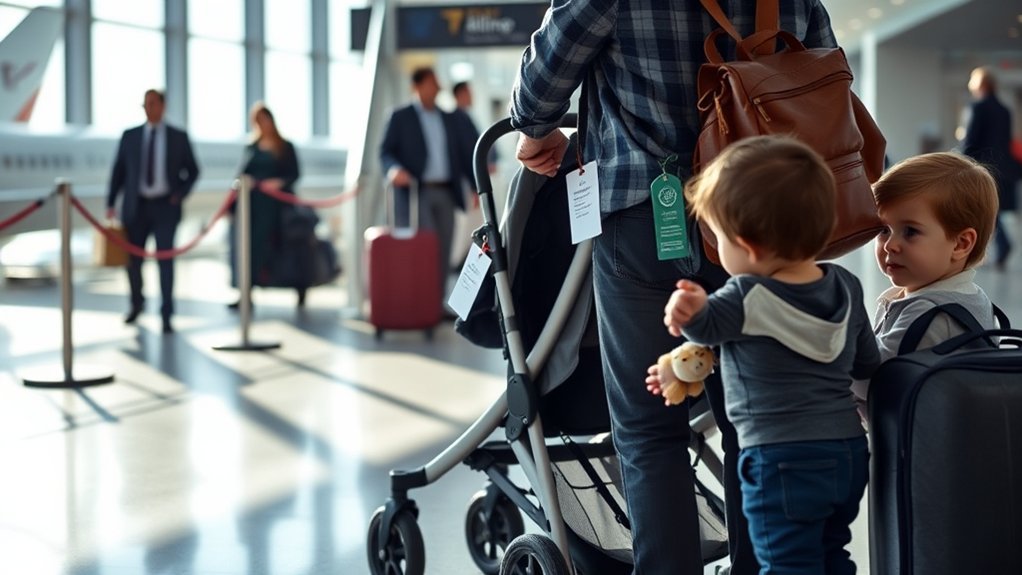
A smooth gate-check starts before you reach the jet bridge: clean your stroller, attach a label with your contact information, and confirm your airline’s size and weight limits so there are no surprises.
At the check-in counter, tell the agent you’re gate-checking your stroller and ask for the proper tag. Then collapse it for TSA screening, and keep baby gear separate so security moves faster.
If you’re flying with a larger or pricier model, slip it into a protective bag to help guard against scuffs and breaks.
Before you head out, review your airline’s policies for strollers, because rules can differ from one carrier to another.
You’re not giving up convenience—you’re reclaiming ease by planning a few simple steps. With clear labeling, a proper tag, and a quick check of the rules, you can move through the airport with more confidence and less stress.
Frequently Asked Questions
What Happens if You Gate Check a Stroller?
You tag your stroller, hand it over at boarding, and usually reclaim it at the jet bridge; check gate check procedures, stroller damage risks, baggage handler care, stroller insurance options, travel stroller recommendations, parent experiences shared, stroller replacement policies.
How to Protect a Stroller When Gate Checking?
Like armor for your wheels, use stroller covers for damage prevention. Check airline policies, follow packing tips, clean it first, and label it. Compare stroller brands and travel essentials so you can gate-check with confidence.
What Size Stroller Can Be Checked at the Gate?
You can gate-check compact stroller dimensions, usually around 22 x 14 x 9 inches, if airline policies allow. Check folding mechanisms, weight limits, safety features, stroller types, and your travel tips before you board.
How Does TSA Check Strollers?
Like a gatekeeper with a flashlight, TSA checks your stroller by asking you to remove your child, collapse it, then hand-screen, X-ray, or swab it during security screening, following TSA regulations and stroller safety travel tips.
Conclusion
Gate checking your stroller can make travel easier when you know what to expect. You’ll save space in the terminal, keep your little one comfortable, and still bring your stroller close to boarding. Just check your airline’s rules, label your stroller, and fold it properly. If something goes wrong, report damage right away. A little planning goes a long way, and as the saying goes, an ounce of prevention is worth a pound of cure.
