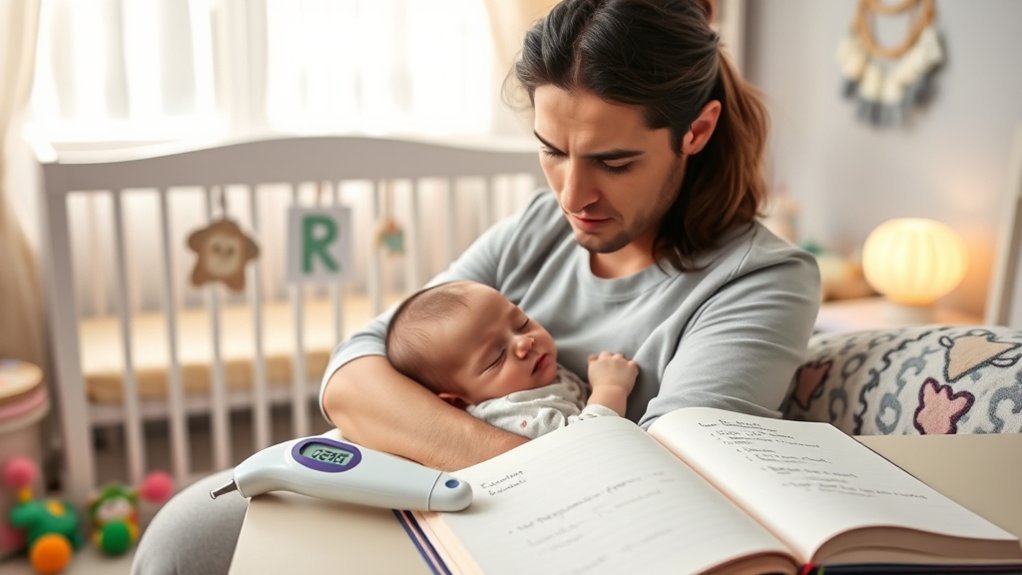
Feeling anxious when your infant has a fever is completely normal, but staying calm matters for your baby’s well-being. Knowing when to seek medical attention, how to keep your baby comfortable, and what to avoid can make all the difference. These guidelines will help you handle your infant’s fever with confidence.
Quick Answer
- A fever in infants is a temperature above 100.4°F (38°C) and usually means the immune system is fighting an infection.
- Babies under 3 months with any fever need immediate medical evaluation.
- Keep your baby lightly dressed, hydrated, and monitored. Use age-appropriate medication only as directed by your pediatrician.
- Never use alcohol rubs or overdress your baby. Watch for additional symptoms like rash, difficulty breathing, or unusual lethargy.
Understanding Fever in Infants
When your infant runs a fever, it can be concerning, but understanding what it means helps. A fever, defined as a body temperature above 100.4°F (38°C), often signals that your child’s immune system is fighting an infection.
A fever in your infant usually means their immune system is working against an infection.
It’s a common response to illnesses, ranging from mild viral infections to more serious conditions. The fever itself isn’t the danger; the underlying cause is what matters.
You may notice your infant being more irritable or lethargic than usual. Keep them hydrated and dress them in lightweight clothing to help regulate their temperature.
Monitor their behavior and any accompanying symptoms, as this information will be helpful for healthcare providers if further evaluation is needed.
When to Seek Medical Attention
Knowing when to seek medical attention for your infant’s fever is one of the most important things you can do as a parent, especially if symptoms escalate or persist. Contact a healthcare professional if your baby is under three months old with a temperature of 100.4°F (38°C) or higher. Also watch for signs of dehydration, rash, persistent vomiting, or unusual lethargy. See the American Academy of Pediatrics fever guidance for additional detail on these thresholds.
| Symptom | When to Call a Doctor | Notes |
|---|---|---|
| High Fever | 100.4°F (38°C) & under 3 months | Immediate evaluation needed |
| Dehydration | Dry mouth, no tears, fewer wet diapers | Important to address quickly |
| Rash | Sudden or widespread rash | Can indicate serious conditions |
| Persistent Vomiting | Vomiting multiple times | Risk of dehydration increases |
| Unusual Lethargy | Hard to wake or overly sleepy | Requires prompt medical assessment |
Dos: Monitoring Your Baby’s Temperature
Once you know when to seek help, monitoring your baby’s temperature becomes central to managing their fever effectively.
Use a digital thermometer for accurate readings, and make sure it’s suitable for infants, such as rectal, axillary, or tympanic types. Measure their temperature at regular intervals, especially if their symptoms change or worsen. Keep a record of these readings to share with your healthcare provider if needed.
Use a suitable digital thermometer to regularly monitor your baby’s temperature and track any changes for your healthcare provider.
Pay attention to your baby’s behavior. Lethargy or irritability may indicate a need for further evaluation. A fever isn’t always harmful on its own, but consistent monitoring helps you assess your baby’s condition and decide on the right next steps.
Stay calm and supportive. Your reassurance can make a real difference to your baby during this time.
Dos: Keeping Your Baby Comfortable
Keeping your baby comfortable during a fever is essential for their well-being.
Dress them in lightweight clothing, make sure they stay hydrated, and consider using lukewarm baths to help regulate their body temperature.
Dress Appropriately for Comfort
Dressing your baby appropriately during a fever is essential for their comfort. Choose lightweight, breathable fabrics like cotton to help regulate their body temperature.
Avoid heavy blankets and thick clothing, as these can trap heat and worsen discomfort. Opt instead for loose-fitting garments that allow for airflow.
Layering can be helpful since you can easily adjust clothing based on temperature changes. If your baby feels warm to the touch, removing an outer layer is a good idea.
Always monitor their comfort level. Your baby’s cues will guide you in dressing them appropriately.
Maintain Hydration Levels
When your baby has a fever, maintaining hydration is key to their comfort and recovery. Offer plenty of fluids to help prevent dehydration, which can worsen their condition.
Breast milk or formula is usually the best option for infants. If your baby is older than six months, you can also offer small amounts of water or electrolyte solutions.
Watch for signs of dehydration: dry mouth, decreased urine output, or unusual lethargy. Encourage sips frequently, even if your baby seems disinterested in drinking.
Keeping hydration levels up not only soothes discomfort but also supports their immune system. Always consult your pediatrician if you’re unsure about your baby’s hydration needs.
Use Lukewarm Baths
A lukewarm bath can help soothe your baby’s discomfort during a fever. This method gently lowers body temperature without causing the shock that comes from extreme temperature changes.
Fill the tub with water that’s comfortably warm to the touch, ideally around 98–100°F (37–38°C). Avoid cold or ice baths, as they can trigger shivering and increased discomfort.
Keep the bath short, around 10–15 minutes, and stay close to monitor your baby’s reaction. After the bath, gently pat your baby dry and dress them in light clothing to prevent overheating.
Always consult your pediatrician before trying this method, especially if your baby’s fever persists or if they show signs of distress.
Dos: Administering Fever-Reducing Medication
Fever-reducing medication can be an effective way to manage your infant’s discomfort. Always consult your pediatrician for guidance on the appropriate dosage and type. Common options include acetaminophen and ibuprofen, but age restrictions apply.
| Medication | Age Range | Dosage Guidelines |
|---|---|---|
| Acetaminophen | 2 months and older | 10–15 mg/kg every 4–6 hours |
| Ibuprofen | 6 months and older | 5–10 mg/kg every 6–8 hours |
| Dosage Form | Liquid, chewable, or tablet | Confirm it’s suitable for your infant |
| Frequency | Do not exceed recommended doses | Monitor closely for effectiveness |
Make sure your infant stays hydrated and watch for any concerning symptoms. Your pediatrician can provide additional support as needed.
Don’ts: Overdressing Your Baby
When your baby has a fever, avoid overdressing them.
Infants regulate their body temperature differently than adults, and too many layers can lead to discomfort and overheating. Light, breathable clothing is the better choice.
Temperature Regulation Basics
Overdressing your baby can raise their body temperature further, complicating fever management. Infants have a limited ability to regulate body temperature and rely heavily on their environment to do it.
Too many layers can cause overheating, making the fever worse and increasing discomfort. Choose lightweight, breathable fabrics and check their skin regularly. If it’s warm or sweaty, remove a layer.
The goal is a comfortable temperature that lets their body fight off illness effectively.
Comfort Over Layers
Bundling your baby up for warmth during a fever can actually hinder their comfort and recovery. Overdressing traps heat, which can push their body temperature even higher.
Aim for a single lightweight layer that allows for airflow. Monitor your baby’s comfort level by checking for signs of sweating or distress. If they feel warm to the touch, remove an extra layer.
A fan or well-ventilated room can also help regulate temperature. If you’re unsure, consult a healthcare professional for guidance.
Don’ts: Using Alcohol Rubs
Using alcohol rubs on infants to reduce fever is highly discouraged, even if it seems like a quick fix.
Alcohol can be absorbed through the skin, potentially leading to dangerous side effects such as respiratory problems or alcohol poisoning. Infants have thinner skin, making them more vulnerable to these risks.
Alcohol can be absorbed through infants’ delicate skin, posing serious risks including respiratory problems and alcohol poisoning.
Alcohol rubs can also cause discomfort and chilling, which may worsen your child’s condition rather than help it. Use age-appropriate medications or consult a healthcare professional instead.
Don’ts: Ignoring Other Symptoms
Ignoring symptoms that accompany your infant’s fever can lead to serious consequences. While a fever is often just a sign of infection, additional symptoms may point to something more severe. Always monitor your baby closely.
| Symptom | Possible Concern |
|---|---|
| Persistent crying | Pain or distress |
| Difficulty breathing | Respiratory issues |
| Rash | Allergic reaction or infection |
| Lethargy | Serious illness |
If you notice any of these symptoms, contact your pediatrician right away. Delaying treatment can worsen your infant’s condition. Trust your instincts; your observations are essential to your baby’s well-being.
Dos: Hydration and Nutrition During Fever
When your infant has a fever, keeping them hydrated is essential. Offer clear fluids like water or electrolyte solutions, and monitor their nutritional intake, as a balanced diet supports recovery.
Offer Clear Fluids
During a fever, infants lose fluids more rapidly, so hydration becomes a priority. Clear fluids help maintain hydration and support recovery. Here’s a helpful guide on what to offer:
| Type of Fluid | Benefits | Notes |
|---|---|---|
| Water | Essential for hydration | Offer small sips |
| Oral rehydration solution | Replenishes electrolytes | Use as directed |
| Clear broth | Nourishing and soothing | Confirm it’s low-sodium |
| Diluted juice | Provides some nutrients | Limit to avoid sugar overload |
| Herbal tea (cool) | Calming and hydrating | Ensure it’s caffeine-free |
Encourage your infant to drink frequently, even in small amounts, to keep their hydration levels stable during illness.
Monitor Nutritional Intake
Proper nutritional intake matters when your infant has a fever, as their body needs extra energy to fight off illness. Focus on providing easily digestible foods, such as pureed fruits, vegetables, or cereals.
If your baby is breastfeeding, encourage frequent feedings to keep up hydration and nutrients. For formula-fed infants, continue regular feedings but consider offering smaller, more frequent amounts.
If your child has a reduced appetite, don’t force them to eat. Prioritize hydration and offer clear fluids. Monitoring their intake helps you assess their condition and keep them comfortable.
Dos: Following Up With Your Pediatrician
Fever in infants can be alarming, but keeping in touch with your pediatrician is one of the best things you can do for your baby’s well-being.
If your infant’s fever persists beyond a few days, or if they show signs of distress, reach out without delay. Give your pediatrician detailed information about symptoms, including any changes in behavior, eating habits, or sleep patterns. This helps them make informed decisions about necessary tests or treatments.
Trust your instincts. If something feels off, call your pediatrician. Their expertise is invaluable in getting your infant the appropriate care they need.
Frequently Asked Questions
Can Teething Cause Fever in Infants?
Teething can cause a mild temperature rise in infants, but it typically doesn’t reach 100.4°F. If your child has a higher fever, consult a pediatrician to rule out other causes.
What Is a Normal Temperature Range for Infants?
A normal temperature for infants is typically between 97°F and 100.4°F. Monitoring this range helps you gauge your infant’s health and gives you a clear baseline if a fever develops.
Are There Natural Remedies for Infant Fever?
Cool baths, keeping your baby hydrated, and gentle soothing can all help. Monitor your infant closely, and consult a healthcare professional if symptoms persist or worsen.
How Long Can a Fever Last in Infants?
A fever in infants can last anywhere from a few hours to several days. If your baby’s fever persists beyond three days or worsens, consult a healthcare professional for guidance.
Can Fever Affect an Infant’s Sleep Patterns?
Yes. Fever can disrupt your infant’s sleep, making them restless and irritable. Monitor their comfort and seek guidance if sleep issues persist or worsen alongside the fever.
Conclusion
Managing fever in your infant takes attentiveness, patience, and a clear sense of when to act. The dos and don’ts covered here give you a solid foundation, but your baby’s specific symptoms and behavior should always guide your decisions. Stay alert to any changes, keep their comfort as the priority, and reach out to your pediatrician whenever something feels off. Attentive care and timely guidance go a long way in getting your infant through this safely.
