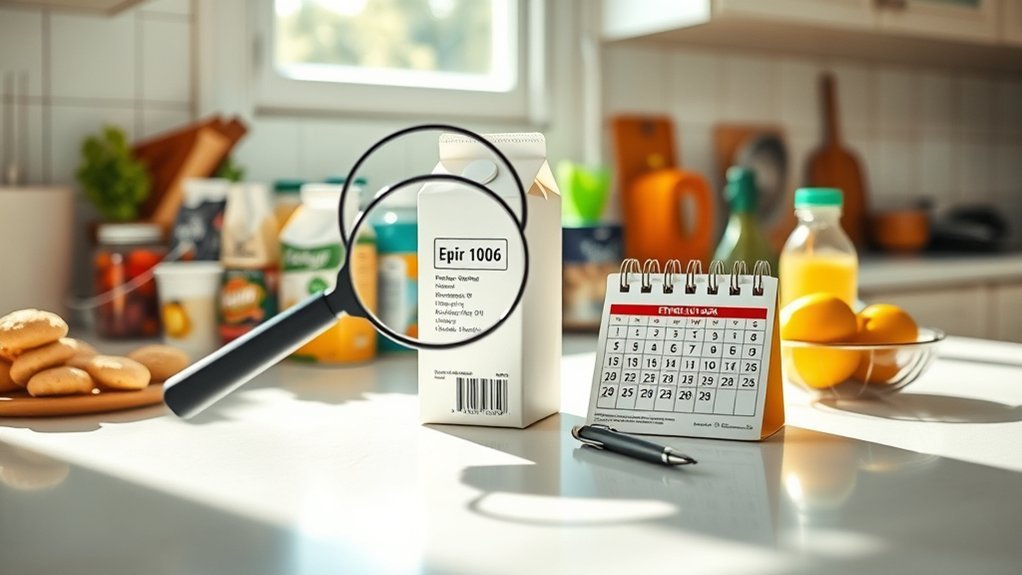
You might have noticed that carton of milk in your fridge with a “sell by” date approaching. Understanding these expiration terms is essential for making informed decisions about food safety and quality. Each label serves a specific purpose, and knowing the differences can impact your health and reduce waste. Let’s explore how these dates are determined and what you should really pay attention to in your pantry.
Understanding Expiration Dates: Types and Terminology
When you check the expiration date on a product, it’s essential to understand the different types and terminology associated with these dates.
Expiration dates are often labeled in various ways, each carrying specific meanings. For example, “use by” indicates the last date a product is at its peak quality, while “best by” suggests when it may start to lose flavor or texture but is still safe to consume.
Understanding expiration date terminology, like “use by” and “best by,” is crucial for ensuring food quality and safety.
“Sell by” serves as a guideline for retailers, helping them manage inventory while ensuring you purchase fresh items.
Familiarizing yourself with these terms can enhance your shopping decisions, ensuring food safety and peak quality. Always pay attention to these details to minimize waste and maximize your product experience.
The Difference Between Expiration, Best By, and Sell By Dates
Understanding the distinctions between expiration dates, best by dates, and sell by dates can greatly impact your food choices and safety. Each label serves a unique purpose that influences how you handle food.
| Date Type | Meaning |
|---|---|
| Expiration Date | Indicates the last day for safe consumption. |
| Best By Date | Suggests peak quality but not safety; food may still be good after this date. |
| Sell By Date | Tells retailers how long to display the product; it’s not a safety indicator for consumers. |
Recognizing these differences helps you make informed decisions about food freshness and safety, ensuring you enjoy your meals without unnecessary waste or risk.
How Expiration Dates Are Determined
Expiration dates are determined through a combination of scientific testing and regulatory guidelines, ensuring food safety and quality.
Manufacturers conduct stability tests under controlled conditions, evaluating how food products react to factors like temperature, moisture, and light over time. These tests help identify the point at which a product may lose its freshness or safety.
Regulatory bodies, such as the FDA, provide frameworks that guide these determinations. They focus on microbial growth, chemical changes, and sensory attributes like taste and smell.
Ultimately, the expiration date reflects the period during which the food retains peak quality and safety for consumption.
The Science Behind Food Spoilage
As food undergoes various physical and chemical changes over time, it becomes susceptible to spoilage due to factors like microbial growth, enzymatic activity, and oxidation.
Microbial growth, primarily from bacteria, molds, and yeasts, thrives in favorable conditions, leading to foodborne illnesses.
Enzymatic activity involves natural processes that can cause texture and flavor changes, affecting taste and quality.
Oxidation, a reaction with oxygen, contributes to rancidity in fats and alters color in fruits and vegetables.
Each of these processes can accelerate spoilage, depending on temperature, moisture, and light exposure.
Understanding these scientific principles helps you better manage food storage and minimize waste, ensuring you consume safe and high-quality products.
Interpreting Expiration Dates: What to Look For
When it comes to food safety, knowing how to interpret expiration dates is crucial for making informed choices. Different terms can indicate various meanings regarding food quality. Here’s a quick guide:
| Term | Meaning |
|---|---|
| Expiration Date | Last date for ideal quality and safety. |
| Best Before Date | Food may still be safe but might lose quality. |
| Use By Date | Indicates the last date to consume for safety. |
Always check for the specific term on the product packaging. This knowledge helps you avoid waste and guarantees you’re consuming food at its best. Remember, proper storage can also extend the life of your products considerably.
Signs of Spoilage Beyond Expiration Dates
When evaluating food safety, you shouldn’t rely solely on expiration dates.
Look for visual indicators like discoloration or mold, and pay attention to any changes in smell or texture. These signs can help you determine whether a product is still safe to consume.
Visual Indicators of Spoilage
Spoilage can be more than just a date on a label; visual indicators often tell the real story about food quality.
When evaluating your food, look for discoloration, which can signal that fruits or vegetables have lost their freshness. Mold, appearing as fuzzy spots, indicates that food is no longer safe to consume.
Additionally, observe any changes in packaging, like bulging or leakage, as these can suggest bacterial growth. If you notice excessive moisture or a slimy texture, it’s a clear sign that the food has spoiled.
Always trust your eyes—if something looks off, it’s better to err on the side of caution and discard it. Visual cues are essential for ensuring your safety and maintaining food quality.
Smell and Texture Changes
Visual indicators aren’t the only signs that food may have gone bad; changes in smell and texture also play a critical role in evaluating food quality. Trust your senses—if something smells off or feels different, it’s best to err on the side of caution.
| Smell Changes | Texture Changes | Action |
|---|---|---|
| Sour or rancid odors | Slimy or sticky surfaces | Discard immediately |
| Musty or moldy scents | Hard or overly soft | Evaluate further |
| Unpleasant chemical smells | Crumbly or cracked | Check for expiration |
Proper Storage Practices to Extend Shelf Life
To extend the shelf life of your food, temperature control and proper container usage are essential.
Keeping perishable items at the right temperature slows spoilage, while storing them in airtight containers prevents exposure to air and moisture.
Implementing these practices can greatly enhance the longevity of your groceries.
Temperature Control Techniques
Proper temperature control is vital for extending the shelf life of perishable items, as even a slight deviation can lead to reduced quality and safety.
To optimize storage, keep your refrigerator at or below 40°F (4°C) and your freezer at 0°F (-18°C). Regularly check the temperature with a reliable thermometer.
When storing items, avoid overcrowding to guarantee proper air circulation. It’s imperative to place items in the correct zones; the back of the fridge is typically the coldest spot.
For items that require room temperature, like certain fruits and vegetables, find a cool, dark area away from direct sunlight.
Airtight Container Usage
Using airtight containers can greatly increase the shelf life of your food items. These containers prevent air and moisture from entering, which are key factors in spoilage.
When you store dry goods like grains, nuts, or snacks in airtight containers, you reduce oxidation and keep them fresh longer. Make sure to choose BPA-free materials to avoid chemical leaching.
For perishable items, vacuum-sealed bags can further enhance preservation by eliminating air. Always label containers with the contents and the date of storage to track freshness effectively.
Safe Consumption: When to Trust Your Senses
How do you know when food is still safe to eat, even if it’s past its expiration date? Trusting your senses can be essential here.
Start by examining the appearance; look for any discoloration, mold, or unusual texture. Next, take a whiff. If the smell is off or sour, it’s best to discard it.
Examine food for discoloration or mold, and trust your nose—discard anything that smells off or sour.
Taste should be your last resort—if everything seems fine but you’re still unsure, try a small amount. If it tastes strange, spit it out.
Keep in mind that some foods, like dry goods, might still be safe even after the date. Always remember, when in doubt, it’s safer to throw it out.
Prioritizing your health is paramount.
Reducing Food Waste: Tips for Using Products Before They Expire
While it can be tempting to overlook items nearing their expiration dates, taking proactive steps to use these products can greatly reduce food waste and save you money.
Here are some effective strategies to help you use items before they expire:
- Plan meals: Create weekly menus incorporating perishable items.
- Batch cooking: Prepare large quantities and freeze portions for later use.
- Creative recipes: Transform soon-to-expire ingredients into soups, smoothies, or casseroles.
- Share with friends: Offer surplus items to neighbors or family members.
- Regular inventory: Check your pantry weekly to prioritize items nearing expiration.
Resources for Further Reading and Information
Accessing reliable resources can enhance your understanding of expiration dates and food safety. Start with the USDA Food Safety and Inspection Service website, which offers guidelines on food labeling and safety practices.
The FDA also provides extensive information about food product dates, including definitions of “sell by,” “use by,” and “best before.”
For scholarly perspectives, consider reviewing articles in journals like the Journal of Food Science or Food Quality and Preference.
Additionally, consumer advocacy groups, such as the Food Waste Reduction Toolkit, present practical insights and tips for managing food freshness.
Frequently Asked Questions
Can I Still Eat Food After Its Expiration Date?
You can often eat food after its expiration date, but you should check for signs of spoilage. If it looks, smells, or tastes off, it’s best to avoid consuming it for safety.
How Do Different Countries Handle Expiration Date Labeling?
Different countries approach expiration date labeling uniquely; some use “best before” for quality, while others implement strict safety guidelines. You should familiarize yourself with local regulations to guarantee safe food consumption and avoid waste.
What Happens to Food After It Expires?
After food expires, its safety and quality can decline. You might notice changes in taste, texture, or smell. While some items remain safe for a while, others can harbor harmful bacteria, so always check carefully.
Are Expiration Dates the Same for All Food Types?
Expiration dates aren’t the same for all food types; they vary widely. Perishable items like dairy spoil faster than canned goods. Understanding these differences helps you avoid eating questionable food and wasting money on wasteful purchases.
How Can I Tell if a Food Is Safe Without Checking the Date?
You can assess food safety by examining its appearance, smell, and texture. If it looks moldy, smells off, or feels slimy, it’s best to discard it, regardless of the expiration date. Always trust your senses.
Conclusion
In the grand scheme of food safety, it’s ironic how a simple date can dictate your health. You might think those numbers are absolute, yet your senses often hold the real power. By understanding expiration terminology and implementing smart storage, you’re not just prolonging shelf life – you’re also outsmarting waste. So next time you glance at that “best by” date, remember: trust your instincts, not just the label, and embrace the art of mindful consumption.
