Expiration dates can feel like a life-or-death matter when it comes to food safety. Yet, many people misunderstand what these dates really mean. They often confuse terms like “Best by,” “Use by,” and “Sell by,” leading to unnecessary waste or risky decisions. Understanding these distinctions can help you make informed choices. So, what do these dates actually indicate, and how can you tell if your food is still good?
What Do Expiration Dates Mean?
While you might think expiration dates simply indicate when a product is no longer safe to consume, they actually convey more nuanced information about quality and safety.
These dates often reflect a manufacturer’s assessment of a product’s peak freshness, flavor, and nutritional value. For example, a “best by” date suggests ideal quality, indicating the timeframe in which you’ll enjoy the best taste and texture.
Conversely, a “sell by” date guides retailers on inventory management but doesn’t necessarily mean the product is unsafe afterward. Understanding these distinctions can help you make informed decisions, minimizing waste and maximizing your purchasing power.
Always consider sensory cues, like smell and appearance, alongside these dates to assess a product’s actual condition.
How Are Expiration Dates Determined?
Expiration dates are determined through rigorous testing methods that assess a product’s stability and safety over time.
Various regulatory guidelines also play a vital role in shaping these dates, ensuring they reflect scientifically-backed assessments.
Understanding these factors can help you make informed decisions about the products you use.
Testing Methods Used
Determining expiration dates involves a series of rigorous testing methods designed to assess a product’s stability and safety over time. Manufacturers utilize various techniques to evaluate factors like temperature, humidity, and light exposure. These tests help predict how long a product retains its quality.
Here’s a brief overview of some common testing methods:
| Testing Method | Purpose | Duration |
|---|---|---|
| Accelerated Aging | Simulates long-term storage | Days to weeks |
| Microbial Testing | Assesses contamination risk | Days to several months |
| Sensory Evaluation | Checks taste, smell, texture | Weeks to months |
| Stability Testing | Monitors chemical changes | Weeks to years |
| Real-Time Testing | Observes actual shelf life | Months to years |
These methods guarantee that you receive safe, effective products.
Regulatory Guidelines Impact
Regulatory guidelines greatly influence how manufacturers establish expiration dates for their products. These guidelines guarantee safety and efficacy, requiring companies to adhere to specific protocols.
When determining expiration dates, manufacturers consider several critical factors:
- Stability Testing: Evaluating how long a product maintains its potency.
- Environmental Conditions: Examining temperature, humidity, and light exposure effects.
- Historical Data: Utilizing past research and product performance.
- Legal Requirements: Complying with regulations set by governing bodies like the FDA.
Are Expiration Dates the Same for All Foods?
While many people assume that all foods share the same expiration dates, this isn’t the case. Different types of foods have varying shelf lives due to their compositions, preservation methods, and susceptibility to spoilage.
For example, perishable items like dairy and meat often have shorter expiration dates compared to non-perishables such as canned goods or dry pasta. Factors like moisture content, acidity, and storage conditions further influence these dates.
Additionally, processed foods may include preservatives that extend their shelf life, while fresh produce typically spoils more quickly. Understanding these differences can help you manage your pantry effectively and reduce food waste.
Always check the specific expiration dates on packaging to guarantee food safety and quality.
What Is the Difference Between “Best By” and “Use By”?
Understanding the difference between “Best By” and “Use By” dates is essential for making informed decisions about food consumption.
Understanding the distinction between “Best By” and “Use By” dates is crucial for safe and informed food choices.
“Best By” dates indicate when a product is expected to maintain its ideal flavor and quality, while “Use By” dates denote the last date recommended for the safe consumption of perishable items.
Here are key points to remember:
- “Best By” dates are about quality, not safety.
- “Use By” dates are critical for perishable foods.
- Consuming items past their “Best By” date may not pose risks.
- Always adhere to “Use By” dates to guarantee safety.
Recognizing these distinctions helps you manage your pantry better and reduce food waste while guaranteeing your meals remain safe and enjoyable.
Can You Eat Food After Its Expiration Date?
Many people wonder whether it’s safe to eat food after its expiration date, and the answer often depends on the type of product and how it’s been stored.
Expiration dates indicate quality rather than safety, and many items, particularly dry goods, can still be consumed past these dates if there’s no visible spoilage. For example, canned goods may last for years if unopened and stored properly.
However, dairy and meat products are more sensitive and can pose health risks if consumed after their expiration dates.
Always assess the food’s appearance, smell, and texture. If anything seems off, it’s best to err on the side of caution and discard the item to avoid foodborne illnesses.
How Should You Store Food to Maximize Shelf Life?
Storing food properly is essential for maximizing its shelf life.
You should keep perishable items at ideal temperatures and use airtight containers to reduce exposure to air and moisture.
Optimal Temperature Guidelines
To maximize shelf life, it’s crucial to maintain the right temperature for food storage.
Different types of food require specific temperature ranges to remain fresh and safe. Here are some guidelines to follow:
- Store perishable items like dairy and meat at or below 40°F (4°C).
- Keep frozen foods at 0°F (-18°C) or lower to prevent spoilage.
- Maintain pantry items in a cool, dry place, ideally between 50°F (10°C) and 70°F (21°C).
- Avoid fluctuating temperatures by regularly checking your fridge and freezer settings.
Airtight Storage Solutions
Maintaining the right temperature is just one part of ensuring food stays fresh; using airtight storage solutions is equally important. By sealing food in airtight containers, you limit exposure to air, moisture, and contaminants, which can greatly prolong its shelf life.
Choose containers made of glass, BPA-free plastic, or vacuum-sealed bags. Make sure the lids fit snugly to prevent any air from getting in. For dry goods, consider using mylar bags with oxygen absorbers to further extend freshness.
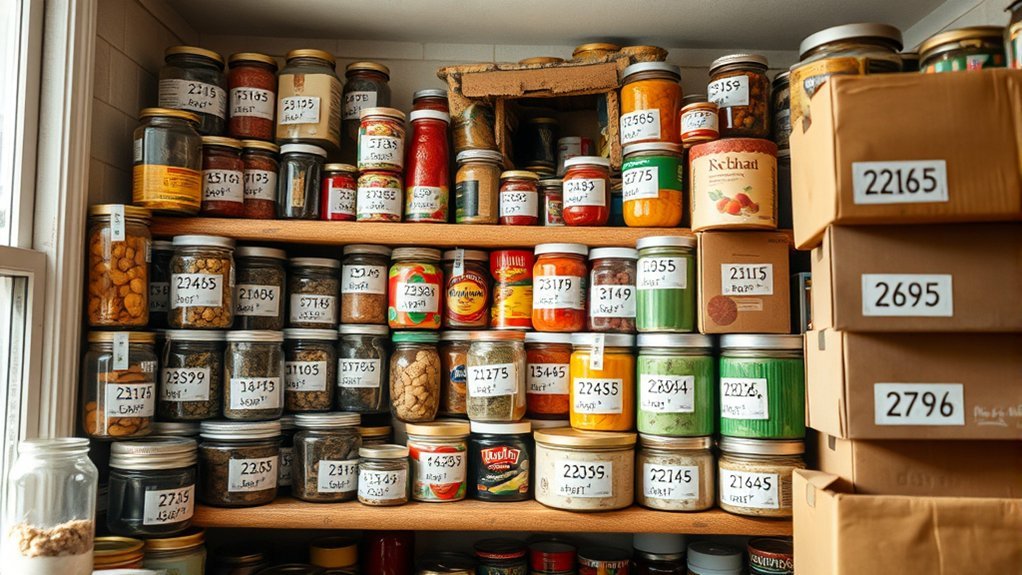
Label your containers with dates to monitor freshness and rotate stock regularly. Remember, proper storage techniques don’t just preserve flavor; they also minimize waste and save money in the long run.
Prioritize airtight solutions for ideal food longevity.
What About Medications and Expiration Dates?
While you might assume that expiration dates on medications indicate a strict cutoff for safety and efficacy, the reality is often more complex.
Many medications can still be effective well past their expiration dates, but several factors influence this. It’s crucial to reflect on the following:
- Storage Conditions: Heat, humidity, and light can affect medication stability.
- Type of Medication: Some medications, like antibiotics, may degrade faster than others.
- Dosage Form: Tablets might last longer than liquids or injections.
- Manufacturer Guidelines: Always refer to specific recommendations from the manufacturer.
Ultimately, while it’s wise to be cautious, many expired medications may still retain their effectiveness, but consulting a healthcare professional is always the best course of action.
How Can You Tell If Food Has Gone Bad?
Understanding how to identify spoiled food is just as important as knowing about medication expiration dates. First, trust your senses; look for discoloration, unusual textures, or off-putting odors. For perishable items like dairy and meats, check for sour smells or slimy surfaces, which indicate spoilage.
Next, consider the “best by” and “use by” dates; while these aren’t absolute, they provide a guideline. For canned goods, inspect for dents, rust, or swelling, which signal compromised safety.
Additionally, always store food properly, as temperature fluctuations can accelerate spoilage. If you’re ever unsure, it’s safer to discard questionable items than risk foodborne illness. By being vigilant, you can guarantee the food you consume remains safe and fresh.
Frequently Asked Questions
Do Expiration Dates Vary by Country or Region?
Yes, expiration dates do vary by country or region. Different regulations and standards influence how products are labeled, leading to discrepancies in date formats, terminology, and shelf-life expectations that consumers should be aware of.
Can I Trust the Freshness of Organic Foods After Their Expiration Date?
You can often trust the freshness of organic foods after their expiration date, as studies show 60% of consumers discard food too early. Always check for signs of spoilage before deciding to consume them.
What Are the Legal Implications of Selling Expired Products?
Selling expired products can lead to legal repercussions, including fines and lawsuits. You’re responsible for ensuring product safety and compliance with regulations, so always check local laws to avoid potential liabilities.
How Do Manufacturers Test Food for Shelf Life?
Manufacturers conduct rigorous tests, analyzing factors like temperature, humidity, and packaging. They monitor chemical stability and microbial growth over time, ensuring products maintain safety and quality, ultimately determining how long you can confidently enjoy them.
Are There Exceptions for Foods Without Expiration Dates?
Yes, some foods, like dry grains and canned goods, often lack expiration dates but can remain safe for years if stored properly. Always check for signs of spoilage, as those are your best indicators.
Conclusion
To sum up, understanding expiration dates can feel like decoding a secret language, but you’re now equipped to navigate it like a pro! Remember, “Best by” and “Use by” aren’t ticking time bombs; they’re more like gentle nudges. Trust your senses and proper storage techniques to keep your food fresh longer. And as for medications, they might just be the superheroes of the shelf, still packing a punch even past their expiration. So, go forth and conquer your pantry with confidence!
