Excessive burping during pregnancy usually happens because progesterone slows digestion, your growing uterus presses on your stomach, and you swallow extra air when you eat too fast. Carbonated drinks, beans, cabbage, fried foods, and spicy meals can make it worse. You can usually ease it by eating smaller meals, chewing slowly, staying upright after eating, and avoiding trigger foods. If you also have heartburn, trouble swallowing, or persistent symptoms, you should call your doctor for guidance.
What Causes Burping During Pregnancy?
Burping during pregnancy is usually caused by a mix of normal body changes and everyday habits. You may notice more burping because your digestive tract slows down, and your growing uterus can press on your stomach, pushing gas upward.
Burping during pregnancy often happens as digestion slows and your growing uterus puts pressure on your stomach.
Eating quickly, talking while eating, or overeating can make you swallow extra air, which adds to the causes. Carbonated drinks and gassy foods like beans and broccoli can also increase gas production.
Stress and anxiety may affect how your gut works, so your symptoms can feel worse when you’re tense. These causes are common and usually not harmful, even when they feel inconvenient. Additionally, hormonal changes can lead to increased fluid retention, which may also contribute to gastrointestinal discomfort.
You don’t have to accept discomfort as your new normal; small adjustments can help you feel more in control. If your burping comes with severe pain, vomiting, or trouble eating, talk with your healthcare provider for guidance.
Why Pregnancy Hormones Increase Gas
When pregnancy hormones rise, especially progesterone, they relax the muscles of your digestive tract and slow digestion, which can increase gas buildup and burping.
This slowdown can extend intestinal transit time by up to 30%, so gas stays in your system longer and pressure builds. As your uterus enlarges, it also presses on your abdomen, which can make you feel bloated and may encourage more gas release.
You might also swallow more air while eating because hormonal shifts can change how you breathe and eat.
These changes are normal, and they’re a common reason pregnancy can be due to more burping. You don’t need to fight your body; you can support it with awareness and patience.
In most cases, this pattern improves after childbirth, when hormone levels stabilize and digestion returns closer to baseline. Additionally, regular blood sugar monitoring during pregnancy can help identify any underlying issues that may contribute to digestive discomfort.
Which Foods Make Pregnancy Burping Worse?
You may notice more burping after gassy foods like beans, cabbage, and broccoli, since they can increase gas in your digestive system.
Fizzy drinks, including soda and carbonated water, can also add extra air, and fatty or spicy foods may slow digestion or irritate your stomach.
Eating smaller meals and slowing down at mealtime can help reduce these symptoms. Additionally, staying well-hydrated aids in digestion, which can also help minimize burping.
Gassy Foods to Avoid
Certain foods can make pregnancy burping worse by increasing gas, slowing digestion, or both. When you’re choosing gassy foods to avoid, pay attention to items that commonly trigger bloating and pressure. You don’t need to eliminate everything forever; just notice your pattern and adjust freely.
| Food group | Why it may worsen burping |
|---|---|
| Beans, lentils, whole grains | High fiber can increase gas |
| Broccoli, cabbage, Brussels sprouts | They often produce more intestinal gas |
| Fried, fatty, sugary foods | They may slow digestion and ferment |
Try smaller portions, eat slowly, and pair meals with water. If a food reliably leaves you uncomfortable, it’s reasonable to limit it during pregnancy and protect your comfort.
Fizzy Drinks and Burping
Fizzy drinks are another common burping trigger during pregnancy. When you drink soda or carbonated water, the carbon dioxide gas releases in your stomach and can build up quickly. That extra gas increases pressure, makes burping more likely, and can leave you feeling bloated or uncomfortable.
If you also choose sugary fizzy drinks, you may notice more indigestion or heartburn because they can irritate your gut and add to gastrointestinal distress.
To reduce symptoms, skip carbonated beverages when you can and choose still water, milk, or other non-carbonated options instead. This simple shift can help you lower gas production, ease stomach pressure, and support a more comfortable, liberated pregnancy experience without giving up hydration or flavor entirely.
Fatty Spicy Triggers
Fatty, spicy, and highly seasoned foods can make pregnancy burping worse because they slow digestion, irritate the digestive tract, or increase stomach acid.
You may notice more burping after fatty foods, like fried items or rich dairy, because they linger in your stomach and boost gas.
Spicy foods can worsen heartburn and burping by triggering extra acid and irritation.
Processed meats and heavily seasoned dishes often digest slowly, so they can add to your discomfort.
Beans, cabbage, and broccoli can also increase gas buildup.
Carbonated beverages add more air to your system, intensifying symptoms.
To support your comfort, choose simpler meals, eat slowly, and notice which foods affect you most.
You deserve relief, and small changes can help.
What Burping Triggers Should You Avoid?
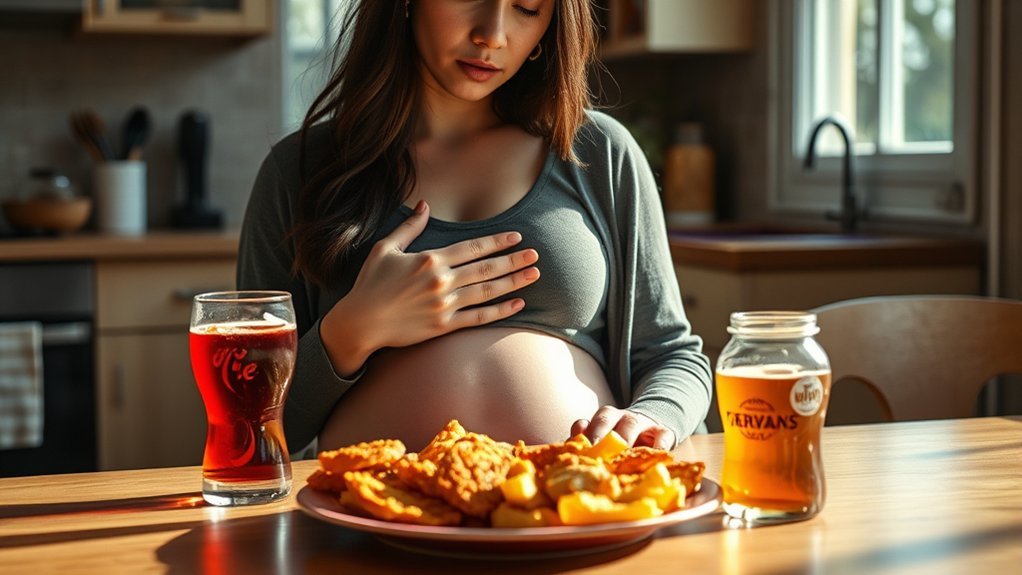
To help reduce burping during pregnancy, it’s best to avoid common triggers that increase gas or irritate the stomach. Carbonated beverages are one of the main burping triggers, since their bubbles add gas that can build up quickly.
Avoid carbonated beverages during pregnancy, since their bubbles can quickly add gas and trigger burping.
You’ll also want to limit beans, cabbage, and broccoli, which can create extra gas during digestion. Fatty and fried foods may slow your stomach down, leading to bloating and more burping.
Sugary and caffeinated drinks can irritate your stomach and make symptoms worse, so it’s wise to reduce them. Eating too quickly or overeating can cause you to swallow more air, which may increase burping, so choose smaller, more frequent meals and eat at a calm pace.
These adjustments can help you feel more comfortable and support a sense of control over your body.
How Can You Stop Burping During Pregnancy?
You can often reduce burping during pregnancy by making a few simple changes to your eating habits and daily routine. If you’re looking for how to stop burping during pregnancy, start with practical steps that ease stomach pressure and limit swallowed air. You don’t need to restrict yourself harshly; small adjustments can support comfort and autonomy.
- Eat smaller, more frequent meals
- Drink non-carbonated beverages
- Chew food thoroughly and slowly
- Avoid beans, cabbage, and fried items
- Wear loose clothing around your abdomen
These measures can help reduce gas build-up, lessen abdominal pressure, and improve digestion. Additionally, regular monitoring of gestational health can help identify any underlying issues that may contribute to discomfort during pregnancy.
Slow, mindful eating also lowers the chance of swallowing extra air, which can trigger burping. Staying hydrated supports smoother digestion, while looser clothing may help your abdomen feel less compressed.
If burping remains severe, painful, or comes with other symptoms, speak with your healthcare provider for further evaluation.
Pregnancy Burping Relief Through Diet
Diet can play a major role in easing burping during pregnancy, especially when you focus on meals and drinks that are easier to digest. For pregnancy burping relief through diet, choose smaller, more frequent meals instead of large portions, since this can limit gas buildup.
Drink non-carbonated fluids, such as water, between meals to support digestion without adding extra air. Pay attention to foods to avoid, including beans, cabbage, onions, and carbonated drinks, because these often increase bloating and burping.
Choose non-carbonated drinks between meals, and avoid gas-triggering foods like beans, cabbage, onions, and fizzy beverages.
You can also include plain yogurt with live cultures, which may support gut balance and reduce discomfort. Identifying trigger foods can help you spot what causes your discomfort and make informed choices with confidence.
This approach helps you reclaim comfort without restrictive rules, while keeping your nutrition steady and your digestion calmer throughout pregnancy.
Lifestyle Changes That Reduce Pregnancy Burping
You can help reduce pregnancy burping by eating small, frequent meals instead of large ones, which eases stomach pressure. Chew each bite slowly and thoroughly so you swallow less air and support digestion. It also helps to avoid lying down right after eating, since staying upright can reduce reflux and burping. Additionally, dietary adjustments can significantly alleviate digestive discomfort during pregnancy.
Small Frequent Meals
Eating five to six smaller meals a day instead of three large ones can help ease pregnancy burping by reducing stomach pressure and limiting the amount of gas produced at one time.
When you choose small meals, your digestive system can work more efficiently, which supports better nutrient absorption and steadier energy. This pattern also helps you avoid overeating, a common trigger for extra swallowed air and bloating.
Build each plate with nutrient-dense foods in modest portions so you stay nourished without overloading your stomach.
- Eat every 2 to 3 hours
- Keep portions modest
- Include protein, fiber, and healthy fats
- Stop before you feel overly full
- Choose small meals you can tolerate
This simple shift can reduce discomfort and give you more freedom during pregnancy.
Chew Slowly Thoroughly
Chewing each bite thoroughly can make a real difference when it comes to pregnancy burping. When you chew slowly and thoroughly, you break food down more completely and swallow less air, which can lower burping during meals.
Your saliva also starts digestion early, helping reduce gas production before food reaches your stomach. Slowing your pace gives your body time to recognize fullness, so you’re less likely to overeat and create extra stomach pressure.
Stay attentive to each bite, because mindful eating can also help you notice foods that seem to trigger gas or belching. Try putting down your utensils between bites and breathing calmly.
This simple habit supports digestion, eases discomfort, and gives you more control over your eating routine during pregnancy.
Avoid Lying Down
To help your digestive tract work efficiently, stay upright for at least one hour after eating. This supports digestion, limits swallowed air, and can reduce stomach acid moving upward.
- Sit tall during meals
- Take a gentle walk afterward
- Avoid lying down after eating
- Sleep with your head elevated
- Wear loose clothing around your waist
These small changes can ease gas buildup and give you more comfort and freedom during pregnancy.
If burping continues or you develop heartburn, discuss it with your clinician for personalized support.
When Is Burping a Sign of Heartburn?
Burping can be a sign of heartburn during pregnancy, especially when it comes with a burning feeling in your chest or throat. When excess stomach acid moves up into your esophagus, you may notice burping, heartburn, or a sour taste in your mouth. Frequent episodes, discomfort, or food-triggered flare-ups can point to acid reflux or GERD. You deserve relief, and knowing the pattern helps you act with confidence.
Heartburn can occur due to certain medications that may worsen symptoms.
| Symptom | What you may feel | What it can mean |
|---|---|---|
| Burping | Repeated air release | Possible reflux |
| Burning chest | Warm, sharp discomfort | Heartburn |
| Sour mouth | Acidic taste | Reflux irritation |
| After large meals | Worse symptoms | Stomach pressure |
| After spicy foods | More burping | Triggered heartburn |
If burping and heartburn keep happening, talk with your healthcare provider. They can guide safe, pregnancy-friendly treatment and help you manage symptoms without guesswork.
How Indigestion Can Cause Burping
Indigestion can cause you to burp more often during pregnancy because food and gas may sit in your stomach longer than usual. Rising progesterone relaxes digestive muscles, so digestion slows and gas builds.
Indigestion during pregnancy can make you burp more as food and gas linger longer in your stomach.
You may notice more burping when you eat too much, eat too fast, or swallow extra air. Rich, fatty, or spicy foods can also trigger indigestion and add to the pressure.
- Eat smaller meals
- Chew slowly
- Avoid trigger foods
- Limit fatty meals
- Stay upright after eating
These changes can help you manage indigestion and reduce burping without giving up comfort or control. Additionally, understanding the causes of nausea can provide further insight into your symptoms during pregnancy.
You don’t have to accept constant discomfort as your new normal. By adjusting how and what you eat, you can support smoother digestion and ease the air that’s trapped in your system.
When Should You Call Your Doctor?
If your burping keeps happening despite lifestyle changes, you should call your doctor for further evaluation.
You should also seek care if you have pain, reflux, discomfort, or changes in appetite.
Watch for worsening symptoms or new warning signs, since these can show that you need medical attention. Additionally, consider discussing psychological factors that may contribute to gastrointestinal issues, as they can play a significant role in symptom management.
Persistent Burping
While burping is often harmless during pregnancy, persistent episodes that come with discomfort, pain, heartburn, or bloating may point to an underlying issue.
If you notice persistent burping, track how often it happens and what symptoms appear with it. When diet changes, smaller meals, and other self-care steps don’t help, contact your healthcare provider for evaluation. You deserve relief, and you don’t have to tolerate ongoing digestive disruption.
- Burping lasts for days or weeks
- Symptoms interfere with meals or sleep
- Bloating or heartburn keep returning
- Home changes don’t reduce episodes
- Regular check-ins support pregnancy health
Your clinician can assess whether you need further care and help you manage gastrointestinal concerns safely.
Pain Or Reflux
Severe pain, significant discomfort, or reflux that doesn’t improve with lifestyle changes should prompt you to contact your healthcare provider, because these symptoms can signal a condition that needs evaluation.
If your burping comes with pain, your clinician can check for reflux or another gastrointestinal issue and guide treatment that supports your comfort and autonomy. You shouldn’t have to push through ongoing heartburn, especially if it keeps returning despite smaller meals, upright posture, or avoiding trigger foods.
A sudden increase in burping or a change in your usual pattern also deserves assessment. If you notice trouble swallowing, a hoarse voice, unexplained weight loss, or a persistent cough, seek medical care promptly.
Early evaluation helps you protect your health and feel more in control.
Warning Signs
When should you call your doctor about burping during pregnancy? If it’s persistent, painful, or feels different, trust your body and seek evaluation. These warning signs can point to reflux or another issue needing care.
You should contact your provider if you also notice difficulty swallowing, a hoarse voice, or a persistent cough. Watch for a sudden rise in burping frequency or intensity, especially if home changes don’t help.
- Ongoing burping with discomfort
- Burping plus pain or pressure
- Trouble swallowing or chest irritation
- Hoarse voice or lingering cough
- No relief after diet changes
Regular check-ins can support your freedom to feel informed and in control. Your clinician can assess symptoms, answer questions, and protect your pregnancy health with practical guidance.
Frequently Asked Questions
Can Burping During Pregnancy Hurt the Baby?
No, burping during pregnancy usually won’t hurt your baby. You’re releasing swallowed air, not affecting fetal health. If you’ve got pain, vomiting, or severe bloating, you should contact your clinician promptly.
Is Burping Worse in the First Trimester?
Yes, you’ll often notice burping more in the first trimester, like a draft through a half-open door. Hormonal Changes slow digestion, so you may feel gassier, but it’s usually harmless and manageable.
Does Burping Mean I Have a Boy or Girl?
No—burping doesn’t tell you whether you’re having a boy or girl. That’s a Gender Myth. Your hormones and digestion usually cause it, and it’s common. If you’re worried, your clinician can help.
Can Prenatal Vitamins Cause More Burping?
Yes, prenatal vitamins can cause more burping. Your stomach may react to iron or swallowed air, a common Vitamin Impact. Try taking them with food, splitting doses, or switching brands; ask your clinician if symptoms persist.
Is Burping Normal After Drinking Water?
Yes, you can burp after drinking water; coincidentally, swallowing a little air often does it. Hydration Effects usually make this harmless. You’re likely fine unless you’ve got pain, vomiting, or persistent bloating.
Conclusion
As your pregnancy progresses, burping can feel like a small storm in an otherwise calm sky. Usually, it’s just your hormones, slower digestion, or certain foods at work—not a sign something is wrong. By eating slowly, avoiding triggers, and staying upright after meals, you can ease the pressure. If burping comes with burning, pain, or vomiting, talk to your doctor. With the right steps, you can help your body find its rhythm again.
