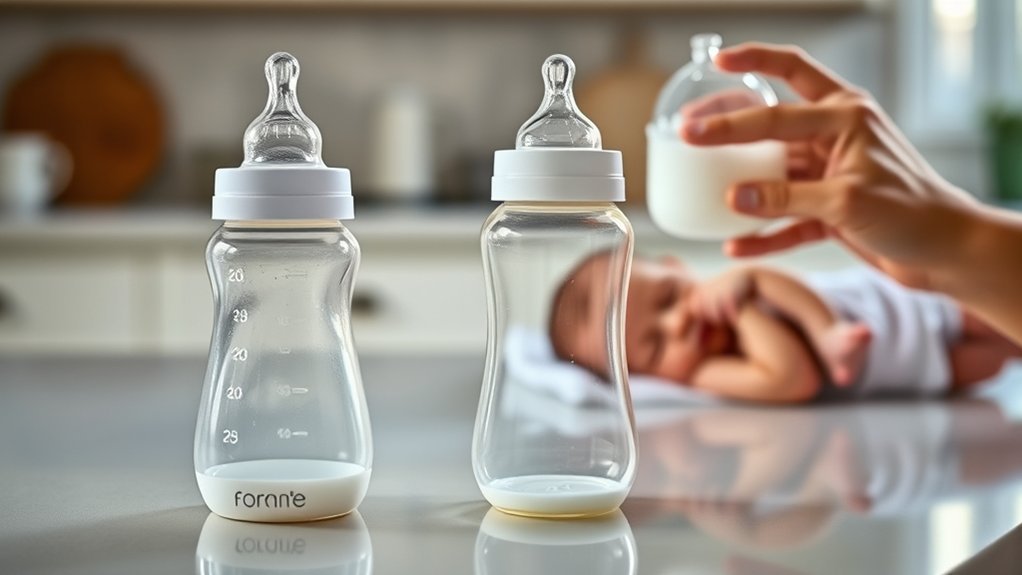
Anti-colic bottles can really help if your baby swallows lots of air, gets gassy, or spits up during feeds, but they’re not magic. They work by venting air away from milk and can reduce fussiness and discomfort for some babies. You may not need one if feeds are already calm and comfortable. Try pacing, upright holds, and burping first, then choose what fits your baby best. There’s more to know if you keep going.
Do Anti-Colic Bottles Really Work?

Yes—anti-colic bottles can really help. When you choose anti-colic bottles, you give your baby a bottle designed to reduce gas by limiting air intake during feeds. That can ease feeding issues, soften spit-up, and make milk flows feel steadier for you and your little one.
Research shows many parents notice less fussiness and better comfort, and one study found babies using Philips Avent anti-colic bottles had less colic at two weeks than babies using standard bottles.
Still, these bottles aren’t magic. A colicky baby may need a few supports, including paced feeding, the right nipple flow, and good burping. You’re not failing if the first bottle doesn’t solve everything.
Your baby’s tummy and digestive system are still developing, so responses vary. But if excessive crying seems tied to feeding, anti-colic bottles can be a smart, practical step that helps you reclaim calmer, more connected feeding moments. Additionally, understanding common infections leading to nausea can further help in managing your baby’s digestive comfort.
Why Do Babies Get Gassy?
Babies get gassy for a few common reasons, and most of them are normal. Your baby may swallow extra air during feeding, especially with bottle feeding, and that air can mix with milk and turn into gas.
Newborn digestive systems are still maturing, so your baby may not burp or pass gas easily, which can cause discomfort. If your baby cries, they often swallow even more air, and that can fuel a cycle of excessive crying and more gas.
You might notice clenched fists, knees pulled toward the belly, or a squirmy, tense body. Those signs usually point to abdominal discomfort, not something dangerous.
To help prevent gas, feed slowly, use paced feeding, and keep your baby upright after meals. These simple steps can reduce swallowed air and support easier digestion.
If your baby seems miserable, you’re not failing—your baby’s body is still learning how to handle air, food, and digestion together.
How Do Anti-Colic Bottles Work?
Anti-colic bottles use an airflow separation system, so air enters through a separate vent instead of mixing with the milk.
That setup helps your baby swallow less air, which can mean less gas, spit-up, and fussiness.
Their teats also aim for a steadier, more breast-like flow, so feeding can feel easier and more comfortable.
Airflow Separation System
When air can move through a vent instead of mixing into the milk, anti-colic bottles help keep your baby from swallowing as much air during feeds.
This airflow separation system uses a vent system, often a one-way valve or nipple holes, to let air escape while milk keeps flowing. You’re not fighting the bottle; you’re using design to prevent air from building up and to reduce gas and discomfort.
Evidence shows these anti-colic bottles can help prevent colic symptoms and lessen spit-up and fussiness. The airflow setup also supports nutritional integrity by reducing oxidation in breastmilk or formula.
Different brands vary, but the goal stays the same: a calmer feeding experience for you and your baby, with less air in the tummy and more ease at the table.
Reduced Air Swallowing
By letting air enter through a vent instead of mixing with milk, anti-colic bottles can reduce how much air your baby swallows during a feed. That’s the core idea behind anti-colic baby bottles: they’re designed to prevent air bubbles from traveling through the milk, so your baby takes in less air and may reduce gas, spit-up, and burping.
Internal vent systems work to keep air away from the milk, which can support feeding comfort and help reduce gas without extra effort from you. Research also links these bottles with fewer colic symptoms, less fussing, and better overall settling after feeds.
If your baby seems gassy or uncomfortable, this can be a practical, evidence-based option that may reduce symptoms while keeping feeding simpler and more calm for both of you.
Easier Feeding Flow
A smoother feeding flow is one of the main ways anti-colic bottles work. Their air venting system keeps air separate from milk, so your baby drinks with less effort and fewer swallowed bubbles. That can reduce gas, ease pressure, and support less fussiness.
| Feature | What it does |
|---|---|
| Venting system | Moves air away from milk |
| Teat shape | Supports better latching |
| Smoother milk flow | Reduces hard sucking |
| Feeding design | Helps reduce gas |
| Breast-like feel | May lessen nipple confusion |
Because milk during feeding moves more evenly, you don’t have to fight constant pauses or drips. Anti-colic bottles can also mimic breastfeeding, which may help mixed-fed babies. In studies, parents report fewer spit-up episodes and easier feeds. If feeding feels like a struggle, this design can give you more control and your baby more comfort.
3 Features to Look for in an Anti-Colic Bottle
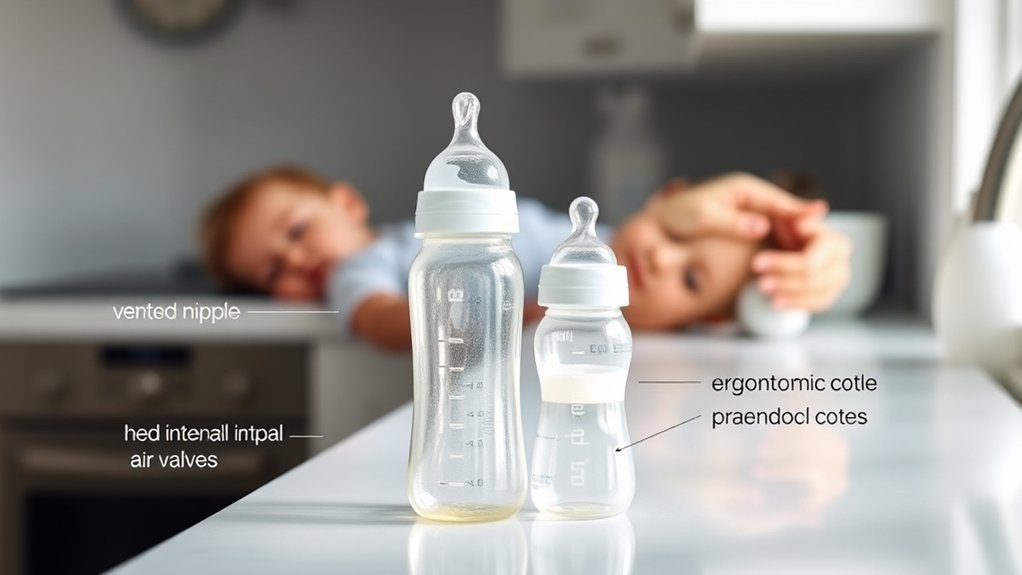
To get the most from an anti-colic bottle, look for a venting system that lets air enter without mixing with milk, since that helps reduce how much air your baby swallows during feeds.
Look for a venting system that keeps air separate from milk to help reduce swallowed air during feeds.
A good anti-colic bottle should also have a breast-like nipple that supports a natural latch and can make bottle-feeding feel more familiar.
Choose BPA-free materials that feel durable and are easy to clean, so you can keep baby gear hygienic without extra hassle.
Multiple nipple flow rates let you match the bottle to your baby’s pace, and you can switch when feeds seem too slow or frustrating.
Soft nipples can also help lower the risk of nipple confusion.
Some designs use bottom vents to move air away from the milk path, which may help reduce colic by limiting swallowed air.
Focus on features that work with your routine, so you keep feeding simple, calm, and more freeing for both of you.
When to Use an Anti-Colic Bottle
You’ll usually reach for an anti-colic bottle when your baby seems uncomfortable during or after feeds, especially if you notice fussiness, extra gas, or frequent spit-up.
Anti-colic bottles can help reduce gas by preventing air from entering milk, which matters when your baby shows signs of discomfort or colic symptoms. They’re especially useful if your baby swallows excess air with standard bottles, or if you’re doing mixed feeding and want a smoother shift from natural breast to bottle.
- Use them when spit-up and gas keep interrupting feeds.
- Try them if your baby seems calmer with less trapped air.
- Keep using them if they support feeding comfort without affecting baby’s development.
Research shows these bottles can lower spit-up and improve sleep for both of you. They’re not a cure-all, but they can free you from some feeding stress. Additionally, keeping your baby properly hydrated can also help alleviate discomfort during feeding sessions.
If symptoms continue beyond three months, staying consistent may still help.
How to Feed a Gassy Baby
When your baby seems gassy, a few simple feeding adjustments can make a real difference.
Hold the bottle horizontally and practice paced feeding so milk flows smoothly and your baby swallows less air. Choose Anti-Colic bottles with strong venting if you want extra help reduce swallowed air during feeding.
Hold the bottle horizontally and pace feeds to help your baby swallow less air.
Pause every 2-3 ounces for burping; this can release trapped air and ease discomfort. After feeding, keep your baby upright for 20-30 minutes to help prevent spit-up and lower gas pressure.
If your baby still seems unsettled, try gentle bicycle leg movements to support digestion and comfort. You don’t need to chase perfection; you just need tools that work for your family.
Watch your baby’s cues, slow things down, and trust that small changes can improve feeding for a gassy baby. With consistent pacing, burping, and good venting, you can reduce gas and protect your peace. Additionally, perineal massage during pregnancy has been shown to enhance elasticity, which can be beneficial for mothers when feeding and caring for their gassy babies.
Frequently Asked Questions
Do Anti-Colic Bottles Actually Make a Difference?
Yes, anti-colic bottles can make a difference: you’ll often see gas reduction, calmer colic symptoms, and better infant comfort. Your bottle design, feeding techniques, formula choices, and pediatric advice matter too; parent experiences and product reviews support that.
What Is the 3 3 3 Rule of Colic?
You’ll hear the 3 3 3 rule: crying over 3 hours daily, 3 days weekly, for 3 weeks in a healthy baby. It guides colic symptoms, soothing techniques, feeding habits, baby gas, infant digestion, parental stress, sleep patterns, breast vs. bottle, colic duration, and pediatric advice.
Do Babies Burp Less With Anti-Colic Bottles?
Yes—often. You’ll usually see less burping with anti-colic bottles: their bottle design and nipple flow cut air intake, easing gas relief and baby comfort. Still, your burping techniques, feeding positions, and feeding frequency matter.
What Are the Disadvantages of Anti-Colic Bottles?
Anti-colic bottles can cost more, complicate cleaning, and need extra assembly. You may still see colic symptoms if bottle design, nipple flow, or feeding techniques don’t suit your baby’s comfort and air intake; check product reviews and pediatric advice.
Conclusion
If your baby’s belly seems to rumble like a storm cloud, an anti-colic bottle can help calm the wind. By reducing swallowed air and keeping milk flowing steadily, it may ease gas and fussiness for some babies. But you don’t always need one—sometimes a good latch, paced feeding, and burping do the trick. Trust your baby’s cues, and use the right bottle like a helpful tool, not a magic wand.
