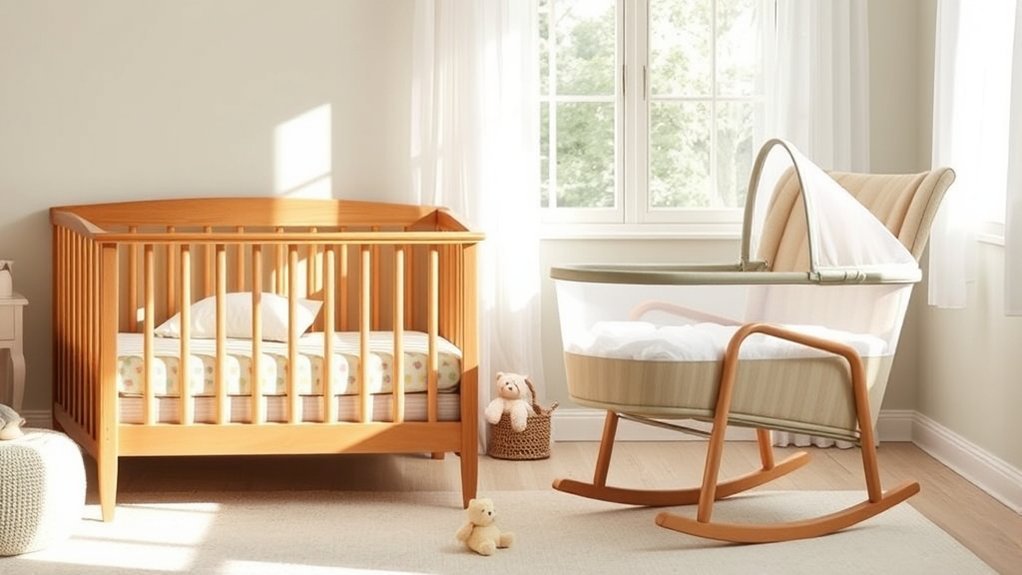
It’s interesting how many parents find themselves torn between choosing a crib or a bassinet, often at the same time their little one arrives. Each option has its distinct advantages and challenges, and your decision can greatly impact your baby’s comfort and your nightly routine. As you weigh your options, consider how factors like safety, space, and your lifestyle come into play. The choice may be simpler than you think, but there are essential details to explore.
Understanding Cribs: Features and Benefits
When you’re preparing for your little one’s arrival, understanding the features and benefits of cribs can make a significant difference in your decision-making.
Cribs come in various designs, catering to different styles and spaces, ensuring you find one that suits your home. A convertible crib, for instance, grows with your child, transforming into a toddler bed, which can save you money in the long run.
Additionally, consider crib accessories, like breathable mattress pads and stylish bedding, that enhance safety and comfort. These elements not only create a cozy environment but also reflect your personal aesthetic.
Ultimately, selecting the right crib is about fostering a nurturing space where your child can thrive, giving you peace of mind as a parent.
Exploring Bassinets: Features and Benefits
Bassinets offer a range of features that can truly simplify your parenting experience.
Their portability and space-saving design make them perfect for small homes or for moving from room to room.
Plus, with added safety features, you can rest easy knowing your little one is secure while they sleep.
Portability and Convenience
For many new parents, convenience and mobility are essential when it comes to choosing a sleeping solution for their little ones. Bassinets offer travel-friendly options and lightweight designs, making them perfect for on-the-go lifestyles. You can easily move them from room to room or take them along during family visits.
Here’s a quick comparison of key features:
| Feature | Bassinet |
|---|---|
| Portability | Easily transportable |
| Weight | Lightweight design |
| Setup | Quick and hassle-free |
| Storage | Compact when folded |
With a bassinet, you can keep your baby close while enjoying the freedom to navigate your home, or even travel. It’s all about making life a little easier during those busy early months.
Space-Saving Design
Finding the right sleeping solution often means considering how much space you have at home. If you’re living in a cozy apartment or a small room, bassinets offer perfect space-saving solutions.
Their compact design allows you to make the most of limited space without sacrificing comfort for your baby. Many modern bassinets come with features like foldable frames, enabling you to store them easily when not in use.
This flexibility means you can create a serene sleeping area without clutter. Plus, their stylish designs often blend seamlessly with your existing compact furniture.
Choosing a bassinet not only enhances your baby’s sleeping environment but also liberates your living space, allowing you to enjoy a more organized home.
Safety Features Explained
When it comes to your baby’s safety, understanding the features of a bassinet is essential. These compact sleeping spaces often come with unique safety features that guarantee peace of mind. Here’s a quick comparison to help you make an informed choice:
| Feature | Importance | Considerations |
|---|---|---|
| Safety Regulations | Adherence to standards | Look for CPSC certification |
| Baby Monitoring | Keeps track of your baby | Consider models with monitors |
| Firm Mattress | Reduces suffocation risk | Verify it fits snugly |
| Stable Base | Prevents tipping | Check for stability ratings |
Choosing a bassinet that meets safety regulations and provides effective baby monitoring can liberate you from worry, allowing you to enjoy those precious early moments.
Safety Standards: Cribs vs. Bassinets
While both cribs and bassinets are designed to cradle your little one, understanding their safety standards is essential for peace of mind.
Cribs must meet strict safety regulations, including rigorous product testing to guarantee sturdiness and prevent hazards. Look for cribs certified by organizations like the Consumer Product Safety Commission (CPSC).
Bassinets, while often more portable, also have specific safety standards, particularly regarding height and stability to prevent tipping.
Always check for recalls and verify that the model you choose meets current safety guidelines.
Space Considerations: Which Option Fits Your Home?
Choosing the right sleep space for your baby isn’t just about safety; it also involves considering the layout of your home.
Think about your room size and how furniture arrangement impacts your daily life. If you’re tight on space, a bassinet might fit better, allowing you to keep your baby close without overwhelming your room.
As your baby grows, you may need to adapt your choices to accommodate their changing needs.
Consider your family dynamics and lifestyle choices—do you have other children or a busy schedule? A crib could offer longevity, while a bassinet provides a cozy, temporary solution.
Ultimately, selecting the right option should harmonize with your home’s flow and your family’s comfort.
Portability: Ease of Moving Between Rooms
As you consider the best sleep option for your baby, portability becomes a key factor in ensuring convenience in your daily routine. Choosing portable solutions can enhance your experience as a parent.
Here are three benefits of opting for a portable bassinet over a crib:
- Room Mobility: You can easily move the bassinet from room to room, keeping your baby close during naps or nighttime feedings.
- Lightweight Design: Most bassinets are lightweight, making it simple to transport them to different areas of your home or even when traveling.
- Compact Storage: When not in use, many bassinets fold up, allowing for easy storage without taking up precious space.
These advantages give you the freedom to adapt your environment to your family’s needs, creating a more harmonious living space.
Duration of Use: Lifespan of Cribs vs. Bassinets
When it comes to the duration of use, understanding the lifespan of cribs versus bassinets can greatly impact your decision.
Bassinets typically last from birth until your baby is around 4 to 6 months old, making them a short-term solution. In contrast, cribs have a longer lifespan, often usable until your child is 2 to 3 years old or even longer with a convertible design.
These lifespan differences mean you’ll need to reflect on your baby’s growth and your family’s needs. Usage recommendations suggest that if you want something temporary for those early months, a bassinet works well.
However, if you seek a more long-term investment, a crib is the practical choice, providing longevity and adaptability as your child develops.
Cost Comparison: Budgeting for Your Baby’s Sleep Space
While both cribs and bassinets serve the essential purpose of providing a safe sleep space for your baby, their costs can vary considerably, impacting your budget.
Both cribs and bassinets provide safe sleep spaces for babies, but their price differences can significantly affect your budget.
Here’s a quick cost breakdown to help you with budgeting tips:
- Bassinets: Typically range from $50 to $200, offering a cozy, portable option for newborns.
- Cribs: Usually cost between $150 and $800, designed for long-term use as your child grows.
- Additional Costs: Don’t forget about mattresses, sheets, and safety accessories, which can add another $50 to $200.
Transitioning From Bassinet to Crib
As your baby grows, shifting from a bassinet to a crib can be a significant step in their development.
You’ll want to evaluate the ideal age range for this change, ensuring your little one’s safety during the process.
Additionally, sleep training techniques can help ease the adjustment for both you and your baby.
Ideal Age Range
Determining the ideal age range for altering your baby from a bassinet to a crib can feel overwhelming, but it’s essential for ensuring your child’s comfort and safety.
Typically, this change happens between 3 to 6 months, when your baby starts to outgrow the bassinet.
Here are three key factors to reflect on:
- Weight: If your baby exceeds the weight limit of the bassinet, it’s time to move.
- Mobility: Once your little one begins to roll over or push up, a crib offers more space for safe movement.
- Newborn Sleep Patterns: As your baby develops, they may need more room to stretch out for better infant comfort.
Embrace this change, and your baby will thrive in their new sleep environment!
Safety Considerations
Moving your baby from a bassinet to a crib brings new safety considerations to keep in mind. You’ll want to guarantee your crib meets current safety regulations to protect your little one. Look for cribs that have a sturdy frame, slats no wider than 2-3/8 inches apart, and no drop-side railings.
Here’s a quick comparison to help you focus on essential safety features:
| Feature | Bassinet |
|---|---|
| Stability | Lightweight & portable |
| Height | Lower than a crib |
| Safety Regulations | Less stringent |
Proper mattress fit is vital for infant safety—there should be no gaps. Shifting can be liberating, but safety should always remain a priority.
Sleep Training Techniques
When do you know it’s time to start sleep training your baby as you shift from a bassinet to a crib?
Look for signs of readiness, like your baby outgrowing the bassinet or showing a desire for more space. Creating a consistent nighttime routine is key to making this change smoother.
Here are three effective sleep training techniques:
- Gradual Change: Start by placing the crib in your room, allowing your baby to get used to it.
- Controlled Comforting: Let your baby cry for short intervals before comforting them, helping them learn to self-soothe.
- Consistent Sleep Schedule: Establish a regular bedtime to signal it’s time to sleep.
With patience and persistence, you’ll empower your baby to embrace this new sleeping space.
Personal Preference: Lifestyle and Parenting Style
Choosing between a crib and a bassinet often hinges on your personal lifestyle and parenting style.
Your parenting philosophy plays an essential role in this decision. If you value mobility and closeness, a bassinet might suit your lifestyle choices better, allowing you to keep your baby nearby during the early months.
On the other hand, if you prefer a more structured sleeping environment, a crib may align with your vision of parenting.
Consider how often you move around your home, your space constraints, and how you want to engage with your baby during sleep time.
Ultimately, it’s about finding the right balance that resonates with your needs while ensuring your baby’s comfort and safety.
Making the Final Decision: Factors to Consider
As you weigh your options, several important factors can guide your decision between a crib and a bassinet.
Consider the following:
- Sleep Environment: Bassinets offer a cozy, portable space, perfect for keeping your baby close during nighttime feeds. Cribs provide a more spacious area for your growing child.
- Parental Comfort: Think about how often you’ll need to attend to your baby. A bassinet can simplify nighttime care, while a crib may require more effort to reach.
- Longevity: Cribs are designed for long-term use, lasting through toddlerhood. Bassinets, while convenient, usually only serve for the first few months.
Ultimately, choose the option that best fits your lifestyle and promotes both your baby’s comfort and your own peace of mind.
Frequently Asked Questions
Can I Use a Crib for a Newborn Baby?
Yes, you can use a crib for your newborn. Just make certain it’s safe, with a firm mattress and no loose bedding. Your baby deserves a cozy, secure space for peaceful sleeping, so prioritize crib safety.
What Are the Best Mattress Options for Cribs and Bassinets?
Did you know that 70% of parents prioritize mattress firmness for their baby’s safety? Opt for firm, breathable materials like organic cotton or foam, ensuring your little one sleeps soundly while promoting healthy development.
How Do I Clean and Maintain a Crib or Bassinet?
To clean and maintain your crib or bassinet, use gentle cleaning techniques like warm soapy water, and check for loose parts regularly. These maintenance tips guarantee a safe, comfortable space for your little one.
Are There Specific Brands Known for Safety or Quality?
You’ll find brands like Graco and Chicco prioritize safety standards and quality. Comparing options helps guarantee you choose a reliable product, offering peace of mind for your little one’s comfort and safety.
Can a Bassinet Be Used When Traveling or on Vacation?
Absolutely, portable bassinets are perfect for traveling parents. Imagine setting up a lightweight bassinet in your hotel room, ensuring your baby sleeps safely and comfortably, so you can enjoy your vacation without worry.
Conclusion
In the end, choosing between a crib and a bassinet comes down to your family’s unique needs and lifestyle. Both options have their perks, but understanding their differences can help guarantee your baby sleeps comfortably and safely. Remember, it’s not just about the sleeping arrangement; it’s about fostering a nurturing environment. Trust your instincts, weigh the factors, and you’ll find the right fit for your little one and your home. Happy parenting!
