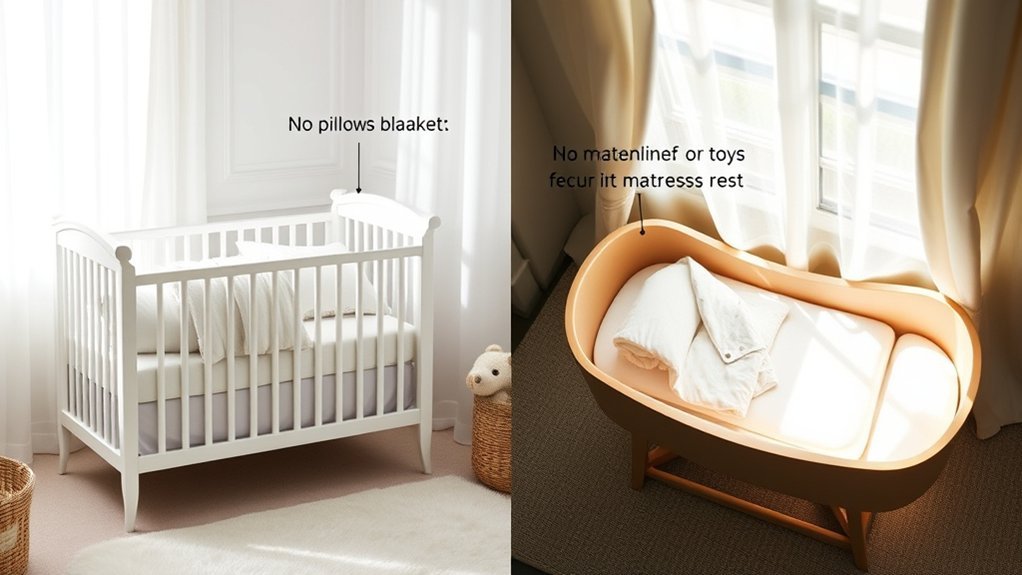
When it comes to choosing between a crib and a bassinet for your little one, safety and comfort are your top priorities. Each option has unique features that can impact your baby’s sleep environment. It’s essential to understand the pros and cons of both, especially when it comes to preventing potential hazards. The right choice can make a significant difference in your baby’s well-being, but how do you decide? Let’s explore the key considerations together.
Understanding Cribs: Features and Safety
When it comes to choosing a safe sleeping environment for your baby, understanding cribs is essential. Cribs are designed to provide a secure space for your little one, but not all cribs are created equal.
Consider crib materials carefully; solid wood options often offer durability and stability, while certain composites may be lighter but less sturdy.
Carefully selecting crib materials is crucial; solid wood provides durability and stability, while lighter composites may lack sturdiness.
Additionally, verify that any crib accessories you choose—like mattresses and bedding—meet safety standards and fit snugly to prevent gaps. Look for breathable materials to promote airflow.
Remember, your baby’s safety is paramount, so always check for recalls and comply with safety guidelines.
Understanding Bassinets: Features and Safety
When choosing a bassinet, it’s essential to understand its key safety features, size, and portability options.
You’ll want to take into account how these factors align with your lifestyle and your baby’s needs.
Additionally, knowing the recommended age range can help guarantee your little one has a safe sleeping environment.
Key Safety Features
While choosing a bassinet for your newborn, understanding its key safety features is essential for ensuring your baby’s well-being.
Look for a sturdy base and a flat sleeping surface to minimize the risk of accidents. Safety features like breathable mesh sides promote airflow, reducing overheating and suffocation hazards.
Check for a secure locking mechanism to prevent collapsing, ensuring stability during use. Design considerations include avoiding sharp edges and ensuring the mattress fits snugly without gaps.
Additionally, make sure the bassinet meets safety standards set by organizations like the Consumer Product Safety Commission.
Size and Portability
Choosing the right size and portability features for a bassinet can make a significant difference in your parenting experience.
Consider your space requirements carefully; a bassinet that fits comfortably in your bedroom or living area can enhance your daily routine. Look for options that are compact yet spacious enough for your baby to sleep comfortably.
Portability is another key factor. If you travel frequently or want to move the bassinet around your home, choose a lightweight design with easy-to-use carrying handles.
A foldable bassinet can offer added travel convenience, allowing you to maintain your baby’s sleeping environment wherever you go.
Recommended Age Range
Understanding the recommended age range for a bassinet is essential for ensuring your baby’s safety and comfort.
Typically, bassinets are suitable for infants up to 4-6 months, or until they reach 15-20 pounds. This aligns with important age recommendations, as babies grow rapidly during this period and begin reaching key developmental milestones like rolling over or sitting up.
Once your baby shows signs of mobility, it’s time to shift to a crib for their safety. By being aware of these age guidelines, you empower yourself to make informed decisions that support your child’s growth while maintaining a secure sleeping environment.
Trust your instincts, and choose what’s best for your family’s unique journey.
Pros of Using a Crib
When considering a crib for your baby, you’ll appreciate its long-term use, allowing your child to grow comfortably in a familiar space.
Cribs also meet stringent safety standards, providing peace of mind as your little one sleeps.
These factors make cribs a practical choice for many parents looking to invest in their child’s sleep environment.
Long-term Use
While many parents consider short-term options like bassinets, cribs offer significant advantages for long-term use that can ease your parenting journey.
Choosing a crib can provide you with several long-term benefits that align with both your emotional and financial considerations:
- Durability: Cribs are built to last, often accommodating your child from infancy through toddlerhood.
- Space: They offer ample sleeping space, allowing your child to grow comfortably.
- Versatility: Many cribs convert to toddler beds, extending their usability.
- Value: Investing in a crib can save money in the long run, as you won’t need to replace it frequently.
Safety Standards
Choosing a crib not only guarantees a cozy sleeping environment for your baby but also aligns with stringent safety standards designed to protect your little one.
Cribs are subject to rigorous safety regulations, ensuring they meet high-quality manufacturing guidelines. When you select a crib, look for product certifications from reputable organizations, which indicate that the crib has passed extensive safety tests.
This commitment to safety minimizes risks such as falls or entrapment, allowing you to rest easier knowing your baby is secure. Unlike some alternatives, cribs often provide a sturdy structure built to last, promoting a safe sleep space for years to come.
Ultimately, investing in a certified crib empowers you to provide a nurturing and liberating environment for your child.
Pros of Using a Bassinet
Using a bassinet can offer several benefits for both you and your newborn, especially in those early weeks when bonding and convenience are paramount.
Here are some key bassinet benefits to contemplate:
- Proximity: A bassinet allows your baby to sleep close to you, enhancing bonding and supporting sleep safety.
- Portability: Lightweight and easy to move, bassinets make nighttime feedings and soothing more manageable.
- Space-Saving: They occupy less space than cribs, fitting easily into smaller rooms while still providing a cozy sleep environment.
- Ease of Use: Many bassinets come with features like rocking or vibrating motions, which can help calm your baby and promote restful sleep.
With these advantages, a bassinet can be an excellent choice for your family’s early days together.
Cons of Using a Crib
Although bassinets offer numerous advantages, cribs also come with their own set of challenges that potential parents should consider.
One major issue is the amount of crib space, which can be overwhelming in smaller rooms. You might find it difficult to navigate your home with a bulky crib, especially during nighttime feedings.
The size of cribs can be cumbersome in small spaces, making nighttime feedings a challenge.
Additionally, ensuring infant comfort can be tricky; cribs often lack the cozy, snug feel of a bassinet. Some babies may feel lost in a larger crib, making it harder for them to settle down.
Finally, cribs can be a significant financial investment, and if you’re looking for a more flexible, space-saving option, a bassinet might be the better choice for your family’s needs.
Cons of Using a Bassinet
While bassinets are often praised for their portability and snug design, they do come with some drawbacks that parents should evaluate carefully.
Here are some bassinet limitations and safety concerns to reflect upon:
- Limited lifespan: Most bassinets are suitable for infants up to 3-4 months, which means you’ll need to shift to a crib soon after.
- Space restrictions: Their small size can limit movement, making it harder for your baby to stretch out as they grow.
- Stability issues: Some models may not be as sturdy, presenting potential safety concerns during restless nights.
- Lower weight capacity: Many bassinets can only support infants up to a certain weight, requiring you to monitor your baby’s growth closely.
Tips for Creating a Safe Sleep Environment
Creating a safe sleep environment for your baby is crucial, especially when considering the potential risks associated with sleep-related incidents.
Start by placing your baby on their back for every sleep, as this sleep position greatly reduces the risk of Sudden Infant Death Syndrome (SIDS).
Placing your baby on their back for sleep significantly lowers the risk of Sudden Infant Death Syndrome (SIDS).
Guarantee the sleeping area is free of soft bedding, pillows, and toys that could pose a suffocation hazard.
Maintain a comfortable room temperature, ideally between 68°F and 72°F, to prevent overheating.
Use a firm mattress with a fitted sheet and avoid any loose fabrics.
Regularly check on your baby while they sleep, and trust your instincts.
You’re creating a peaceful sanctuary that fosters safe, restful sleep for your little one.
Making the Right Choice for Your Family
How do you decide between a crib and a bassinet for your baby? Understanding your family preferences and sleep routines is essential in making the right choice. Here are some factors to take into account:
- Space: Assess the area available in your home. A bassinet is compact, while a crib requires more room.
- Longevity: Cribs typically last until your child is ready for a toddler bed, whereas bassinets are short-term solutions.
- Mobility: If you want to move your baby’s sleeping area frequently, a bassinet is easier to transport.
- Safety Standards: Confirm whichever option you choose meets the latest safety guidelines for your peace of mind.
Frequently Asked Questions
Can I Use a Crib and Bassinet Simultaneously?
Yes, you can use a crib and bassinet simultaneously. Crib placement allows for long-term sleep, while the bassinet benefits your newborn’s closeness and convenience during nighttime feedings, giving you flexibility and peace of mind.
How Long Can a Baby Stay in a Bassinet?
Your baby can stay in a bassinet until they reach the weight limit, usually around 15 to 30 pounds. Most infants shift after about three to six months, ensuring they sleep safely and comfortably.
What Is the Ideal Crib Mattress Firmness?
A firm mattress is essential for your baby’s safety and comfort. Look for materials that pass firmness testing, ensuring they provide the right support. A well-chosen mattress helps your little one sleep soundly and securely.
Are There Specific Safety Standards for Bassinets?
Yes, bassinets must meet specific safety standards, similar to crib standards. Always check for certifications and recalls. Prioritizing your baby’s safety guarantees peace of mind, allowing you to enjoy those precious moments together.
When Should I Transition My Baby From Bassinet to Crib?
You should shift your baby from the bassinet to the crib when you notice signs like rolling over or outgrowing the bassinet. Prioritize your baby’s comfort to guarantee a smooth and positive adjustment for both of you.
Conclusion
Choosing between a crib and a bassinet is like picking the perfect nest for your little one. Both offer unique benefits, but your decision should rest on your family’s needs and lifestyle. Remember, safety is the golden thread that ties your choice together. As you create that cozy sleep haven, trust your instincts and prioritize comfort. Whether it’s a sturdy crib or a snug bassinet, your love and care will always be the softest blanket surrounding your baby.
