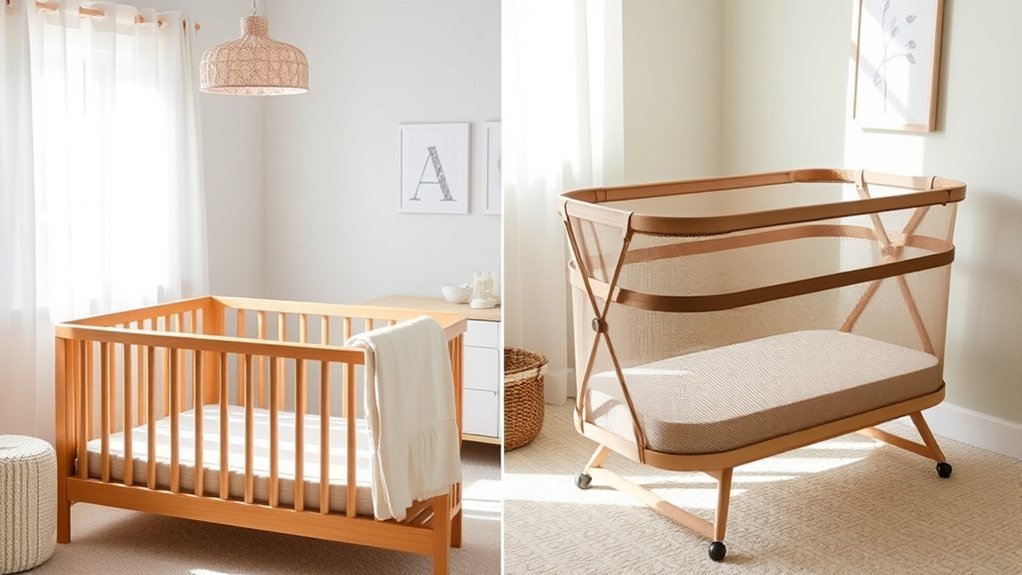
Choosing between a crib and a bassinet is like selecting the right foundation for a home—both serve a purpose, but each has its unique features. You might be wondering when the best time is to shift your baby from one to the other and what safety considerations to keep in mind. Understanding these factors can help you create a secure and comfortable sleep environment for your little one. Let’s explore what you need to know.
What Is the Primary Difference Between a Crib and a Bassinet?
When deciding between a crib and a bassinet, it’s important to understand their primary differences.
Cribs typically feature larger dimensions, providing ample space for your growing baby, while bassinets come in various styles, often designed for portability and cozy sleeping arrangements.
A crib usually measures around 28 by 52 inches, making it suitable for long-term use, whereas bassinets are smaller, usually around 30 inches in length, allowing them to fit snugly in your bedroom.
If you value versatility, a bassinet may be ideal for those early months, but if you’re looking for a permanent sleep solution, a crib offers longevity.
Ultimately, your choice should align with your space, lifestyle, and the comfort of your little one.
When Should I Transition My Baby From a Bassinet to a Crib?
How do you know it’s time to shift your baby from a bassinet to a crib? The change timing often depends on your baby’s size and developmental milestones.
If your little one can push up on their hands and knees or is nearing the weight limit of the bassinet, it’s likely time to make the switch. Additionally, consider your baby’s comfort; if they seem cramped or restless in the bassinet, a crib can provide the space they need to move freely.
Generally, many parents find this change happens between 3 to 6 months. Trust your instincts, and don’t hesitate to make the alteration when you feel your baby is ready for a more spacious sleeping environment.
What Are the Safety Considerations for Cribs and Bassinets?
When choosing between a crib and a bassinet, it’s vital to take into account safety standards and regulations.
You’ll want to guarantee that whichever option you choose meets current safety guidelines and is appropriate for your baby’s age and size.
Understanding these factors can help create a safe sleeping environment for your little one.
Safety Standards and Regulations
While choosing a crib or bassinet, it’s important to understand the safety standards and regulations that protect your little one. Familiarizing yourself with safety certifications and regulatory compliance helps guarantee you’re making informed choices.
| Feature | Crib Safety Standards |
|---|---|
| Safety Certifications | ASTM, CPSC |
| Regulations | Must meet federal guidelines |
| Mattress Support | Firm, flat, no gaps |
| Slat Spacing | No more than 2 3/8 inches |
| Age Limit | Varies; check manufacturer |
Recommended Age and Usage
Understanding the recommended age and usage for cribs and bassinets is essential for guaranteeing your baby’s safety and comfort.
Bassinets are great for newborns up to about three to four months, or until they can push up on their hands and knees. They cater to newborn preferences, providing a cozy, enclosed space that mimics the womb.
Cribs, on the other hand, are suitable from birth until your child is ready for a toddler bed, generally around two to three years old.
For sleep safety, verify your crib meets current safety standards, and never place soft bedding inside.
Which Option Is Better for Small Living Spaces?
When you’re maneuvering a small living space, choosing between a crib and a bassinet can feel challenging.
You’ll want to contemplate how each option impacts your space efficiency, along with their portability and available storage solutions.
Understanding these factors can help you make the best choice for your family’s needs.
Space Efficiency Comparison
If you’re maneuvering a small living space, choosing between a crib and a bassinet can greatly impact your comfort and convenience.
When considering space optimization, here’s a size comparison to help you decide:
- Bassinets: Typically compact, they fit snugly in tight corners or beside your bed, making nighttime access easy.
- Cribs: While they offer longevity, cribs can take up significant floor space, which may not be ideal in smaller rooms.
- Dual-purpose options: Some bassinets convert into playpens, maximizing utility without consuming extra space.
Ultimately, if you prioritize space efficiency, a bassinet may be the better choice for your small living environment.
It allows you to maintain a sense of freedom and comfort while ensuring your little one is close by.
Portability and Mobility
Choosing the right sleeping arrangement for your baby isn’t just about space; portability and mobility play a significant role, especially in small living spaces.
If you value travel convenience, a bassinet might be your best bet. It’s lightweight and easy to move from room to room, allowing you to keep your little one close without sacrificing your home’s layout. Weight considerations also matter; bassinets typically weigh less than cribs, making them ideal for cramped quarters.
Whether you’re on the go or just shifting between rooms, a bassinet offers the flexibility you need. On the other hand, cribs, while sturdier, can be cumbersome and less adaptable to your lifestyle.
Ultimately, your choice should reflect both your space constraints and your desire for mobility.
Storage Solutions Available
While both cribs and bassinets serve the essential purpose of providing a safe sleeping space for your baby, their storage capabilities differ greatly, especially in small living areas.
If you’re tight on space, consider these storage options:
- Baskets: Use stylish baskets to store baby essentials like diapers and clothes, keeping them within reach yet organized.
- Under-Crib Storage: Cribs often have space underneath where you can slide storage bins or boxes for toys and extra bedding.
- Wall Shelves: Install shelves above the crib or bassinet to hold books and small items, freeing up floor space.
How Long Can My Baby Use a Bassinet?
Most babies can comfortably use a bassinet for about three to six months, depending on their size and development. This bassinet lifespan is essential for ensuring your baby’s comfort and safety.
As your little one grows, they may outgrow the bassinet‘s dimensions or become more mobile, making a change necessary.
It’s important to monitor your baby’s weight and length, as these factors influence when you should consider moving them to a crib. If your baby shows signs of discomfort or feels cramped, it’s time to make the switch.
Ultimately, listening to your instincts and prioritizing your baby’s comfort will guide you in making the right decision for their sleeping arrangements.
Are There Any Specific Features to Look for in Cribs and Bassinets?
As your baby outgrows the bassinet, it’s important to contemplate the specific features that make cribs and bassinets safe and comfortable.
Prioritizing these features guarantees your little one sleeps soundly while giving you peace of mind.
- Safety Standards: Look for cribs and bassinets that meet or exceed safety regulations to protect your baby from potential hazards.
- Adjustable Mattress Height: Crib features like adjustable mattress heights allow you to lower the mattress as your baby grows, making it easier to lift them in and out safely.
- Portability: Bassinet features such as lightweight design and wheels can be incredibly helpful for moving it around your home.
Choosing wisely means your baby’s sleep environment will be cozy and secure, giving you that much-needed liberation.
Frequently Asked Questions
Can I Use a Crib and Bassinet Simultaneously?
Yes, you can use a crib and bassinet simultaneously. Just guarantee you prioritize crib safety for longer-term sleeping and enjoy the bassinet’s features for convenience, allowing your little one comfort and freedom in both spaces.
Are Bassinets Portable for Travel Purposes?
Bassinets are fantastic portable options for travel. They’re lightweight and easy to move, allowing you to create a cozy sleeping space for your baby wherever you go. Isn’t that freedom simply delightful?
What Age Can a Baby Sleep in a Crib?
Your baby can typically sleep in a crib around six months, when they’re ready for a sleep shift. Always prioritize crib safety, ensuring it meets standards to provide a secure and comfortable sleeping environment for your little one.
Do Cribs and Bassinets Come in Different Styles?
Yes, cribs and bassinets come in various styles. You can choose from modern designs for a sleek look or traditional styles that evoke nostalgia, ensuring your baby’s space reflects your personal taste and values.
How Much Do Cribs and Bassinets Typically Cost?
Cribs typically range from $100 to $1,000, while bassinets usually cost between $50 and $300. For budget considerations, both offer price comparison options, ensuring you can choose what fits your family’s needs and style.
Conclusion
Choosing between a crib and a bassinet can feel overwhelming, but understanding their differences and safety considerations helps. Think about your baby’s growth and your space needs as you weigh your options. Each choice offers unique benefits, but the right one will ultimately guarantee your little one sleeps soundly and safely. So, as you prepare for this important decision, ask yourself: are you ready to make the leap into a world of cozy comfort and sweet dreams?
