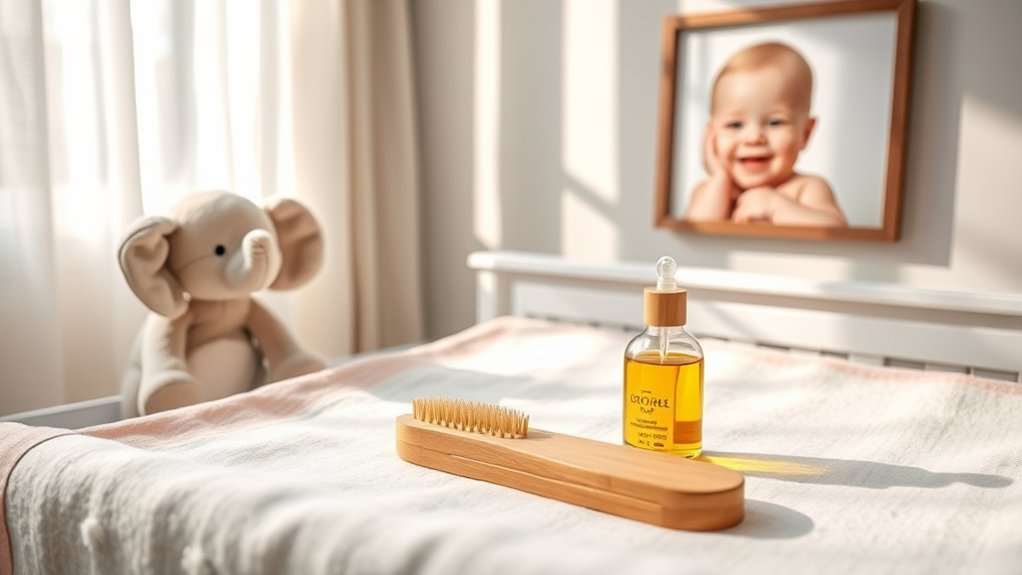
Cradle cap isn’t just a cosmetic issue; it’s a common condition affecting many infants and can be a source of discomfort. Understanding how to prevent it can make a significant difference in your baby’s well-being. By establishing a thoughtful washing routine and using the right products, you can help keep your baby’s scalp healthy. Let’s explore some effective strategies to guarantee your little one stays comfortable and happy.
Understanding Cradle Cap: What It Is and Why It Happens
Understanding cradle cap is essential for parents and caregivers, as it’s a common condition that affects many infants. This mild skin disorder, known medically as seborrheic dermatitis, typically appears as yellowish, greasy patches on the scalp. It can also manifest on the face and behind the ears. While the exact cause isn’t fully understood, it’s believed to result from overactive oil glands and the presence of yeast on the skin. Cradle cap isn’t contagious or harmful; it can be frustrating for you to see, but it usually resolves on its own. Recognizing the signs early can help you manage any concerns, ensuring your baby remains comfortable as their skin naturally heals over time.
Maintain a Regular Washing Routine
To effectively manage cradle cap, establishing a regular washing routine is essential. You’ll want to choose gentle cleansers that won’t irritate your baby’s sensitive skin while ensuring you wash their scalp frequently enough to prevent buildup. This consistent care can greatly improve the condition and comfort of your little one.
Choose Gentle Cleansers
When caring for cradle cap, choosing gentle cleansers is essential for maintaining a healthy scalp. Opt for mild, fragrance-free shampoos specifically designed for infants, as they’re less likely to irritate sensitive skin. Avoid harsh chemicals, sulfates, and alcohol-based products, which can strip natural oils and worsen dryness. You want to protect your baby’s delicate skin while effectively removing buildup. Look for cleansers that include ingredients like aloe vera or coconut oil, which soothe and nourish the scalp. When selecting a product, consider your child’s specific skin type and any sensitivities they might have. By prioritizing gentle cleansers, you’ll help prevent further irritation and support the healing process, making cradle cap care smoother for both you and your baby.
Frequency of Washing
Regularly washing your baby’s hair is essential for managing cradle cap effectively. Aim to wash your baby’s scalp two to three times a week, using a gentle cleanser. This routine helps remove excess oil and reduces the buildup of scales. If the cradle cap persists, consider increasing the frequency to every other day, but be cautious not to irritate the skin. Always monitor your baby’s scalp for signs of redness or discomfort. After washing, gently brush your baby’s hair with a soft brush to help loosen any flakes. Consistency is key; maintaining this routine not only keeps cradle cap at bay but also promotes overall scalp health. By caring for your baby’s scalp, you’re fostering comfort and confidence in their early development.
Choose the Right Shampoo for Your Baby
How do you choose the right shampoo for your baby’s delicate scalp? Start by looking for a mild, fragrance-free formula that’s specifically designed for infants. Ingredients matter; choose shampoos with natural components like chamomile or aloe vera to soothe and hydrate. Avoid products with sulfates, parabens, or artificial fragrances, as these can irritate sensitive skin.
Test the shampoo on a small area of your baby’s scalp first to verify there’s no allergic reaction. If your baby has cradle cap, consider a medicated shampoo recommended by your pediatrician. Remember, the goal is to maintain a gentle balance, keeping your baby’s scalp clean without causing irritation. Your careful selection can make a significant difference in managing cradle cap effectively.
Gentle Scalp Massage Techniques
Although cradle cap can be concerning, gentle scalp massage techniques can help alleviate symptoms while promoting a healthy scalp. Start by using your fingertips to apply light pressure in circular motions on your baby’s scalp. This technique not only helps to loosen any flakes but also stimulates blood flow, which can enhance scalp health. You might consider massaging for about five to ten minutes during bath time, making it a soothing experience. Always make sure your hands are clean and your nails are trimmed to avoid scratching. If your baby seems uncomfortable, adjust the pressure or stop. Remember, consistency is key; regular massages can support a healthier scalp and may reduce the severity of cradle cap over time.
Keep Your Baby’s Scalp Moisturized
To effectively manage cradle cap, it’s essential to keep your baby’s scalp moisturized. You can choose the right oils and incorporate gentle massage techniques into your daily routine. This consistent care helps soothe irritation and supports healthy skin.
Choose the Right Oils
When selecting oils to keep your baby’s scalp moisturized, it’s essential to choose options that are gentle yet effective. Look for natural oils like coconut oil, which has antifungal properties and penetrates the skin well. Jojoba oil is another excellent choice, mimicking natural sebum and helping to soften scales. Avoid mineral oils or those with strong fragrances, as they may irritate your baby’s sensitive skin. Always perform a patch test before applying any new oil to guarantee there’s no allergic reaction. Regular application of the right oils can help maintain moisture levels, reducing the risk of cradle cap. By prioritizing safe, nourishing oils, you’re taking a proactive step in caring for your little one’s scalp health.
Gentle Massage Techniques
Choosing the right oils is just the beginning of keeping your baby’s scalp moisturized. Once you’ve selected a suitable oil, gently massage it into your baby’s scalp. Use your fingertips, applying light pressure in circular motions. This technique not only helps distribute the oil evenly but also promotes blood circulation, which can aid in healthy scalp development. Focus on areas where flakes are more pronounced, but be careful to avoid any irritation. Aim for a few minutes of massage each time, creating a calming routine for both you and your baby. This nurturing practice can soothe discomfort and enhance the effectiveness of the oils, ultimately contributing to a healthier scalp. Remember, consistency is key.
Daily Moisturizing Routine
A consistent daily moisturizing routine is essential for keeping your baby’s scalp hydrated and healthy. Start by choosing a gentle, fragrance-free moisturizer or natural oil, such as coconut or olive oil. Apply a small amount to your fingertips and gently massage it into your baby’s scalp, focusing on any dry or flaky areas. This not only hydrates but also promotes blood circulation, which is beneficial for scalp health.
Make this part of your daily care, ideally after bath time when the scalp is still slightly damp. Consistency is key; regular moisturizing can greatly reduce the likelihood of cradle cap developing. Always monitor your baby’s skin for any signs of irritation, and consult a pediatrician if you have concerns.
Monitor for Allergens and Irritants
As you care for your baby’s cradle cap, it is essential to monitor for potential allergens and irritants that could exacerbate the condition. Common triggers include certain fabrics, laundry detergents, and even skincare products. Opt for fragrance-free and hypoallergenic options to minimize any adverse reactions. Pay attention to your baby’s environment; dust, pet dander, and pollen can also contribute to irritation. If you notice increased redness, itching, or flaking after introducing a new product or changing laundry detergent, it might be worth reevaluating your choices. Always consult your pediatrician if you’re unsure about specific products or potential allergens. By being vigilant and proactive, you can help create a soothing atmosphere that supports your baby’s skin health.
Frequently Asked Questions
Can Cradle Cap Affect My Baby’s Hair Growth?
Cradle cap typically doesn’t affect your baby’s hair growth long-term. While it may temporarily cause hair loss in affected areas, hair usually grows back once the condition resolves. Regular care can help manage and prevent recurrence.
Is Cradle Cap Contagious to Other Children?
No, cradle cap isn’t contagious. Curiously, about 50% of infants experience it. You can rest easy knowing your child won’t spread it to others, but consult your pediatrician if you have concerns.
How Long Does Cradle Cap Usually Last?
Cradle cap usually lasts a few weeks to a couple of months. Most infants outgrow it by their first birthday. Regular gentle washing can help, but don’t worry; it’s common and typically resolves on its own.
Can I Use Adult Shampoos on My Baby?
No, you shouldn’t use adult shampoos on your baby. They contain harsh chemicals that can irritate delicate skin. Instead, opt for gentle, baby-specific shampoos designed to cleanse and nourish your infant’s sensitive scalp safely.
When Should I Consult a Pediatrician About Cradle Cap?
You should consult a pediatrician if cradle cap persists beyond a few weeks, appears infected, or causes significant discomfort for your baby. Early intervention can help manage symptoms and guarantee your baby’s healthy skin.
Conclusion
In conclusion, caring for your baby’s scalp is essential to prevent cradle cap. By establishing a gentle washing routine and moisturizing regularly, you can greatly reduce the likelihood of flakes. Did you know that cradle cap affects nearly 50% of infants at some point during their first year? With early recognition and consistent care, you can help guarantee your baby’s comfort and promote healthy skin. Remember, a little effort goes a long way in maintaining their well-being.
