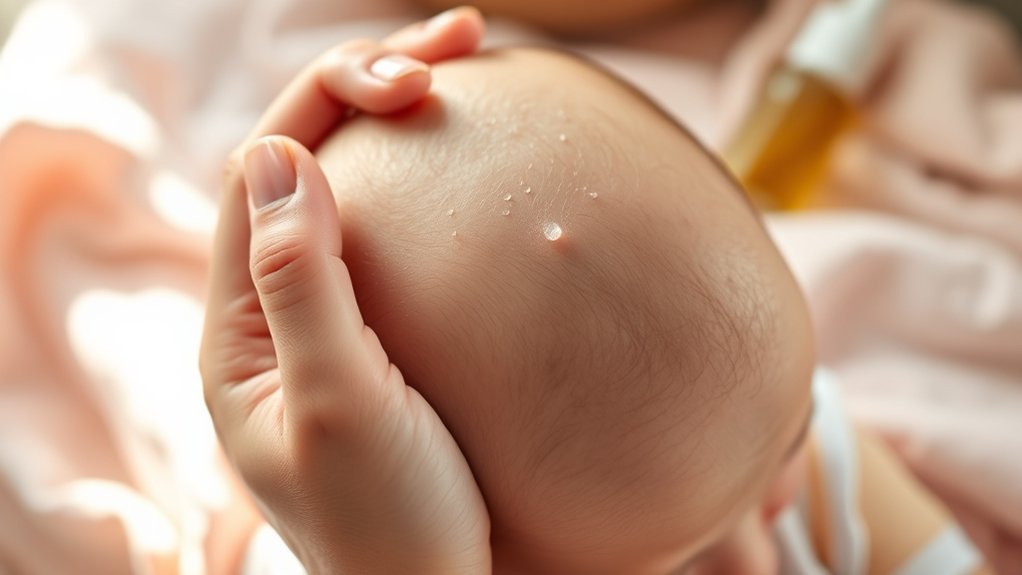
Cradle cap, or seborrheic dermatitis, is a common condition many infants experience, often causing concern for new parents. Understanding how to recognize and treat it is essential for your baby’s comfort. You might wonder about the effectiveness of various treatments or when it’s time to seek professional advice. Let’s explore these frequently asked questions to help you navigate this condition with confidence.
What Is Cradle Cap and What Causes It?
Cradle cap, medically known as seborrheic dermatitis, is a common skin condition that affects many infants during their first few months of life. It appears as yellowish, scaly patches on your baby’s scalp, and it can sometimes extend to other areas like the face or behind the ears. The exact cause isn’t entirely clear, but it’s believed to be linked to overactive sebaceous glands and the presence of a yeast called Malassezia. Hormonal changes passed from you to your baby may also play a role. While cradle cap isn’t harmful and usually resolves on its own, it can be concerning. Understanding its nature helps you approach care with confidence and compassion, ensuring your baby’s comfort during this phase.
How Can I Identify Cradle Cap in My Baby?
To identify cradle cap in your baby, look for yellow or brown crusty patches on the scalp, which can also appear on other areas like the face or behind the ears. You might notice flaking or scaling skin that doesn’t seem to bother your baby. It’s important to distinguish these symptoms from other skin conditions like eczema or psoriasis, so keep an eye on any changes.
Common Symptoms to Observe
Identifying cradle cap in your baby can be straightforward when you know what symptoms to look for. Typically, you’ll notice greasy, yellowish or brown patches on your baby’s scalp. These patches may appear scaly or crusty and can be present in other areas, like the face or neck. It’s common for cradle cap to cause mild redness but rarely leads to itching or discomfort for your baby. You might also see some hair loss in the affected areas, but this is usually temporary. Pay attention to the texture of the patches; they often feel oily. If these symptoms arise, it’s a good idea to consult your pediatrician for further guidance on care and treatment.
Distinguishing From Other Conditions
While you may notice similar symptoms in various skin conditions, recognizing cradle cap requires careful observation of specific characteristics. To help you identify cradle cap, look for these key features:
- Yellowish Scales: You’ll often see greasy, yellowish scales on your baby’s scalp.
- Crusty Patches: These scales can form thick, crusty patches that may appear red or inflamed.
- Location: Cradle cap primarily affects the scalp but can also occur on the face, ears, or neck.
- Non-Itchy: Unlike eczema, cradle cap typically doesn’t cause itching or discomfort for your baby.
If you notice these signs, you can confidently identify cradle cap. However, if symptoms persist or worsen, consult a pediatrician for further evaluation.
Is Cradle Cap Contagious?
You might worry about whether cradle cap is contagious, but rest assured, it’s not. Understanding its causes can help dispel common myths and ease your concerns. Let’s explore how to care for your baby’s scalp while preventing its recurrence.
Understanding Cradle Cap
Cradle cap, or seborrheic dermatitis in infants, often raises concerns among parents, especially regarding its contagiousness. It’s important to clarify that cradle cap isn’t contagious. Understanding the condition can help ease your worries. Here are key points to take into account:
- Common Condition: Cradle cap affects many infants, typically appearing in the first few months.
- Causes: It’s believed to be linked to overactive sebaceous glands and may be influenced by hormones from the mother.
- Symptoms: Look for yellowish, greasy scales on the scalp, which can sometimes spread to other areas.
- Treatment: Regular washing with mild shampoo can help manage the symptoms effectively.
Transmission Myths Debunked
Understanding cradle cap can alleviate many concerns, including misconceptions about its transmission. You might worry that cradle cap is contagious, but rest assured, it’s not. This condition is common among infants and is caused by an overproduction of skin oils, not by germs or infections.
Here’s a quick breakdown of common myths:
| Myth | Truth | Impact |
|---|---|---|
| Cradle cap spreads easily | It’s not contagious | No need for isolation |
| It’s caused by poor hygiene | It’s a natural skin condition | Normal developmental phase |
| Only affects dirty babies | Can occur in any infant | No correlation with cleanliness |
| It’s linked to allergies | No evidence supports this | Not related to allergies |
| Can be passed to siblings | Totally non-transmissible | Safe for family contact |
Understanding these myths can help ease your concerns and promote a more supportive environment for your little one.
Prevention and Care Tips
While cradle cap isn’t contagious, taking proactive steps can help manage and prevent its occurrence. Here are some effective tips for prevention and care:
- Regular Shampooing: Gently wash your baby’s scalp with a mild shampoo to reduce oil buildup.
- Soft Brush: Use a soft-bristled brush to gently loosen scales after washing, promoting healthy skin.
- Moisturize: Apply a small amount of baby oil or coconut oil to the scalp to keep it hydrated.
- Avoid Harsh Products: Steer clear of strong soaps or shampoos that may irritate sensitive skin.
What Are the Best Methods for Treating Cradle Cap?
Treating cradle cap effectively involves several practical methods that can help alleviate symptoms and promote healthy skin. Start by gently massaging your baby’s scalp with a soft brush or cloth to loosen flakes. You can then apply a mild baby oil or mineral oil, allowing it to sit for about 15 minutes before washing it out with a gentle baby shampoo. This can help hydrate the scalp and ease flakiness. Regularly bathing your baby helps prevent buildup, but avoid over-washing, which can irritate the skin. If symptoms persist, consult your pediatrician, as they may recommend other treatments or medications. Remember, patience is key, as cradle cap typically resolves on its own over time.
Should I Use Special Shampoos for Cradle Cap?
Using special shampoos for cradle cap can be beneficial for many babies experiencing this common condition. These shampoos often contain ingredients designed to help manage and reduce the buildup of flakes on your baby’s scalp. Here’s what to evaluate when choosing a shampoo:
- Active Ingredients: Look for shampoos with natural oils, salicylic acid, or zinc pyrithione to help soothe the scalp.
- Gentleness: Choose a formula that’s free from harsh chemicals to avoid irritating your baby’s sensitive skin.
- Frequency: Consult with your pediatrician for recommendations on how often to use special shampoos.
- Moisturizing: A good shampoo should also hydrate the scalp, promoting healing and comfort.
Always monitor your baby’s response to any new product.
How Often Should I Wash My Baby’s Hair if They Have Cradle Cap?
How often should you wash your baby’s hair if they have cradle cap? Ideally, you should wash their hair two to three times a week. This frequency helps remove excess oil and buildup without irritating their sensitive scalp. If you notice the cradle cap worsening, you might increase washing to every other day, using a gentle baby shampoo.
| Washing Frequency | Benefits |
|---|---|
| 2-3 times a week | Removes buildup |
| Every other day | Eases irritation |
| Weekly | Maintains scalp health |
| As needed | Adjusts to severity |
Are There Any Home Remedies for Cradle Cap?
What simple home remedies can help alleviate cradle cap? You can try several effective methods to soothe your baby’s scalp. Here are four options to evaluate:
- Gentle Massage with Oil: Use a small amount of coconut or olive oil. Massage it into your baby’s scalp to loosen the flakes.
- Warm Water Rinse: After applying oil, gently wash your baby’s hair with warm water and a mild shampoo to remove loosened scales.
- Soft Brush: After washing, use a soft baby brush to gently brush away the flakes.
- Oatmeal Bath: Adding colloidal oatmeal to your baby’s bath can soothe their skin and help reduce irritation.
These remedies can provide comfort and support your baby’s healing process. Always observe your baby’s skin for any adverse reactions.
When Should I Consult a Doctor About Cradle Cap?
When should you consider consulting a doctor about your baby’s cradle cap? If home remedies haven’t improved your baby’s condition after a few weeks, it’s time to seek professional advice. Additionally, if you notice redness, swelling, or a foul odor, these could indicate an infection requiring medical attention. Pay attention to any signs of discomfort your baby may show, such as excessive fussiness or scratching, as this can suggest the condition is more severe. If cradle cap spreads beyond the scalp to other areas, like the face or neck, consult your pediatrician. Remember, while cradle cap is usually harmless, your doctor can provide reassurance and recommend suitable treatments tailored to your baby’s specific needs.
Frequently Asked Questions
Can Cradle Cap Affect Infants Older Than One Year?
Yes, cradle cap can affect infants older than one year. While it’s more common in younger babies, some toddlers may still experience it. If you notice persistent symptoms, consider consulting a pediatrician for guidance.
Does Cradle Cap Cause Discomfort or Itching for My Baby?
Cradle cap typically doesn’t cause discomfort or itching for your baby. In fact, studies show about 80% of infants experience it without any pain. It’s mostly a cosmetic issue that usually resolves on its own.
Are There Any Long-Term Effects of Cradle Cap?
Cradle cap typically doesn’t cause long-term effects. Most infants outgrow it without complications. However, if it persists or worsens, consult your pediatrician to rule out other skin conditions and guarantee your baby’s comfort and health.
Can I Prevent Cradle Cap From Occurring?
While you can’t completely prevent cradle cap, maintaining regular scalp hygiene helps. Gently washing your baby’s head with mild shampoo and brushing their hair can reduce oil buildup, fostering a healthier environment for their scalp.
How Can I Tell if Cradle Cap Is Getting Worse?
You can tell cradle cap’s worsening by observing increased redness, swelling, or crusting on your baby’s scalp. If you notice these signs, it’s best to consult a pediatrician for appropriate evaluation and care.
Conclusion
In caring for your baby’s cradle cap, think of it as nurturing a small garden; with gentle attention and the right tools, you can help it flourish. Just like a garden needs consistent care but not overwatering, your baby’s scalp benefits from regular, gentle cleansing without excessive product use. If you notice any signs of irritation or infection, don’t hesitate to consult a doctor. Remember, your vigilance and compassion are key in helping your little one heal comfortably.
