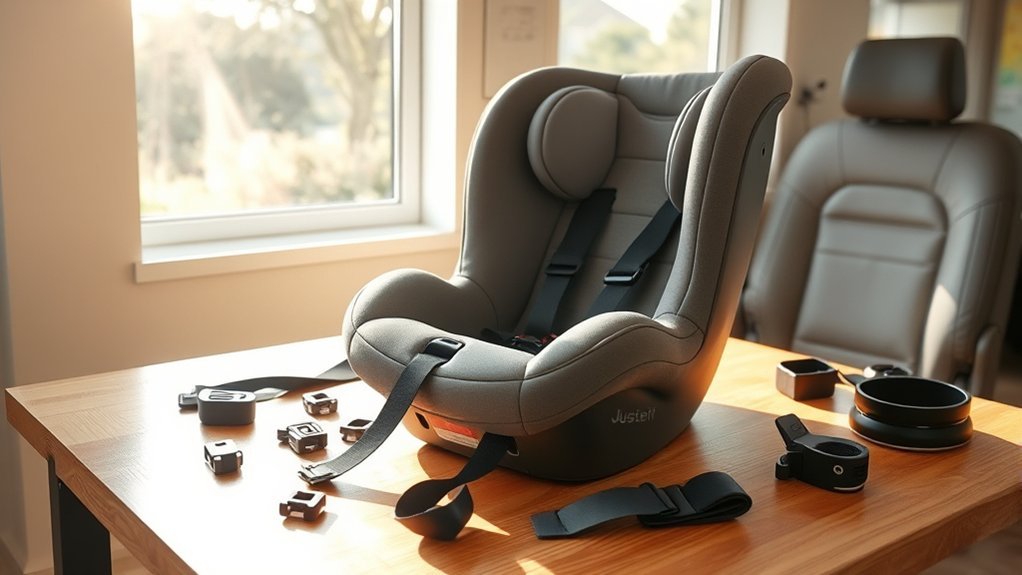
When it comes to car seat compatibility, you need to know that not all car seats fit every vehicle. Understanding the nuances of different car seat types and their installation methods can save you time and frustration. It’s essential to check both your vehicle’s manual and the car seat’s compatibility list. But what do you really need to evaluate when ensuring a safe fit? Let’s explore the key factors that could impact your decision.
Understanding Car Seat Types
When you’re choosing a car seat, it’s essential to understand the different types available, as each serves a specific purpose based on your child’s age and size.
There are three primary categories: rear-facing seats, forward-facing seats, and booster seats. Rear-facing seats are designed for infants and toddlers, providing the safest positioning during a collision.
Once your child outgrows this, you’ll shift to a forward-facing seat, which offers more support and safety features.
Finally, booster seats elevate your child to guarantee proper seat belt placement as they grow.
Knowing these distinctions helps you make informed choices that prioritize safety, making sure your child travels securely and comfortably on every journey.
Empower yourself with this knowledge for a liberated approach to car seat safety.
How to Ensure a Proper Fit
To guarantee a proper fit for your car seat, start by checking its compatibility with your vehicle.
Follow installation guidelines carefully, as each seat may have specific requirements.
Finally, don’t overlook the importance of adjusting the harness to secure your child safely.
Vehicle Compatibility Check
Ensuring your car seat fits properly in your vehicle is essential for your child’s safety. Start by checking your vehicle’s owner manual for guidance on car seat installation.
Pay attention to the specific car seat model guidelines as well. Use the car seat’s compatibility list to verify it fits your make and model.
Next, assess your vehicle’s seat structure; it should have a flat surface for ideal support. If you’re unsure, visit a local car seat inspection station, where certified technicians can help.
Remember, a proper fit minimizes movement and enhances protection during travel.
Finally, always test the fit by attempting to move the seat once installed; it should remain secure without excessive wiggle.
Installation Guidelines Followed
A proper installation is essential for your child’s safety in the car seat. To guarantee a secure fit, follow these guidelines:
| Step | Action | Tip |
|---|---|---|
| Read Manual | Always start with the manual. | Familiarize yourself with the specific model. |
| Position Seat | Place the seat at the correct angle. | Use a level if needed. |
| Secure Base | Use LATCH or seat belt. | Confirm tightness with no more than one inch of movement. |
| Test Stability | Shake the seat after installation. | It should not move considerably. |
| Check Harness | Confirm your child fits snugly. | Adjust straps for a secure hold. |
Harness Adjustment Importance
Properly adjusting your child’s harness is essential for their safety during car rides, as a secure fit minimizes the risk of injury in the event of an accident.
To guarantee a proper fit, follow these key steps:
- Check the shoulder straps: They should lie flat against your child’s shoulders, not twisted or bunched.
- Adjust the harness height: The straps should be at or just above your child’s shoulders for rear-facing seats, and at or just below for forward-facing.
- Test the tightness: You should only be able to fit one finger between the harness and your child’s collarbone.
Key Vehicle Features to Consider
When choosing a car seat, it’s vital to evaluate several key vehicle features that can impact safety and compatibility.
First, check your vehicle’s back seat space. A spacious area allows for proper installation and comfort for your child.
Ensure your vehicle’s back seat offers ample space for safe and comfortable car seat installation.
Next, consider the seat’s anchors and seat belts. Confirm your car has the necessary LATCH system or compatible seat belts for secure attachment.
Additionally, think about the seat depth and height; a lower seat can make it easier to lift your child in and out.
Finally, assess the vehicle’s overall safety ratings, as they play an important role in protecting your little one.
Installation Methods Explained
Understanding how to install a car seat is essential for ensuring your child’s safety during every car ride.
You have a couple of primary installation methods:
- LATCH System: This uses built-in anchors and straps to secure the seat, making it easier and often quicker to install.
- Seat Belt Installation: This method involves threading the vehicle’s seat belt through the car seat’s designated path, providing a secure fit.
- Check for Movement: After installation, always check for movement. A properly installed car seat shouldn’t move more than an inch at the base.
Weight and Height Limits
When selecting a car seat, understanding weight and height limits is essential for your child’s safety.
Infant car seat limits, convertible car seat guidelines, and booster seat specifications all play a significant role in ensuring proper fit and protection.
Infant Car Seat Limits
How do you know when it’s time to change your baby from an infant car seat? Pay close attention to your baby’s growth. Most infant car seats have specific weight and height limits you shouldn’t exceed.
Here are key indicators:
- Weight: Often, the limit is around 30-35 pounds.
- Height: Your baby’s head should be at least one inch below the top of the car seat.
- Age: Generally, infants should change by 12 months, but always consider their size.
When your baby reaches these limits, it’s essential for their safety to move to a convertible car seat.
This change allows for continued protection as they grow, ensuring they’re secure on every journey.
Convertible Car Seat Guidelines
As your child shifts to a convertible car seat, it’s important to be aware of the specific weight and height limits that guarantee their safety.
Generally, convertible car seats accommodate children weighing between 5 to 65 pounds, depending on the model. For height, many seats can accommodate kids up to 49 inches tall.
Always check the manufacturer’s guidelines, as these limits can vary. It’s vital to position the harness correctly to make certain your child is secure.
When your child exceeds these limits, it’s time to upgrade to a booster seat. Staying informed about these specifications empowers you to make the best choices for your child’s safety, ensuring they travel comfortably and securely on every journey.
Booster Seat Specifications
Once your child outgrows their convertible car seat, it’s time to contemplate booster seats, which provide the next level of safety in your child’s journey.
Understanding the specifications is essential for your child’s safety and comfort.
Booster seats typically cater to specific weight and height limits, ensuring proper positioning of the seat belt.
Check these guidelines:
- Weight Limit: Usually ranges from 40 to 100 pounds.
- Height Limit: Often accommodates children from 40 to 57 inches tall.
- Age Recommendation: Generally suitable for children aged 4 to 12 years.
Always refer to the manufacturer’s manual for precise details.
Knowing these specifications empowers you to make informed decisions, fostering both safety and liberation during your travels together.
Safety Standards and Regulations
When it comes to choosing a car seat, understanding safety standards and regulations is vital for protecting your child during travel.
Car seats should meet federal safety standards outlined by the National Highway Traffic Safety Administration (NHTSA). Look for labels indicating compliance with these standards. Additionally, check for testing certifications from independent organizations, which can provide extra confidence of safety performance.
It’s important to verify that the car seat you select is appropriate for your child’s age, weight, and height. Regularly review any recalls or safety alerts related to your car seat model.
Compatibility With Different Vehicle Models
When choosing a car seat, it’s essential to take into account the specifications of your vehicle model.
Each car has unique dimensions and safety features that can affect installation and compliance with safety standards.
Understanding these factors will help you avoid potential installation issues and guarantee your child’s safety on the road.
Vehicle Model Specifications
Understanding vehicle model specifications is essential for guaranteeing that your car seat fits correctly and safely in your vehicle.
Each vehicle has unique dimensions and features that can influence compatibility. Here are some key aspects to reflect on:
- Seat Dimensions: Verify the car seat fits within your vehicle’s seat width and depth.
- Anchorage Points: Look for LATCH or ISOFIX systems specific to your model for secure installation.
- Seat Belt Configuration: Check if the seat belt design aligns with the car seat’s requirements for proper restraint.
Safety Standards Compliance
Verifying your car seat meets safety standards is essential for compatibility with various vehicle models. When choosing a car seat, check for compliance with the Federal Motor Vehicle Safety Standards (FMVSS) or equivalent regulations in your region.
These standards guarantee that the seat provides adequate protection during a crash, regardless of the vehicle it’s used in. Different vehicle models may have unique safety features or configurations, so confirm that your selected car seat is tested and rated for those specifics.
Look for labels indicating compliance and consider any additional safety certifications. By prioritizing safety standards, you empower yourself to make informed choices that protect your child across different vehicles, enhancing both safety and peace of mind.
Installation Compatibility Issues
Many parents encounter installation compatibility issues when fitting a car seat into different vehicle models. Each vehicle has unique seat shapes, anchor placements, and belt systems, making it vital to guarantee a proper fit.
Here are some common challenges you might face:
- Narrow seatbacks that limit space for secure installation.
- Incompatible latch systems that don’t align with your car seat.
- Variable seat angles that affect the safety and comfort of your child.
To overcome these issues, always consult your vehicle’s manual alongside the car seat instructions.
Consider using a car seat technician for guidance.
Prioritize your child’s safety by confirming your car seat is installed correctly, regardless of your vehicle model.
Common Misconceptions
While some parents believe that all car seats fit any vehicle, this misconception can lead to serious safety risks. It’s crucial to understand that car seat compatibility varies by model and manufacturer. Below is a table that outlines common misconceptions regarding car seat compatibility:
| Misconception | Reality | Safety Impact |
|---|---|---|
| All car seats fit all vehicles | Different vehicles have unique designs | Increased risk of improper use |
| Expensive seats are always safer | Price doesn’t guarantee safety | Misplaced trust in cost |
| Older seats are still safe | Expiration dates matter | Risk of malfunction in crashes |
| Installation is the same for all | Each seat has specific instructions | Incorrect installation can be fatal |
| Any seat belt can secure a car seat | Only specific belts are approved | Higher likelihood of injury |
Stay informed to promote your child’s safety on the road.
Transitioning Between Car Seat Stages
Understanding car seat compatibility is just the beginning; knowing when and how to shift between car seat stages is equally important for your child’s safety.
Shifting at the right time guarantees your little one is protected as they grow. Here are key points to take into account:
Shifting at the right time ensures your child’s safety as they grow and develop.
- Weight and Height Limits: Check car seat specifications to determine when your child outgrows their current seat.
- Developmental Milestones: Confirm your child’s ability to sit upright and buckle themselves is aligned with the new seat requirements.
- Manufacturer Guidelines: Always follow the manufacturer’s recommendations for shift to maintain peak safety.
Resources for Parents and Caregivers
How can you guarantee you’re making the best choices for your child’s car seat? Start by accessing reliable resources. Websites like the National Highway Traffic Safety Administration (NHTSA) provide extensive guidelines on car seat safety, installation, and compatibility.
Local organizations often host car seat inspection events, where certified technicians can help you ensure proper installation. Don’t overlook community forums or parenting groups; they can offer personal insights and recommendations based on real experiences.
Additionally, consider consulting your pediatrician for tailored advice. Always read the manufacturer’s manual to understand specific requirements and weight limits. Empower yourself with knowledge; the right resources can lead you to make informed, liberating choices for your child’s safety on the road.
Frequently Asked Questions
Can I Use a Car Seat That’s Expired?
No, you shouldn’t use an expired car seat. Safety standards change, materials degrade, and potential recalls could affect performance. It’s best to invest in a current, certified car seat to guarantee your child’s protection.
What Should I Do if My Car Seat Is Recalled?
If your car seat’s recalled, stop using it immediately. Contact the manufacturer for return instructions and replacement options. Picture peace of mind as you guarantee your child’s safety with a reliable, updated car seat.
Are Second-Hand Car Seats Safe to Use?
Second-hand car seats can be safe if they haven’t been in an accident, are less than six years old, and include all parts. Always check for recalls and verify they’re properly installed for your child’s safety.
How Long Should a Child Remain in a Booster Seat?
Your child should remain in a booster seat until they’re about 4 feet 9 inches tall, typically between 8 and 12 years old. Always guarantee the seatbelt fits properly for maximum safety during travel.
Can I Install a Car Seat in the Front Seat?
You shouldn’t install a car seat in the front seat. Airbags can pose serious risks to children. Always place car seats in the back for maximum safety, ensuring your child travels securely on every journey.
Conclusion
In the world of car seat safety, understanding compatibility is essential. While some parents may rely solely on brand reputation, others may overlook the importance of vehicle specifications. Balancing these factors can be the difference between a secure ride and a hazardous journey. By prioritizing both the car seat’s requirements and your vehicle’s features, you guarantee your child’s safety. Remember, a perfect fit isn’t just about convenience; it’s about protection. Take the time to get it right.
