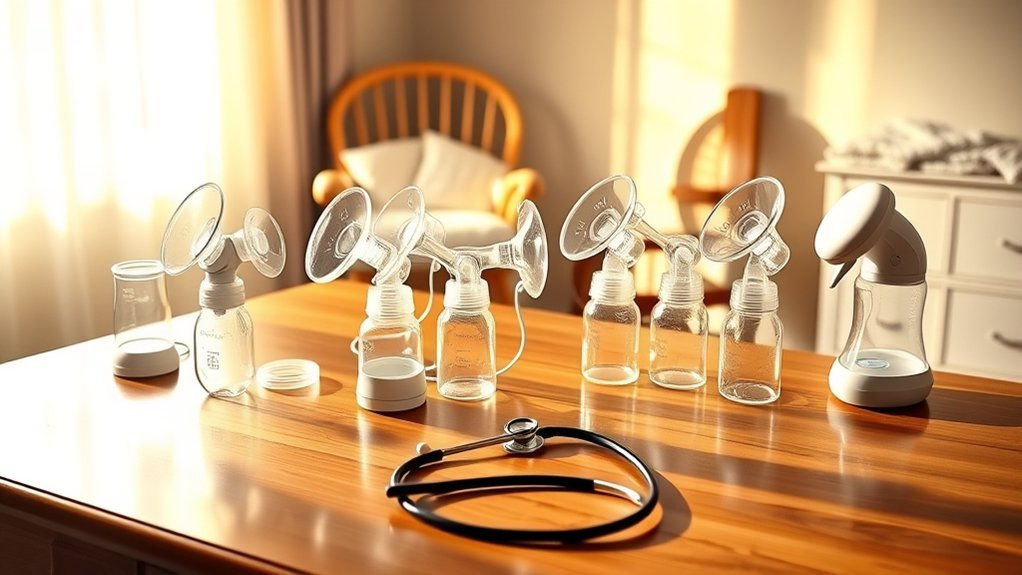
It’s a coincidence that many new parents find themselves overwhelmed by the choices of breast pumps available. Choosing the right pump is just the beginning; knowing when to seek help is equally essential. If you’re feeling uncertain about what’s normal or experiencing discomfort, you’re not alone. Understanding the signs that indicate it’s time to call a doctor can make your breastfeeding journey smoother and more successful. Let’s explore these important indicators together.
Understanding Breast Pumps: An Overview
When you’re traversing the world of breastfeeding, understanding breast pumps can make a big difference in your experience.
Breast pumps come in various types, each designed to meet different needs. You’ll typically encounter manual pumps, which require you to create suction by hand, and electric pumps, which automate the process for you. Knowing the differences helps you choose what fits your lifestyle best.
Breast pumps vary in type, with manual and electric options to suit your unique needs and lifestyle.
For instance, an electric pump can save time if you’re frequently on the go, while a manual pump might be ideal for occasional use.
Whichever you choose, remember that using a breast pump can help you maintain your milk supply, relieve discomfort, and provide flexibility in your feeding routine.
You’re not alone on this journey!
Manual Breast Pumps: Pros and Cons
While you might reflect on the convenience of electric pumps, manual breast pumps offer unique advantages that can be quite appealing.
These pumps are perfect for occasional use, and you’ll find they can fit easily into your life. Here are some pros and cons to weigh:
- Pros:
- Portable and lightweight, making them easy to carry.
- Generally more affordable than electric options.
- Allows you to have control over suction strength and speed.
- Requires no power source, so you can use them anywhere.
- Cons:
- Can be more time-consuming than electric pumps.
- May require more physical effort during pumping.
- Limited milk output for some users.
- Mightn’t be as comfortable for extended use.
Using a manual pump can be a great choice for many breastfeeding mothers!
Electric Breast Pumps: Types and Features
If you’re looking for efficiency and ease in your pumping routine, electric breast pumps might be the right fit for you.
These pumps come in two main types: single and double. A single pump lets you express milk from one breast at a time, while a double pump saves time by allowing you to pump both breasts simultaneously.
Many electric pumps feature adjustable suction levels, so you can customize the experience to suit your comfort. Some also include a built-in timer and a rechargeable battery, making them convenient for on-the-go moms.
Many electric pumps offer customizable suction levels and convenient features like timers and rechargeable batteries for busy moms.
Remember, choosing the right pump can support your breastfeeding journey, so don’t hesitate to explore your options and find what works best for you.
You’ve got this!
Hospital-Grade Breast Pumps: When Are They Needed?
Ever wondered when a hospital-grade breast pump might be necessary?
These pumps are designed for frequent use and can be a game-changer in specific situations. You might consider one if:
- You’re experiencing low milk supply and need to encourage production.
- Your baby is in the NICU and requires pumped milk.
- You’re breastfeeding multiples and need to pump efficiently.
- You’re returning to work and need a reliable, high-output pump.
Hospital-grade pumps are powerful and can often help you establish and maintain your breastfeeding journey.
Hand Expression: An Alternative to Pumping
Hand expression can be a valuable alternative to pumping, especially when you need a quick and effective way to collect breast milk. It’s a simple technique that allows you to express milk using your hands, giving you control over the process.
Start by washing your hands and finding a comfortable spot. Gently massage your breast to stimulate milk flow, then use your fingers to cup your breast and compress it.
This method not only helps you gather milk but also promotes bonding with your baby. Plus, it’s convenient—you can do it anywhere without needing equipment.
Don’t be discouraged if you don’t get much at first; practice makes perfect. Embrace this natural approach and trust your body’s ability to nourish your little one.
Signs You Might Need Professional Help
Recognizing when you might need professional help is important for ensuring a successful breastfeeding experience. If you notice any of the following signs, it’s time to seek guidance:
- Severe pain during breastfeeding or pumping that doesn’t improve with adjustments.
- Signs of infection, such as redness, swelling, or fever.
- Persistent low milk supply despite increased pumping or feeding efforts.
- Breastfeeding difficulties, like a poor latch or frequent fussiness from your baby.
Don’t hesitate to reach out to a lactation consultant or your healthcare provider. They’re there to support you and help resolve any issues you may face.
When to Call a Doctor: Key Indicators
Knowing when to call a doctor can make a significant difference in your breastfeeding experience. If you notice persistent pain while pumping or breastfeeding, it’s essential to seek help.
Unusual swelling, redness, or a fever over 100.4°F can indicate an infection, such as mastitis, and warrants immediate attention. If you’re struggling to produce milk despite consistent pumping, don’t hesitate to reach out.
Additionally, if your baby shows signs of dehydration—like fewer wet diapers or lethargy—contact your healthcare provider.
Tips for Successful Breast Pumping
To make your breast pumping experience successful, focus on using the proper technique and keeping your pump clean.
Ensuring you’re comfortable and positioned correctly can help you get the most out of each session.
Plus, maintaining hygiene won’t only protect your milk but also keep you and your baby healthy.
Proper Pumping Technique
Mastering proper pumping technique can make a significant difference in your breastfeeding journey.
To guarantee an effective and comfortable experience, keep these tips in mind:
- Choose the right time: Pump when you’re relaxed and your baby is calm, ideally after a feeding.
- Adjust the settings: Start with a low suction and gradually increase to a comfortable level.
- Create a cozy environment: Find a quiet, comfortable spot to help you relax and let down your milk.
- Use skin-to-skin contact: Holding your baby or looking at a photo can stimulate milk flow.
Maintaining Pump Hygiene
Maintaining pump hygiene is essential for ensuring both your health and your baby’s well-being. Always wash your hands thoroughly before handling any pump parts.
After each use, disassemble the pump and clean all components with warm, soapy water, making sure to rinse well. If possible, consider using a dishwasher for dishwasher-safe parts. Allow all parts to air dry on a clean towel or drying rack.
It’s also vital to sterilize pump parts regularly, especially for newborns. Store your breast milk in clean containers and refrigerate or freeze it promptly.
Finally, check your pump for any signs of wear or damage, and replace parts as needed. Following these steps will help you maintain a safe and effective pumping routine.
Frequently Asked Questions
Can I Use a Breast Pump if I Have Inverted Nipples?
Yes, you can use a breast pump with inverted nipples. Many women successfully pump with them. Just make certain you’re using the right technique and seek advice if you encounter challenges. You’ve got this!
How Long Can I Store Breast Milk After Pumping?
When Sarah pumped her milk, she stored it in the fridge for up to four days. You can keep breast milk in the refrigerator for that long, or freeze it for up to six months.
What Are the Best Brands of Breast Pumps Available?
Some of the best breast pump brands include Medela, Spectra, and Lansinoh. These brands offer reliable, efficient pumps that cater to various needs. You’ll find options that suit your lifestyle and make pumping easier and more comfortable.
Are Breast Pumps Safe for Premature Infants?
Yes, breast pumps are safe for premature infants when used correctly. They can help you provide essential nutrition. Always consult your healthcare provider for guidance to guarantee you’re meeting your baby’s specific needs effectively.
Can I Pump Exclusively Instead of Breastfeeding?
Absolutely, you can pump exclusively instead of breastfeeding! It’s a great option if it suits you and your baby. Just make sure you’re maintaining a good pumping routine and keeping an eye on your little one’s needs.
Conclusion
In your journey with breast pumping, remember that you’re not alone. Trust your instincts, seek help when needed, and keep communication open with your healthcare provider. If you experience pain, notice signs of infection, or struggle with milk supply, don’t hesitate to reach out. Embrace the process, learn from each experience, and celebrate your efforts. With the right support and knowledge, you can navigate this journey confidently and successfully. You’ve got this!
