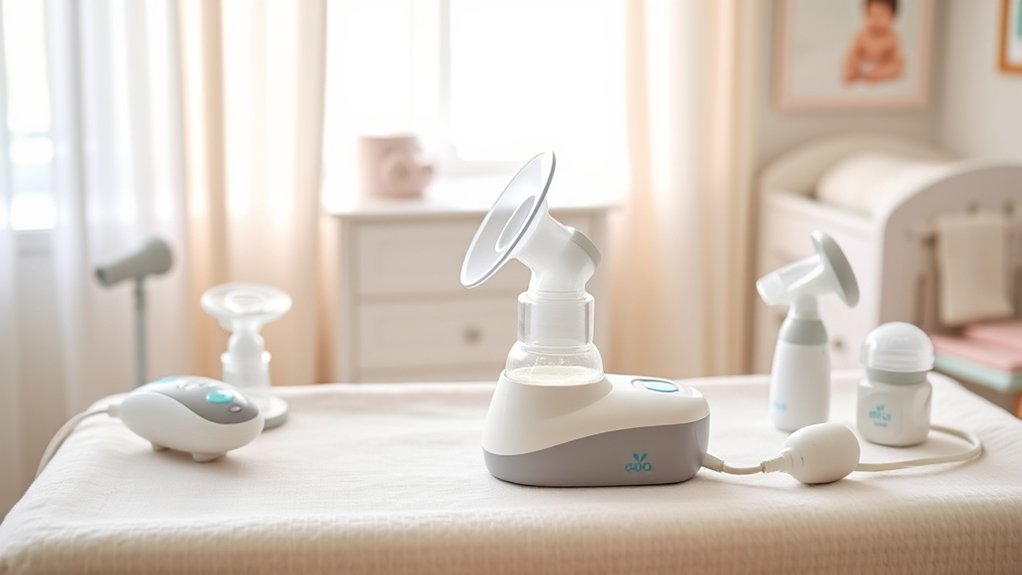
Choosing the right breast pump can feel overwhelming, especially when you’re dealing with low milk supply or the need for portability. It’s important to understand the different types available and how they can fit your unique situation. Whether you’re considering a manual option or a more advanced electric pump, recognizing the signs and symptoms that indicate your needs can make all the difference. Let’s explore what you should know to make an informed decision.
Understanding Different Types of Breast Pumps
When you’re exploring the world of breastfeeding, understanding the different types of breast pumps can make a significant difference in your experience. You’ll find two main categories: manual and electric pumps.
Manual pumps are portable and budget-friendly, making them great for occasional use. You control the suction, which can be empowering, but it requires more effort.
Electric pumps, on the other hand, are faster and often provide more consistent suction, ideal for frequent pumping or when you’re returning to work. Within electric pumps, you’ll see single and double options; double pumps save time by expressing milk from both breasts simultaneously.
Choosing the right pump depends on your lifestyle and needs, so take the time to explore what feels best for you.
Symptoms of Low Milk Supply
Are you worried about your milk supply? It’s completely normal to have concerns about how much milk you’re producing.
Some common symptoms of low milk supply include your baby being fussy or unsatisfied after feedings, fewer wet or dirty diapers, and a noticeable decrease in the amount of milk you pump.
If you’re nursing, you might find that your baby feeds more frequently or takes longer to latch. Another sign can be a lack of weight gain in your baby.
Remember, every mother’s experience is unique, and it’s okay to seek support. If you suspect low milk supply, don’t hesitate to consult a lactation consultant or your healthcare provider for guidance tailored to your needs.
You’re not alone in this journey.
Signs You Need a Portable Pump
Have you ever found yourself in a situation where pumping feels like a hassle? If you’re constantly on the go, juggling errands, or back at work, it might be time to contemplate a portable pump.
You might notice you’re missing feedings because your current setup is too bulky, or you’re struggling to find a private space to pump efficiently. If your hands are tied while you’re pumping, a portable option can free you up to multitask.
Additionally, if you’re feeling stressed about not being able to pump when needed, that’s a clear sign a portable pump could ease your worries.
When to Consider a Hospital-Grade Pump
Knowing when to contemplate a hospital-grade pump can greatly impact your breastfeeding experience. These pumps are designed for high-demand situations and can be a game-changer for many mothers.
Consider a hospital-grade pump if you:
- Have a premature baby who needs extra help with feeding.
- Experience low milk supply and need to establish or increase your supply.
- Require frequent pumping due to medical conditions or returning to work soon.
Using a hospital-grade pump can help you meet your breastfeeding goals, providing comfort and convenience.
Using a hospital-grade pump can enhance your breastfeeding journey, offering both comfort and convenience.
Remember, it’s okay to seek out the best tools for your journey. Your needs matter, and finding the right pump can make a significant difference in your breastfeeding experience.
You’re not alone in this!
Choosing a Pump for Your Lifestyle
When considering the right breast pump for your lifestyle, what factors come to mind?
Think about how often you’ll be pumping, where you’ll do it, and your comfort level. If you’re often on the go, a portable, battery-operated pump might be best. If you’ll be pumping frequently, a hospital-grade or double electric pump can save you time.
Also, consider your budget—there are plenty of options available at different price points. Don’t forget about ease of cleaning and storage; you want something that fits seamlessly into your routine.
Ultimately, choose a pump that supports your needs and helps you feel confident and comfortable as you navigate your breastfeeding journey. You’re doing an amazing job!
Frequently Asked Questions
Can Breast Pumps Cause Nipple Pain or Soreness?
Yes, breast pumps can cause nipple pain or soreness, especially if they’re not properly fitted or used. If you’re experiencing discomfort, consider adjusting the settings or consulting a lactation expert for support and guidance.
How Often Should I Clean My Breast Pump?
You should clean your breast pump after every use to keep it hygienic. Regularly sterilizing parts helps prevent bacteria buildup, ensuring both your health and your baby’s safety. It’s an essential part of your routine.
Are There Any Side Effects of Using a Breast Pump?
Yes, you might experience some side effects like sore nipples or engorgement, but don’t worry! These issues can often be managed with proper technique and care, ensuring a more comfortable pumping experience for you.
Can I Use a Breast Pump While Breastfeeding?
Yes, you can use a breast pump while breastfeeding. It helps you manage milk supply and allows others to feed your baby. Just make sure you’re comfortable, and your baby’s latch remains strong during breastfeeding sessions.
What Is the Lifespan of a Breast Pump?
A breast pump typically lasts about 5 to 7 years with proper care. If you notice any wear or reduced performance, it might be time to contemplate a replacement for your comfort and efficiency.
Conclusion
Just like a gardener nurtures their plants, finding the right breast pump can help you cultivate a flourishing milk supply. Whether you need the gentle touch of a manual pump or the robust support of an electric one, each choice can be a tool in your journey. Pay attention to your body’s signals, and don’t hesitate to seek help when needed. Remember, every drop counts, and you’re not alone in this beautiful adventure of motherhood.
