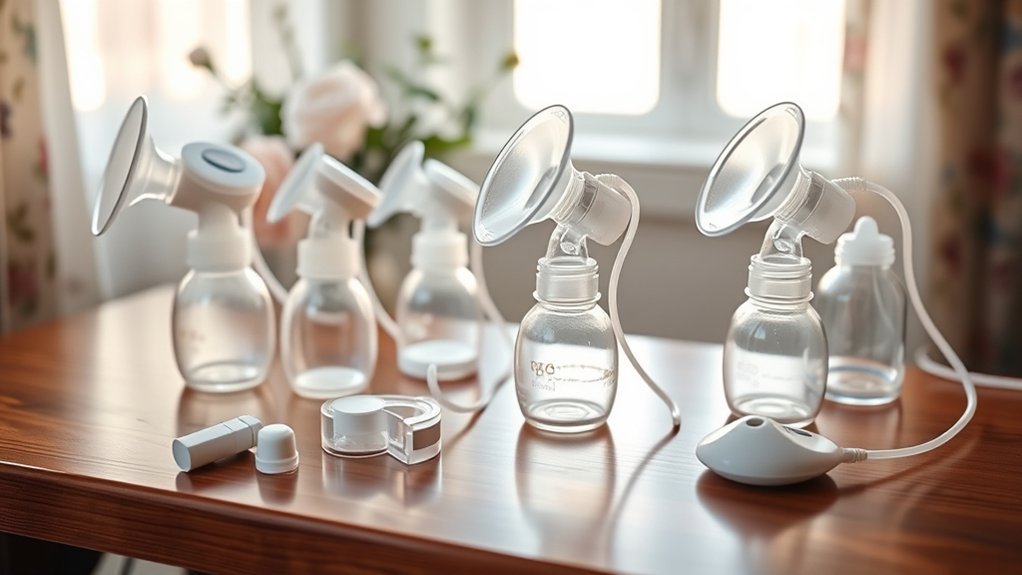
Did you know that about 85% of new mothers use a breast pump at some point during their breastfeeding journey? Choosing the right type can greatly impact your pumping experience and overall comfort. With various options like manual, electric, and hospital-grade pumps, it’s essential to understand their differences. Let’s explore each type to help you find the best fit for your needs and guarantee an effective pumping routine.
Understanding Manual Breast Pumps
When you’re considering a breast pump, understanding manual breast pumps can be a great first step.
Manual pumps are typically compact, affordable, and easy to use, making them ideal for occasional pumping. They rely on your hand to create suction, allowing you to control the speed and pressure. This can be beneficial if you prefer a personalized experience or want to pump discreetly.
Since they don’t require electricity, you can take them anywhere with ease. However, be prepared for a bit more physical effort compared to electric pumps. It’s important to choose a comfortable design that fits well with your body.
Exploring Electric Breast Pumps
If you’re looking for efficiency and convenience in your pumping routine, electric breast pumps might be the right choice for you.
These pumps operate with a motor that provides consistent suction, allowing you to express milk quickly and with less effort. You’ll find both single and double electric pumps, with double options enabling simultaneous pumping, which can save you valuable time.
Many electric models come with adjustable suction settings and let you customize your experience for comfort and effectiveness. They’re also portable, making it easy to pump at home or on the go.
With their advanced technology, electric breast pumps can help support your breastfeeding journey while accommodating your busy lifestyle.
Comparing Hospital-Grade Pumps
While you may already be familiar with electric breast pumps, comparing hospital-grade pumps can reveal significant advantages for those needing extra support in their breastfeeding journey.
Hospital-grade pumps are designed for multiple users, offering powerful suction and advanced technology to enhance milk production. They typically provide a more efficient and comfortable pumping experience, which can be beneficial for mothers facing challenges like low supply or difficulty latching.
These pumps often feature adjustable settings to suit your needs, and their durability makes them ideal for extended use. If you’re considering short-term or long-term pumping, a hospital-grade pump might be the right choice, providing the reliability and performance you need to guarantee a successful breastfeeding experience.
Features to Consider When Choosing a Pump
Choosing the right breast pump involves considering several key features that can greatly impact your pumping experience. You’ll want to evaluate factors like suction strength, portability, noise level, and ease of cleaning. Each of these elements plays a critical role in how efficient and comfortable your pumping sessions will be.
| Feature | Considerations |
|---|---|
| Suction Strength | Adjustable levels for comfort |
| Portability | Lightweight and battery-operated |
| Noise Level | Quiet operation for discretion |
| Ease of Cleaning | Dishwasher-safe parts |
| Price | Budget-friendly options available |
Tips for Effective Pumping and Storage
Effective pumping and storage techniques can make a significant difference in your breastfeeding journey. Start by ensuring you’re relaxed and comfortable while pumping; stress can affect your milk flow.
Use a good-quality pump and follow the manufacturer’s instructions for ideal results. Aim to pump at the same times each day to establish a routine.
When storing milk, use clean, BPA-free containers or bags specifically designed for breast milk. Label each container with the date and time to keep track of freshness.
Store milk in the back of the fridge or freezer to maintain a stable temperature. Remember, you can refrigerate milk for up to four days and freeze it for up to six months.
Always thaw milk in the fridge or under running water, avoiding microwave heating.
Frequently Asked Questions
Can I Use a Breast Pump if I’M Exclusively Breastfeeding?
Yes, you can use a breast pump while exclusively breastfeeding. It can help relieve engorgement, increase your milk supply, or allow others to feed your baby. Just make sure it fits your breastfeeding goals and needs.
How Long Should I Pump Each Session?
Most moms pump for about 15-20 minutes per session. You’ll find that pumping longer might not yield considerably more milk, so focus on comfort and efficiency to maximize your results during each session.
Are There Any Side Effects From Using a Breast Pump?
Yes, there can be side effects from using a breast pump, such as discomfort, sore nipples, or decreased milk supply if not used correctly. It’s important to monitor your body and adjust your technique as needed.
Can I Share Breast Pump Parts With Another Person?
“Sharing isn’t always caring.” You shouldn’t share breast pump parts with another person. It can pose health risks due to potential contamination. Always use your own parts to guarantee safety and hygiene for both you and your baby.
What Should I Do if My Pump Isn’T Working?
If your pump isn’t working, check the power source and connections first. Clean the parts thoroughly, ensuring they’re assembled correctly. If problems persist, consult the user manual or contact customer support for assistance.
Conclusion
Choosing the right breast pump is like selecting a tool for a job; each has its purpose. A manual pump offers simplicity and portability, while an electric pump provides efficiency and convenience. Hospital-grade options stand ready for serious needs. By weighing factors like suction strength and ease of cleaning, you can find the perfect balance for your lifestyle. Ultimately, the right pump not only meets your needs but also supports your breastfeeding journey, making it a rewarding experience.
