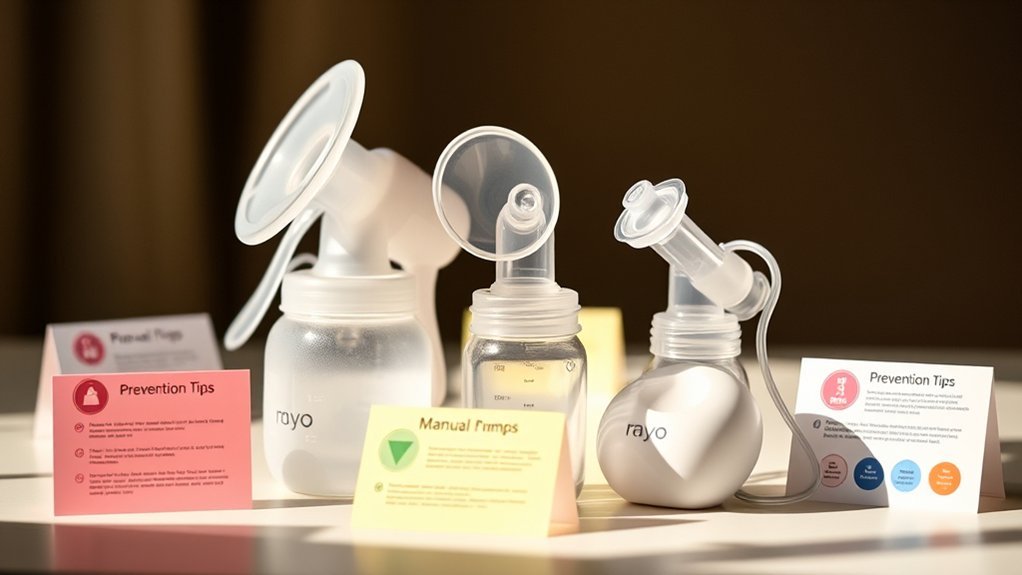
Choosing a breast pump can feel like finding the right key for a complex lock; it opens up essential moments of bonding and care. Understanding the different types of pumps is crucial for your journey, but there’s more to take into account beyond just the mechanics. By focusing on prevention tips and selecting the right pump for your lifestyle, you can enhance your pumping experience. What should you look for in a pump to guarantee comfort and efficiency?
Manual Breast Pumps
When you’re looking for a simple and cost-effective way to express milk, manual breast pumps can be a great option. They’re lightweight, portable, and easy to use, making them perfect for on-the-go moms.
You can control the suction and speed, allowing you to find a rhythm that feels comfortable for you. Plus, they require no batteries or electricity, so you can use them anywhere.
Manual pumps are also generally more affordable than electric ones, which is a big plus for your budget. Many moms appreciate the quiet operation, making discreet pumping possible.
Electric Breast Pumps
Electric breast pumps offer a convenient and efficient way to express milk, making them a popular choice for busy moms.
These pumps can save you time and energy, allowing you to multitask while ensuring your little one gets the nutrition they need.
Electric breast pumps help you save time and energy, letting you multitask while providing essential nutrition for your baby.
- Speed: Electric pumps can express milk quickly, often in half the time of manual pumps.
- Comfort: Many models feature adjustable settings, helping you find the perfect suction for a more comfortable experience.
- Hands-Free Options: Some electric pumps come with wearable designs, letting you pump while you’re on the go.
Choosing the right electric breast pump can make a significant difference in your breastfeeding journey, providing you with the support you need during this precious time.
Hospital-Grade Breast Pumps
When considering hospital-grade breast pumps, you’ll find they offer advanced features designed for efficiency and comfort.
These pumps are ideal for various situations, especially when you need to establish or increase milk supply quickly.
Plus, knowing how to clean and maintain them properly guarantees they remain effective and safe for your use.
Features of Hospital Pumps
Hospital-grade breast pumps are designed with advanced technology and features that cater to the unique needs of breastfeeding mothers, especially those requiring extra support.
These pumps are built for efficiency and comfort, making them an essential choice for many.
- Multi-phase expression: Mimics a baby’s natural feeding pattern to maximize milk production.
- Adjustable suction levels: Allows you to customize the experience for your comfort and needs.
- Shared-use design: guarantees safety and hygiene, ideal for multiple users in a clinical setting.
Ideal Usage Scenarios
For mothers facing challenges with breastfeeding or those who need to pump frequently, hospital-grade breast pumps offer reliable solutions in specific situations.
If you’re dealing with low milk supply, these pumps can help stimulate production more effectively than standard models. They’re also ideal if your baby is in the NICU, ensuring you can provide breast milk even when you’re separated.
Additionally, if you’re returning to work and need to pump multiple times a day, a hospital-grade pump can make the process quicker and more efficient. These pumps are designed for heavy use, so they’re perfect for moms in need of extra support.
Cleaning and Maintenance Tips
Keeping your hospital-grade breast pump clean is essential for both your health and the quality of your milk. Regular cleaning and maintenance help prevent bacteria growth and guarantee peak performance.
Here are some tips to keep your pump in top shape:
- Wash your hands before every use and clean all parts that come into contact with milk.
- Disassemble the pump after each session, and wash all components in warm, soapy water or use a dishwasher, if safe.
- Inspect tubing and parts regularly for wear and tear, replacing them as needed to maintain efficiency.
Portable Breast Pumps
Portable breast pumps offer the freedom to pump on the go, making your breastfeeding journey more manageable.
When choosing the right model, consider factors like battery life and size to find one that fits seamlessly into your lifestyle.
You deserve a pumping experience that supports your needs, wherever you are.
Benefits of Portability
When you’re juggling the demands of motherhood, having a breast pump that you can easily take with you can make a world of difference.
Portable breast pumps offer you flexibility and peace of mind, allowing you to pump on your terms.
- Convenience: You can pump at home, work, or even during errands without hassle.
- Discretion: Many portable models are compact and quiet, so you can pump anywhere without drawing attention.
- Time-Saving: Quick and efficient pumping lets you maximize your time spent with your little one.
With a portable breast pump, you can maintain your milk supply while staying active in your daily life.
It’s about making your breastfeeding journey smoother and more enjoyable.
Choosing the Right Model
Finding the right portable breast pump can greatly enhance your breastfeeding experience, especially when you’re on the go. When choosing a model, consider factors like battery life, size, and suction strength. A lightweight pump with a long battery life can make a world of difference during outings. Here’s a quick comparison to help you decide:
| Feature | Model A |
|---|---|
| Battery Life | Up to 5 hours |
| Weight | 1.5 lbs |
| Suction Strength | Adjustable |
| Noise Level | Whisper-quiet |
Look for a pump that fits your lifestyle and comfort. Remember, it’s okay to try a few models before finding the perfect fit. Trust your instincts—you’ve got this!
Wearable Breast Pumps
While juggling the demands of motherhood, you might appreciate the convenience of wearable breast pumps, which offer a hands-free solution for expressing milk.
These innovative devices allow you to multitask, whether you’re at home or on the go. Here are some features that make them a great choice:
Wearable breast pumps enable multitasking, offering convenience whether you’re home or out and about.
- Discreet Design: Wearable pumps fit comfortably under your clothing, letting you pump without drawing attention.
- Portability: Lightweight and often battery-operated, you can take them anywhere, making them ideal for busy lifestyles.
- Ease of Use: Many models come with intuitive controls, so you can adjust settings without hassle.
With wearable breast pumps, you can embrace the freedom to care for your baby while still managing your own needs.
Double vs. Single Pumps
Choosing between double and single breast pumps can greatly impact your pumping experience. Double pumps can save you time, allowing you to express milk from both breasts simultaneously, which is perfect for busy schedules. On the other hand, single pumps can be more portable and often come at a lower cost, making them suitable for occasional use. Here’s a quick comparison to help you decide:
| Feature | Double Pumps | Single Pumps |
|---|---|---|
| Time Efficiency | Faster pumping | Slower pumping |
| Portability | Heavier, less portable | Lightweight, portable |
| Cost | Generally pricier | More budget-friendly |
| Milk Yield | Often higher yield | Varies, usually less |
Ultimately, consider your lifestyle and needs to choose what’s right for you.
Considerations for Choosing a Pump
When it comes to selecting a breast pump, you’ll want to evaluate several key factors that align with your lifestyle and breastfeeding goals.
Choosing the right pump can make your breastfeeding journey smoother and more enjoyable. Here are some important considerations:
- Frequency of use: Will you pump daily or occasionally?
- Portability: Do you need a lightweight, travel-friendly option?
- Comfort and efficiency: Are you looking for a pump that offers customizable settings for a better experience?
Taking the time to assess these aspects will guarantee you pick a pump that fits your needs.
Essential Prevention Tips for Pumping Success
To guarantee pumping success, it’s essential to set yourself up for the best possible experience from the start.
First, choose a comfortable, quiet space to help you relax. Make sure your pump is clean and properly assembled. Establish a pumping schedule that aligns with your baby’s feeding routine, aiming for consistency.
Stay hydrated and nourish your body with nutritious foods to support milk production. If you’re feeling stressed, try some deep-breathing exercises or listen to soothing music while you pump.
Finally, don’t hesitate to reach out for support or advice from lactation consultants or fellow parents. Remember, every pumping journey is unique, so be patient with yourself and celebrate each small victory along the way.
Frequently Asked Questions
Can Breast Pumps Affect Milk Supply Long-Term?
Yes, breast pumps can affect your milk supply long-term if used excessively or incorrectly. It is vital to balance pumping with breastfeeding to maintain a healthy supply. Consult a lactation expert if you’re concerned.
How Often Should I Clean My Breast Pump?
You should clean your breast pump after each use. This helps maintain hygiene and guarantees your milk stays safe. Regular cleaning prevents bacteria build-up, supporting your breastfeeding journey and giving you peace of mind.
Are There Any Side Effects of Using a Breast Pump?
Using a breast pump can cause discomfort, nipple irritation, or low milk supply if not used correctly. It’s important to listen to your body, adjust settings as needed, and take breaks to guarantee a positive experience.
Can I Use a Breast Pump for Feeding Preemies?
Absolutely, you can use a breast pump for feeding preemies. Remember, “where there’s a will, there’s a way.” Pumping can help guarantee they get essential nutrients, and it’s a wonderful bonding experience for you both.
What Is the Best Way to Store Breast Milk After Pumping?
Store breast milk in clean, BPA-free containers. You can refrigerate it for up to four days or freeze it for six months. Label each container with the date, so you know when it was pumped.
Conclusion
In the grand circus of motherhood, choosing a breast pump shouldn’t feel like a juggling act gone wrong. With the right pump and some savvy prevention tips, you can avoid the chaos and keep your milk supply flowing smoothly. Remember, you’re not just a milk machine; you’re a superhero in disguise! So, embrace the quirks, prioritize your comfort, and pump with confidence—because every drop counts, and you deserve a standing ovation for your efforts!
