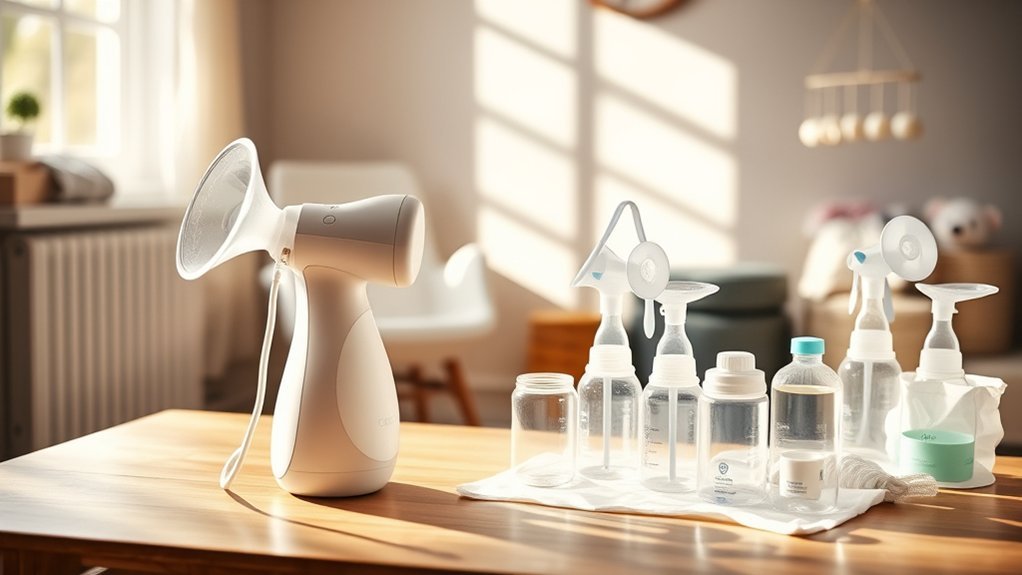
When it comes to breastfeeding, choosing the right breast pump can greatly impact your experience. Each type—manual, electric, or hospital-grade—offers unique benefits tailored to different needs. Understanding these options helps you make an informed decision that suits your lifestyle. But how do you know which pump is best for you? Let’s explore the distinct features of each type and what they mean for your breastfeeding journey.
Manual Breast Pumps: A Hands-On Approach
Manual breast pumps offer a hands-on approach that many parents find convenient and effective. With these pumps, you can control the suction strength and speed, allowing for a personalized experience.
Manual breast pumps provide a convenient, personalized pumping experience with adjustable suction strength and speed, perfect for parents.
They’re lightweight and portable, making them perfect for on-the-go situations. You won’t need to worry about batteries or electrical outlets, which adds to their simplicity.
When you use a manual pump, you can easily adjust your technique to find what works best for you. Some parents appreciate the quiet operation, enabling discreet pumping anytime.
Additionally, manual pumps are often more affordable, making them a budget-friendly option. If you’re looking for a practical solution for occasional pumping, a manual breast pump might just be the right choice for you.
Electric Breast Pumps: Convenience and Efficiency
If you’re looking for a faster and more efficient way to pump, electric breast pumps are an excellent choice.
These devices offer a range of features that make pumping easier. With adjustable suction settings, you can customize the experience to suit your comfort and milk flow. Many electric pumps also come with double pumping options, allowing you to express milk from both breasts simultaneously, saving you valuable time.
They’re typically lightweight and portable, making it easy to pump on the go. Plus, most electric pumps are designed for quick assembly and cleaning, adding to their convenience.
Whether you’re a busy parent or just want to streamline your pumping routine, electric breast pumps can greatly enhance your breastfeeding journey.
Hospital-Grade Breast Pumps: Professional Performance
When you need a pump that delivers professional-grade performance, hospital-grade breast pumps stand out as a top choice.
These pumps are designed for frequent use and can handle the demands of multiple users. They offer powerful suction and effective milk extraction, making them ideal for mothers with low milk supply or those who need to pump large quantities quickly.
Hospital-grade pumps typically feature adjustable settings, allowing you to customize your experience for maximum comfort and efficiency.
Their robust design guarantees durability, which is essential for extensive use. While these pumps are often rented or found in hospitals, they provide a reliable solution for parents seeking the best support for breastfeeding.
Choosing a hospital-grade pump can make a significant difference in your pumping journey.
Choosing the Right Pump for Your Lifestyle
Selecting the right breast pump is an essential step in your breastfeeding journey, especially after considering the benefits of hospital-grade options.
Think about your lifestyle and how often you plan to pump. If you’re a busy parent, a portable, battery-operated pump might suit you best, allowing you to pump on the go. If you’re mainly at home, a stationary electric pump can save time and effort.
Consider whether you prefer a single or double pump; double pumps can help you express milk more quickly. Also, factor in your budget, as prices vary widely.
Finally, check for features that matter to you, like adjustable suction levels or quiet operation. Choose a pump that fits seamlessly into your daily routine.
Tips for Successful Pumping and Storage
To guarantee successful pumping and storage, set a consistent routine that works with your schedule.
Choose a quiet, comfortable space to help you relax while pumping. Always wash your hands before handling any equipment or milk to maintain hygiene.
Select a serene, cozy environment to enhance your pumping experience and prioritize hygiene by washing your hands beforehand.
Use a high-quality breast pump that suits your needs for effective milk extraction.
After pumping, store milk in clean, BPA-free containers or breast milk bags. Label each container with the date and time of pumping for easy organization.
Refrigerate milk if you plan to use it within a few days, or freeze it for longer storage.
When thawing, never use hot water or a microwave; instead, use the fridge or a bowl of warm water to preserve nutrients.
Frequently Asked Questions
How Do I Clean and Sterilize My Breast Pump?
To clean and sterilize your breast pump, disassemble all parts, wash them with warm, soapy water, and rinse thoroughly. Then, sterilize using boiling water or a steam sterilizer. Let everything air dry completely before reassembling.
Can I Use a Breast Pump if I Have Flat or Inverted Nipples?
Absolutely, you can use a breast pump with flat or inverted nipples. Many mothers find success with specific pump styles or techniques, so don’t hesitate to explore options that best suit your needs and comfort.
What Are the Signs of a Faulty Breast Pump?
If your breast pump’s suction feels weak, it makes unusual noises, or you notice milk leakage, it’s likely faulty. Additionally, if it doesn’t turn on or has a damaged power cord, consider replacing it.
How Often Should I Replace Breast Pump Parts?
You should replace breast pump parts every few months, or sooner if they show signs of wear. Waiting too long can lead to decreased efficiency, making your pumping experience feel like trying to run a marathon in slow motion!
Are Breast Pumps Covered by Health Insurance?
Yes, many health insurance plans cover breast pumps, but it varies by provider. You should check your specific policy details and talk to your insurance representative to understand your coverage options and any potential out-of-pocket costs.
Conclusion
In the world of breastfeeding, finding the right pump can make all the difference. Whether you opt for a manual, electric, or hospital-grade pump, each type offers unique benefits that can fit your lifestyle. Remember, it’s not a one-size-fits-all solution; what works for one parent might not work for another. So, take your time to explore your options, and you’ll be well on your way to a smoother breastfeeding journey. After all, when it comes to pumping, every drop counts!
