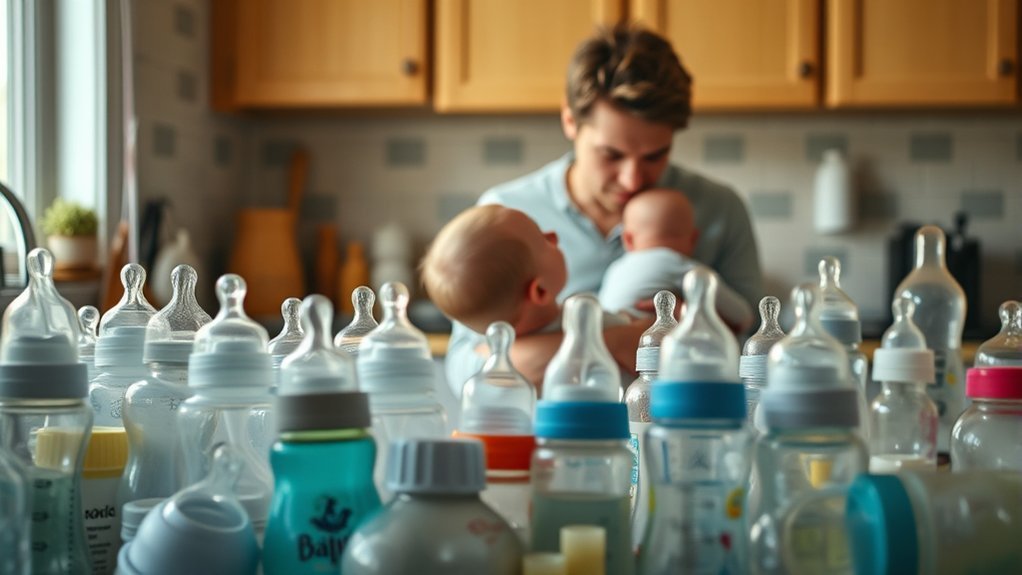
Have you ever wondered why some babies refuse the bottle? It’s a common issue in the U.S., shaped by various developmental stages and feeding practices. Understanding the underlying causes can help ease the changeover for both you and your infant. From the comforting nature of breastfeeding to the impact of caregiver anxiety, several factors play a role. Exploring these elements can reveal the key to fostering a smoother feeding experience for your little one.
Understanding Bottle Refusal
When you’re faced with bottle refusal, it can be both frustrating and puzzling. Understanding why your baby might refuse a bottle is essential for addressing the issue effectively.
Research indicates that factors such as nipple shape, flow rate, and even your baby’s temperament can influence their willingness to accept a bottle. Babies often prefer breastfeeding due to the comfort and closeness it provides.
Additionally, if they’ve recently experienced a change, like a new caregiver or environment, it might heighten their resistance. You might also find that introducing the bottle during a calm moment, rather than when they’re hungry or upset, can make a difference.
Observing your baby’s cues will help you tailor your approach and increase the chances of success.
Developmental Stages and Their Impact
As babies grow, their developmental stages greatly influence their feeding behaviors, including bottle refusal.
At around four to six months, they may begin to show preferences for solid foods, which can lead to decreased interest in bottles.
By eight to ten months, as they gain more control over their motor skills, they might resist bottles in favor of cups, wanting to assert their independence.
As babies develop motor skills, they may prefer cups over bottles, seeking to assert their growing independence.
Additionally, during the teething phase, discomfort may cause them to refuse the bottle altogether.
Understanding these stages helps you recognize that bottle refusal isn’t always a rejection of feeding but often a natural part of their growth.
Feeding Practices Contributing to Refusal
Feeding practices play an essential role in whether your baby will refuse the bottle. If you introduce the bottle too early or too late, your baby might struggle to accept it.
Babies often prefer the familiar feel of breastfeeding, especially if bottle feeding is inconsistent. Using a bottle with a nipple that’s too fast or too slow can also lead to frustration, causing refusal.
Additionally, if you’re not calm and relaxed during feeding, your baby can sense your tension, making them more resistant. It’s important to create a positive feeding environment and try different bottle types or nipple flows to find what works best for your little one.
Understanding these factors can help ease the shift to bottle feeding.
The Role of Breastfeeding in Bottle Acceptance
Breastfeeding plays an essential role in your baby’s acceptance of a bottle, especially when introduced early.
Techniques like mimicking breastfeeding positions and gradually shifting to the bottle can make a significant difference.
Understanding these factors can help ease the journey for both you and your little one.
Importance of Early Exposure
When introducing a bottle to a breastfed baby, early exposure can significantly influence their acceptance.
Research suggests that the sooner you introduce a bottle, ideally around 4 to 6 weeks, the more likely your baby will adapt to it. This period allows your baby to associate the bottle with feeding without disrupting the breastfeeding routine.
If you wait too long, your baby might develop a strong preference for breastfeeding, making bottle acceptance more challenging. Starting early can also help reduce anxiety for both you and your baby during changes.
Techniques to Encourage Transition
Introducing a bottle doesn’t mean you have to abandon breastfeeding; rather, it can complement your feeding routine.
To encourage your baby to accept a bottle, start with breast milk to maintain familiarity. Choose a slow-flow nipple that mimics breastfeeding, and try different bottle shapes to find one your baby prefers.
Timing matters—offer the bottle when your baby is calm, not overly hungry or tired. You can also have someone else introduce the bottle to reduce your baby’s association with breastfeeding.
For best results, create a relaxed environment and hold your baby close, just like during breastfeeding.
Environmental Influences on Feeding Preferences
Environmental factors play a significant role in shaping feeding preferences, as they can either encourage or discourage a child from accepting a bottle.
For instance, the feeding environment can greatly influence a child’s comfort level. A calm, quiet space promotes relaxation, making it easier for your baby to try a bottle. Conversely, distractions from noise or movement can create anxiety, leading to bottle refusal.
Additionally, the presence of other caregivers can affect a child’s willingness to accept a bottle, as they may prefer your direct interaction or familiar routines.
Even the temperature of the milk and the type of bottle used can impact acceptance. By optimizing these environmental factors, you can help facilitate a smoother bottle-feeding experience for your child.
Psychological Factors Affecting Bottle Refusal
When it comes to bottle refusal, your baby’s psychological needs play an essential role.
Many infants develop a strong attachment to breastfeeding, which can make shifting to a bottle challenging.
Additionally, stress and anxiety—whether from the baby or the parent—can further complicate this process, highlighting the importance of understanding these emotional factors.
Attachment to Breastfeeding
Although many parents aim for a smooth shift from breastfeeding to bottle feeding, a strong attachment to breastfeeding can complicate this process.
Infants often associate breastfeeding with comfort, security, and emotional bonding, making them hesitant to adapt to a bottle. Here are three reasons why this attachment might lead to bottle refusal:
- Familiarity: Breastfeeding is a routine that infants have grown accustomed to, making new experiences feel challenging.
- Comfort: The physical closeness during breastfeeding offers emotional reassurance, which bottles can’t replicate.
- Taste Preference: Some babies prefer the natural flavor of breast milk over formula, leading to rejection of the bottle.
Understanding these factors can help you navigate the shift with empathy and patience.
Anxiety and Stress Responses
The strong bond formed during breastfeeding can sometimes contribute to anxiety and stress for infants when faced with the prospect of bottle feeding. This alteration can be overwhelming, as babies associate breastfeeding with comfort and security.
When introduced to a bottle, they may experience confusion and fear, leading to heightened stress responses. Research indicates that infants can sense emotional shifts in their caregivers, which may amplify their anxiety.
If you’re feeling stressed or anxious about the change, your baby might pick up on that energy, making them less likely to accept the bottle. Recognizing these emotional dynamics can help you approach the situation with patience, creating a more relaxed environment that supports your baby’s gradual acceptance of bottle feeding.
Parental Influence and Behavior
Parental behavior greatly influences a baby’s willingness to accept a bottle, as infants often mirror their caregivers’ emotional states and attitudes. If you’re anxious or frustrated during feeding times, your baby may sense that tension and resist the bottle.
Here are three key factors to reflect on:
- Modeling Behavior: Your calmness and positivity can encourage your baby to explore the bottle without fear or hesitation.
- Routine and Consistency: Establishing a regular feeding routine can help your baby feel secure and more willing to try the bottle.
- Responsive Feeding: Being attentive to your baby’s cues fosters trust, making them more likely to accept new experiences like bottle feeding.
Understanding your influence can help create a more positive feeding environment.
Strategies to Encourage Bottle Acceptance
When introducing a bottle to your baby, patience and a few strategic approaches can make all the difference. Start by choosing a bottle and nipple that closely mimics breastfeeding; this can ease the shift.
Offer the bottle when your baby is calm and not overly hungry, so they associate it with comfort, not frustration. You might also try letting someone else give the bottle, as your scent can sometimes distract them.
Gradually introduce the bottle during routine feeding times, mixing breast milk with a little formula if necessary. Finally, keep the experience positive; smile and encourage your baby.
When to Seek Professional Help
How do you know if it’s time to seek professional help regarding your baby’s bottle refusal?
It’s important to be proactive if you notice your baby is struggling. Here are three signs that may indicate the need for assistance:
- Weight Loss or Poor Weight Gain: If your baby isn’t gaining weight appropriately or is losing weight, it’s essential to consult a pediatrician.
- Dehydration Symptoms: Signs like dry mouth, fewer wet diapers, or lethargy can indicate dehydration, requiring immediate attention.
- Prolonged Refusal: If your baby consistently refuses the bottle for several weeks, it’s wise to explore underlying issues with a healthcare professional.
Seeking help early can guarantee your baby receives proper nutrition and support.
Frequently Asked Questions
Can Bottle Refusal Lead to Nutritional Deficiencies in Infants?
Yes, bottle refusal can lead to nutritional deficiencies in infants. If your baby isn’t getting enough milk or formula, they might miss essential nutrients, which can impact their growth and development. It’s important to address this issue.
How Can Parents Identify Early Signs of Bottle Refusal?
About 10% of infants experience bottle refusal. You can identify early signs by observing fussiness during feeding, turning away from the bottle, or showing preference for breastfeeding. Addressing these signs promptly can help maintain proper nutrition.
Are Certain Bottle Brands More Likely to Be Accepted Than Others?
Yes, some bottle brands are more likely to be accepted. Parents often find that bottles with a natural nipple shape or softer materials can mimic breastfeeding better, making it easier for your baby to adapt.
What Age Is Bottle Refusal Most Common in Infants?
Bottle refusal often peaks around six to twelve months, when infants become more aware of their preferences. During this time, they may show a strong attachment to breastfeeding or other feeding methods, creating challenges.
Is Bottle Refusal Associated With Any Long-Term Feeding Issues?
Yes, bottle refusal can lead to long-term feeding issues, like difficulty moving to solids or aversions to certain textures. Staying attentive to your child’s needs and seeking guidance can help address these challenges effectively.
Conclusion
In summary, understanding bottle refusal is essential for a smooth feeding shift. Research shows that about 50% of breastfed infants experience some form of bottle refusal, often linked to developmental stages and caregiver anxiety. By recognizing the factors at play and implementing supportive strategies, you can foster a positive feeding experience for both you and your baby. If challenges persist, don’t hesitate to seek professional guidance to guarantee your little one receives the nourishment they need.
