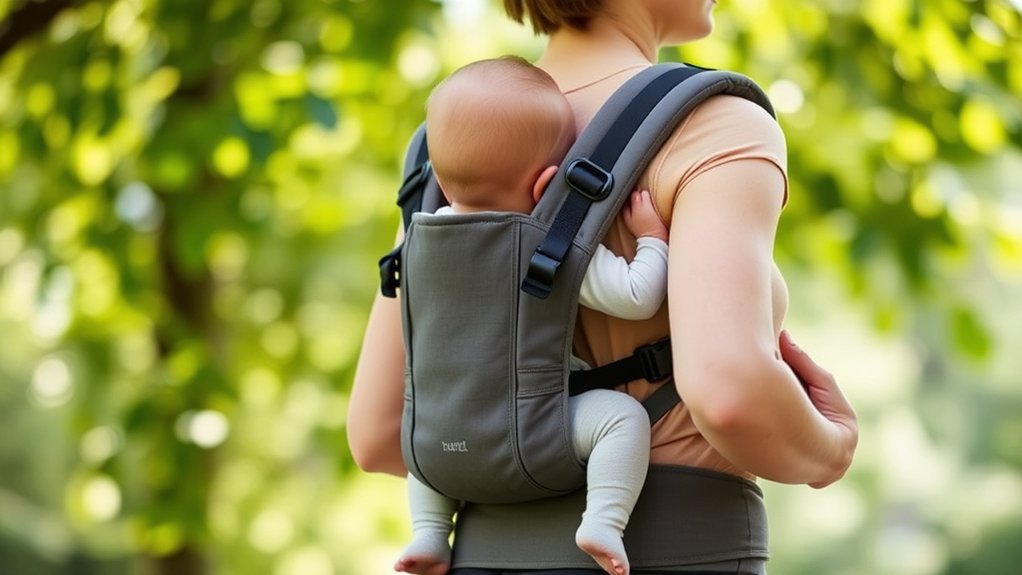
Many might think that back carries are too complex for everyday use, but with the right approach, they can be both safe and practical. Understanding the key principles of back carrying is essential for ensuring your child’s comfort and your own safety. From selecting the right carrier to mastering proper adjustment techniques, every detail matters. Let’s explore how you can enhance your skills while prioritizing well-being for both you and your child.
Choosing the Right Carrier
When selecting a carrier for back carrying, it’s essential to evaluate both safety and comfort. Consider the carrier materials; breathable fabrics enhance comfort while guaranteeing proper support.
Look for carriers made from durable, non-toxic materials to assure longevity and safety. Various carrier types exist, including structured carriers, soft-structured carriers, and wraps.
Choose carriers crafted from durable, non-toxic materials for lasting safety and comfort, with options like structured carriers, soft-structured carriers, and wraps.
Structured carriers provide solid support for your child, while soft-structured carriers combine ease of use with versatility. Wraps offer a customizable fit, allowing you to secure your child snugly.
Each type has its unique benefits, so assess your lifestyle and preferences to determine which best suits your needs. Prioritizing the right carrier guarantees a liberating experience for both you and your child during back carrying.
Preparing Your Child for a Safe Ride
To guarantee your child has a safe ride, start by checking that the carrier fits properly and is adjusted correctly for both you and your child.
Engage your child’s interest by incorporating toys or activities that keep them entertained during the ride.
Don’t forget to equip them with any necessary safety gear to enhance their protection.
Proper Fit and Adjustment
A proper fit and adjustment of your child’s back carry is essential for guaranteeing their safety and comfort during transport.
Start by adjusting the back panel to provide ideal support for your child’s spine. The panel should cradle their back securely, preventing slumping or excessive movement.
Next, pay attention to hip positioning; your child’s hips should be seated in a natural “M” shape, with their knees higher than their bottom. This alignment promotes healthy hip development and minimizes discomfort.
Verify all straps are snug but not overly tight, allowing for movement without compromising safety.
Regularly check adjustments as your child grows, making sure they maintain a secure and comfortable fit throughout your journeys together.
Engaging Child’s Interest
After ensuring a proper fit and adjustment for your child’s back carry, engaging their interest becomes important for a safe and enjoyable ride.
Utilize creative storytelling to captivate their imagination; weaving tales of adventures can transform the experience.
Encourage them to participate by incorporating interactive games, such as counting objects you pass or identifying colors. This not only keeps them engaged but also fosters a sense of participation and excitement.
By making the journey interactive, you’re empowering your child, turning a routine ride into a shared exploration.
Remember, a child’s engagement directly influences their comfort and mood, ensuring a safer, more enjoyable experience for both of you.
Prioritize their interest, and you’ll cultivate a positive association with the back carry.
Safety Gear Essentials
While guaranteeing your child is securely positioned for a back carry, equipping them with the right safety gear is essential for a safe ride.
Here are four essential accessories to take into account:
- Helmet: Protects your child’s head from potential impacts.
- Reflective Vest: Enhances visibility, especially in low-light conditions.
- Knee and Elbow Pads: Cushions against falls, providing extra protection.
- Safety Straps: Guarantees your child remains secure during movement.
Proper Placement and Adjustment Techniques
To guarantee a safe and comfortable back carry, secure strap positioning is essential.
Adjust the straps so they fit snugly without restricting movement, maintaining even weight distribution across your back.
This balance prevents strain and enhances stability during your carry.
Secure Strap Positioning
Proper strap positioning is essential for a secure and comfortable back carry. Confirming your straps are correctly placed helps maintain shoulder alignment and prevents discomfort.
Follow these steps for ideal strap positioning:
- Adjust Strap Length: Start by adjusting the straps to fit your torso length, keeping them snug but not overly tight.
- Check Strap Tension: Confirm there’s adequate tension; loose straps can lead to instability, while overly tight straps may cause pain.
- Position Straps Over Shoulders: Place straps across your shoulders, confirming they sit flat without digging in.
- Test Movement: Move around to check for any shifting or discomfort, adjusting as necessary to maintain a secure fit.
With proper strap positioning, you’ll experience a more liberating carrying experience.
Even Weight Distribution
Achieving even weight distribution is essential for a comfortable back carry, as it minimizes strain on your body and enhances stability.
To implement effective weight distribution techniques, start by centering the load on your back. Adjust the straps so that they evenly distribute weight across your shoulders and hips.
Use balancing tips like tightening the hip belt to support the lower back, while keeping shoulder straps snug but not constricting.
Regularly check the alignment of the load; it should sit evenly and not tilt to one side. If you notice discomfort or uneven pressure, make immediate adjustments.
This attention to detail guarantees a liberated experience during your carry, allowing for more freedom of movement and less fatigue.
Maintaining Good Posture While Carrying
Maintaining good posture while carrying is essential for both your comfort and the safety of your spine. Proper alignment not only alleviates strain but also enhances the ergonomic benefits of your carrying technique.
To achieve and sustain good posture, consider the following:
- Engage your core: Strengthening your abdominal muscles supports your spine.
- Relax your shoulders: Keep them down and back to avoid tension.
- Align your hips: Confirm they’re aligned with your shoulders to maintain stability.
- Practice posture exercises: Incorporate stretches and strengthening routines to develop muscle memory.
Monitoring Your Child’s Comfort and Safety
While you’re focused on carrying your child securely, it’s crucial to regularly check their comfort and safety throughout the process.
Start by monitoring discomfort; if you notice signs like squirming or whining, it may indicate that adjustments are necessary.
Monitor your child’s comfort closely; signs like squirming or whining may mean it’s time for adjustments.
Evaluating engagement is equally important; make sure your child remains alert and interested in their surroundings. A disengaged child may be uncomfortable, leading to a negative experience for both of you.
Pay attention to their body position, making certain they’re properly supported and not at risk of slipping.
Regularly adjusting the carry method based on these observations enhances both comfort and safety.
Practicing Safe Dismounting Methods
To guarantee your child’s safety during dismounting, it’s vital to follow specific methods that minimize the risk of injury.
Utilizing proper dismounting techniques guarantees a safe landing and promotes confidence. Here are four essential steps:
- Assess the Environment: Verify the landing area is clear of obstacles and soft, like grass or a padded surface.
- Secure the Child: Before dismounting, make certain your child is firmly supported and aware of the upcoming change.
- Slowly Lower: Gradually lower your child’s weight by bending your knees, allowing them to slide down gently.
- Encourage Proper Posture: Teach your child to land with knees slightly bent, distributing weight evenly to absorb impact.
Frequently Asked Questions
What Age Is Appropriate for Back Carrying My Child?
You can start back carrying your child around 6 months when they show signs of readiness, like good head and neck control. Always assess your child’s comfort and safety before making this change.
Can I Use a Back Carrier for Hiking?
Yes, you can use a back carrier for hiking, ensuring hiking safety and your child’s comfort. Choose a supportive carrier, adjust it properly, and always monitor your child’s position throughout the hike for maximum safety.
How Do I Clean My Back Carrier?
To clean your back carrier, use mild soap and water. Employ gentle scrubbing techniques for stubborn stains. Regular maintenance tips include air drying, checking for wear, and ensuring all straps function correctly for safety and longevity.
Are There Weight Limits for Back Carriers?
Yes, there are weight recommendations for back carriers. Always follow the manufacturer’s safety guidelines to guarantee both your comfort and your child’s safety. Adhering to these limits promotes a secure and enjoyable carrying experience.
How Do I Choose Between a Framed or Soft Carrier?
When choosing between framed and soft carriers, consider your needs. Framed carriers offer sturdy support for longer hikes, while soft carriers provide flexibility and comfort for shorter outings. Each has unique benefits tailored to your adventures.
Conclusion
To sum up, mastering back carries is not just about technique—it’s about fostering a safe and nurturing bond between you and your child. By selecting the right carrier, ensuring proper adjustments, and prioritizing your child’s comfort, you create an environment where both of you can thrive. Remember, every moment spent together in this way strengthens your connection. So, embrace the journey, and carry with care, because safety is the foundation of every loving embrace.
