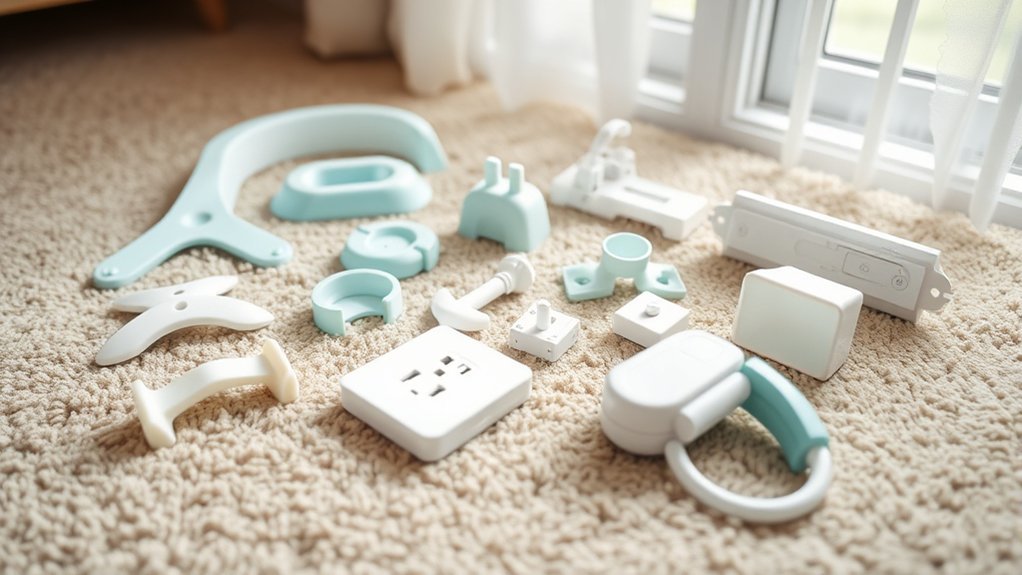
When it comes to keeping your little one safe, understanding babyproofing tools is essential. From edge guards to safety gates, these tools play an important role in preventing accidents. You’ll want to make sure your home is secure, especially in areas where hazards lurk. Let’s explore the key tools and strategies that can help create a safer environment for your child, starting with the most overlooked areas in your home.
Understanding the Importance of Babyproofing
When you bring a baby home, ensuring their safety becomes a top priority, as even the most mundane household items can pose risks.
Babies are naturally curious, exploring their surroundings and often getting into things they shouldn’t. Understanding the importance of babyproofing means recognizing potential hazards like sharp edges, choking hazards, and toxic substances.
You’ll need to assess each room, envisioning how your baby might interact with it. This proactive approach not only protects your child but also gives you peace of mind, allowing you to focus on bonding and nurturing.
Essential Babyproofing Tools for Every Home
When it comes to babyproofing your home, having the right tools is essential for keeping your little one safe.
You’ll want to contemplate corner and edge guards, safety gates and locks, and outlet covers and plugs.
Each of these tools plays a vital role in preventing accidents and ensuring a secure environment for your child.
Corner and Edge Guards
Corner and edge guards are crucial tools for any home with young children, as they provide essential protection against sharp furniture edges and corners.
These simple yet effective products help prevent injuries from falls and bumps, giving you peace of mind as your little ones explore their environment.
When choosing guards, look for soft materials that easily adhere to surfaces, making sure they stay in place.
Installation is typically straightforward—just clean the area, peel off the adhesive backing, and secure the guard.
Remember to regularly check them to confirm they’re still secure and effective.
Safety Gates and Locks
Safety gates and locks are essential tools for keeping your home secure and child-friendly. By installing safety gates at stairways and doorways, you can effectively limit your little one’s access to potentially hazardous areas.
Choose gates that fit your space properly and can be easily operated by adults while remaining secure against curious toddlers.
Locks are equally important; they prevent access to cabinets, drawers, and rooms that may contain harmful substances or sharp objects.
Opt for childproof locks that are straightforward for you to use but tricky for your child to figure out. Regularly check these tools for wear and proper installation.
Investing in quality safety gates and locks empowers you to create a safe environment for your child’s exploration.
Outlet Covers and Plugs
To guarantee your little explorer stays safe at home, outlet covers and plugs are indispensable tools in your babyproofing arsenal.
These simple devices help you prevent accidents and keep your child’s curiosity from leading to danger. Here are three essential benefits of using outlet covers and plugs:
- Prevent Electrical Shock: They block access to outlets, minimizing the risk of electrical hazards.
- Ease Your Mind: Knowing your child can’t access outlets allows you to relax and enjoy their playtime.
- Easy Installation: Most covers and plugs are simple to install, requiring no tools and little time.
Investing in these tools is a proactive step toward creating a safer home environment for your child, giving you the freedom to explore and enjoy your time together.
Tips for Securing Furniture and Heavy Items
To keep your little one safe, it’s essential to secure heavy furniture and items that could tip over.
Anchor bookshelves, dressers, and other tall pieces to the wall to prevent accidents.
Additionally, use corner protectors on sharp edges to minimize injury risks as your child explores.
Anchor Heavy Furniture
Anchoring heavy furniture is essential for preventing accidents in your home, especially when little ones are exploring.
It’s a simple step that can make a huge difference in your child’s safety. Here are three practical tips to help you secure those heavy items:
- Use Furniture Straps: Attach sturdy straps to the back of furniture and secure them to the wall. This keeps cabinets, dressers, and bookshelves from tipping over.
- Add Anti-Tip Brackets: Install brackets that connect furniture to the wall, providing extra stability and security.
- Distribute Weight Wisely: Keep heavier items on lower shelves. This reduces the risk of toppling if little hands decide to climb.
Use Corner Protectors
Securing your home goes beyond anchoring heavy furniture; it also involves protecting your child from sharp corners.
Installing corner protectors on furniture edges is a simple yet effective way to prevent injuries. These soft, cushioned guards absorb impact, reducing the risk of cuts and bruises when your little one explores.
Choose transparent or decorative styles to blend seamlessly with your decor.
Make certain to clean the surface before applying them to guarantee a strong bond. Regularly check the protectors to confirm they’re secure and intact, as wear can reduce their effectiveness.
Creating a Safe Environment in the Kitchen
While cooking can be a joyful activity, it’s important to make certain your kitchen is a safe space for little ones.
Here are three essential tips to keep your kitchen safe:
- Store hazardous items securely: Keep knives, cleaning supplies, and sharp utensils in locked cabinets or high shelves, out of reach.
- Use stove guards: Install stove guards to prevent little hands from reaching hot burners and avoid accidents.
- Create a play zone: Designate a safe play area away from the cooking zone, allowing your child to explore while you prepare meals without worry.
Childproofing Electrical Outlets and Cords
When it comes to childproofing your home, addressing electrical outlets and cords is essential for ensuring your child’s safety.
Start by using outlet covers to prevent curious little fingers from accessing live outlets. Look for tamper-resistant models that automatically close when not in use.
If you have cords, keep them out of reach or use cord management solutions to minimize tangling and tripping hazards. Additionally, consider securing any loose cords with adhesive clips or cord wraps.
Keep electrical devices, like chargers and power strips, away from play areas.
Regularly inspect your outlets and cords for signs of wear or damage, and replace any faulty items immediately.
Taking these steps will empower you to create a safer environment for your child.
Outdoor Safety: Keeping Your Child Secure
Guaranteeing your child’s safety outdoors requires proactive measures and a watchful eye.
To keep your little one secure while they explore, follow these essential tips:
- Fencing: Install a sturdy fence around your yard to create a safe boundary, preventing unexpected exits.
- Supervision: Always keep an eye on your child while they play. Engage with them to guarantee they’re aware of their surroundings.
- Play Equipment: Choose age-appropriate playground equipment and regularly inspect it for safety hazards, like sharp edges or loose parts.
Frequently Asked Questions
What Age Should I Start Babyproofing My Home?
You should start babyproofing your home around 6 months, when your baby begins to crawl and explore. Being proactive guarantees their safety and gives you peace of mind as they grow and become more mobile.
How Often Should I Reassess My Babyproofing Measures?
You should reassess your babyproofing measures every few months or whenever your child reaches a new developmental stage. Regular checks guarantee your home stays safe as they explore and grow, adapting to their changing needs.
Are There Any Environmentally Friendly Babyproofing Products?
Yes, you can find environmentally friendly babyproofing products like natural rubber corner guards, non-toxic outlet covers, and organic crib liners. These options guarantee safety for your child while minimizing environmental impact, helping you create a healthier home.
Can Pets Affect Babyproofing Strategies?
Your playful pup or curious cat can turn babyproofing into a puzzle. They might nudge objects, knock over barriers, or chew on safety gear. Adjust your strategies to guarantee both babies and pets stay safe together.
How Can I Involve My Child in Safety Awareness?
Involve your child by explaining safety rules, making it a fun game. Encourage them to identify potential dangers, and praise their efforts. This helps them understand safety while empowering them to take responsibility for their environment.
Conclusion
By taking the time to babyproof your home, you’re not just putting up safety measures; you’re laying a solid foundation for your child’s growth and exploration. Remember, an ounce of prevention is worth a pound of cure. With the right tools and strategies in place, you can create a nurturing environment where your little one can thrive without unnecessary risks. Stay proactive and enjoy peace of mind as you watch your child discover the world around them.
