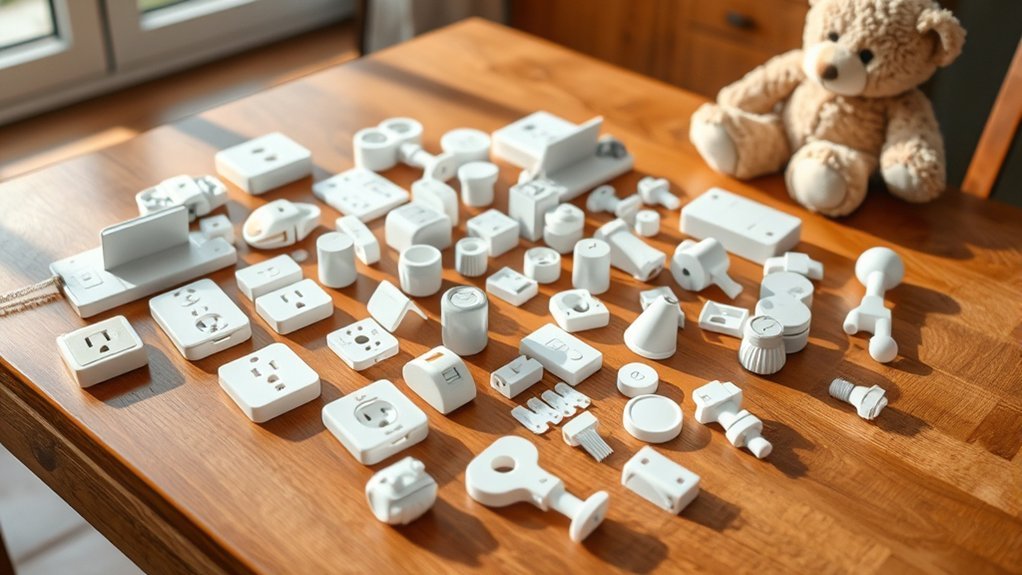
Imagine a toddler stumbling into sharp furniture edges or reaching for small items that could pose a choking hazard. These scenarios are all too common in many homes across the U.S., underscoring the urgent need for effective babyproofing tools. Understanding the various risks your little ones face can help you create a safer environment. What are the essential safety measures you might be overlooking that could prevent accidents?
Common Household Hazards for Children
When it comes to keeping your little ones safe at home, awareness of common household hazards is essential. Many everyday items can pose risks, from sharp edges on furniture to choking hazards like small toys.
Electrical outlets are another concern; consider using outlet covers to minimize danger. Cleaning supplies often contain toxic substances, so store them out of reach or in locked cabinets.
Additionally, heavy furniture should be anchored to prevent tipping. Be mindful of cords from blinds or electronics, as they can create strangulation risks.
Regularly inspect your home for these hazards and take proactive steps to create a safer environment. Empower yourself by making these adjustments, ensuring your child can explore their world without unnecessary risks.
The Impact of Falls and Injuries
While you may take every precaution to babyproof your home, falls and injuries can still occur, often with serious consequences. These incidents can lead to physical harm, emotional trauma, and even long-term developmental issues.
It’s heart-wrenching to witness your child in pain, and the guilt can weigh heavily on you. Understanding the common scenarios where falls happen—like stairs, furniture, and wet surfaces—can empower you to enhance safety measures.
Regularly checking your environment for potential hazards and being proactive can greatly reduce risks. Remember, your child’s curiosity is natural, but so is your desire to protect them.
Choking Hazards in Everyday Items
As a parent, you mightn’t realize that common household items, toys, and even certain foods can pose choking hazards for your little one.
It’s essential to identify these risks to create a safer environment for your child. By being aware of the potential dangers, you can take proactive steps to keep them safe from choking incidents.
Common Household Objects
Everyday household items can unexpectedly turn into choking hazards for young children. Small objects you might overlook, like coins, buttons, or batteries, can pose serious risks.
Even items like food packaging, twist ties, and small appliance parts aren’t safe. You may not realize that a simple rubber band can easily fit into a toddler’s mouth.
It’s vital to stay vigilant; children are naturally curious and often explore everything. Regularly check your living space for these potential dangers and secure items in high cabinets or drawers.
Toys and Accessories
When selecting toys and accessories for your little one, it’s crucial to be mindful of their safety. Many seemingly harmless items can pose choking hazards.
Here are some common risks to reflect on:
- Small Parts: Toys with detachable pieces can easily be swallowed.
- Balloon Fragments: Deflated balloons are a choking risk if they break.
- Marbles and Small Balls: These items can fit perfectly in a child’s throat.
- Button Batteries: Found in many toys, they can be deadly if ingested.
Always inspect toys for age-appropriateness and avoid those labeled for children under three.
Food Items Risks
While keeping an eye on toys and accessories is essential, don’t overlook the potential choking hazards lurking in your kitchen. Everyday food items can pose serious risks to your little one.
Foods like grapes, nuts, and popcorn are notorious for being difficult to chew and can easily obstruct a child’s airway. Even small pieces of hot dogs can be dangerous if not cut properly.
Always slice food into manageable pieces and stay vigilant during mealtime. Encourage your child to chew slowly and avoid distractions while eating to minimize risks.
Electrical Safety Concerns
When it comes to keeping your little one safe, electrical hazards are a significant concern that shouldn’t be overlooked.
You’ll want to focus on outlet safety solutions and how to childproof your electrical appliances effectively.
Common Electrical Hazards
Although electrical hazards can often seem invisible, they pose significant risks in homes with young children.
It’s essential to stay vigilant about these dangers to guarantee everyone’s safety. Here are some common electrical hazards to be aware of:
- Exposed wiring: Damaged cords can lead to shocks or fires.
- Overloaded outlets: Plugging too many devices can cause overheating.
- Unsecured cords: Loose cords can create tripping hazards or be chewed on by curious toddlers.
- Wet areas: Using electrical devices near water increases shock risks.
Outlet Safety Solutions
To protect your little ones from electrical hazards, addressing outlet safety is paramount. You can create a safer environment by using simple solutions. Here are some effective outlet safety options:
| Solution | Description |
|---|---|
| Outlet Covers | Block access to unused outlets. |
| Tamper-Resistant Outlets | Built with safety shutters to prevent foreign objects. |
| Power Strip with Safety Switch | Cuts off power easily, reducing risks. |
| Childproofing Plates | Replace standard plates with secure options. |
| Cord Shorteners | Keep cords out of reach and organized. |
Childproofing Electrical Appliances
As you navigate the challenges of keeping your home safe for your little ones, childproofing electrical appliances is essential to mitigate potential hazards.
Here are some key steps to take into account:
- Secure cords: Use cord organizers to keep them out of reach and prevent tripping.
- Cover outlets: Install safety covers on unused outlets to avoid accidental shocks.
- Store appliances safely: Keep appliances like toasters and irons out of reach or locked away.
- Educate older kids: Teach them about electrical safety and the dangers of playing with devices.
Toxic Substances and Poisoning Risks
When you welcome a baby into your home, it’s essential to be aware of the potential poisoning risks posed by toxic substances lurking in everyday items.
Common household products, like cleaning supplies, medications, and certain plants, can be hazardous if your little one gets into them. Always read labels and store these items out of reach or in locked cabinets.
Even seemingly harmless items, such as essential oils or beauty products, can pose risks. Keep an eye out for toys made from non-toxic materials, too.
By staying informed and vigilant about these dangers, you can create a safer environment for your child, allowing them to explore their world freely while minimizing risks of poisoning.
Your proactive approach is crucial.
The Importance of Proactive Safety Measures
Recognizing the potential hazards in your home is just the first step; taking proactive safety measures can make all the difference in protecting your child.
Identifying hazards in your home is crucial; proactive safety measures are key to safeguarding your child.
By anticipating risks and addressing them before they become issues, you empower yourself and create a safer environment. Here are some essential proactive steps to take into account:
- Install safety gates at stairways.
- Secure heavy furniture to the wall to prevent tipping.
- Use outlet covers to block electrical sockets.
- Keep harmful substances out of reach or locked away.
These measures not only protect your child but also give you peace of mind.
Frequently Asked Questions
What Age Should I Start Babyproofing My Home?
You should start babyproofing your home as soon as your baby begins to crawl, usually around six to ten months old. This proactive step helps create a safe environment for your little one’s exploration and development.
How Often Should I Reassess My Babyproofing Measures?
You should reassess your babyproofing measures every few months or after significant changes, like your child’s developmental milestones. Staying proactive guarantees your home remains a safe haven, letting your little one explore freely and confidently.
Are There Specific Tools for Outdoor Babyproofing?
Yes, you can use specific tools for outdoor babyproofing, like safety gates, pool covers, and corner guards. Always consider your environment and child’s needs to create a safe, liberating space for exploration and play.
How Can I Involve Older Siblings in Babyproofing?
Involving older siblings in babyproofing’s like inviting them to build a fortress of safety. Let them choose safety devices, explain dangers, and create fun tasks. Empower them, turning their curiosity into guardianship for their new sibling.
What Are the Costs Associated With Babyproofing?
The costs associated with babyproofing can vary widely, ranging from affordable DIY solutions to higher-end products. You’ll want to budget for safety gates, outlet covers, and furniture anchors to guarantee a secure environment.
Conclusion
In the world of little ones, “an ounce of prevention is worth a pound of cure.” By understanding common household hazards and taking proactive steps to babyproof your home, you can greatly reduce the risk of injuries. Whether it’s securing sharp edges, locking away harmful substances, or ensuring electrical safety, these measures create a safer environment for your curious child. Remember, a little vigilance today can lead to big peace of mind tomorrow.
