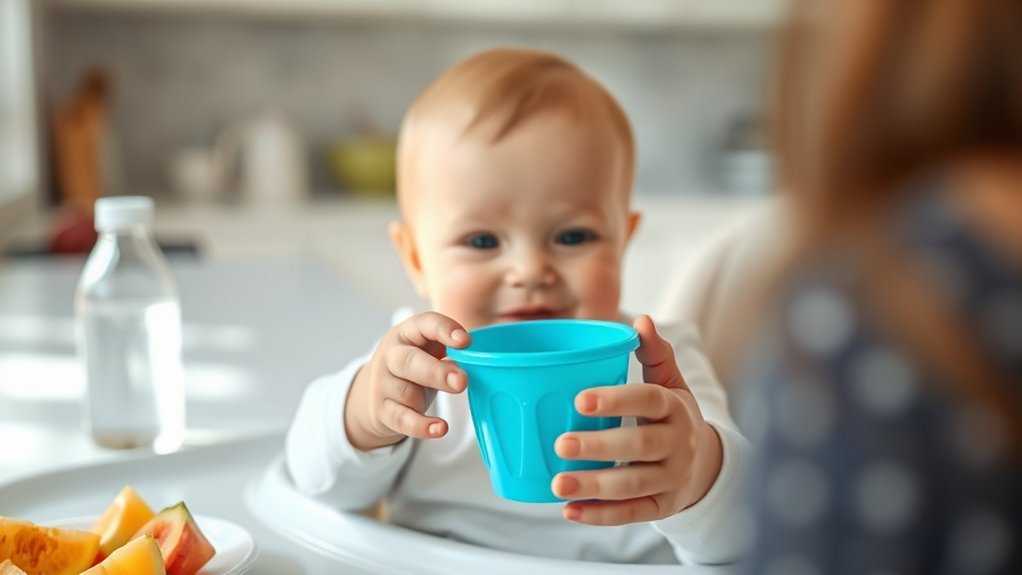
Keeping your baby hydrated starts with knowing what’s normal at each age. Under 6 months, breast milk or formula is enough; after solids begin, you can offer small amounts of water. Watch for dry mouth, fewer wet diapers, dark urine, or no tears. During illness, use an oral rehydration solution instead of sugary drinks. In hot weather or teething, feed more often and offer small sips. Keep going to learn when to call your pediatrician.
What Causes Dehydration in Babies?
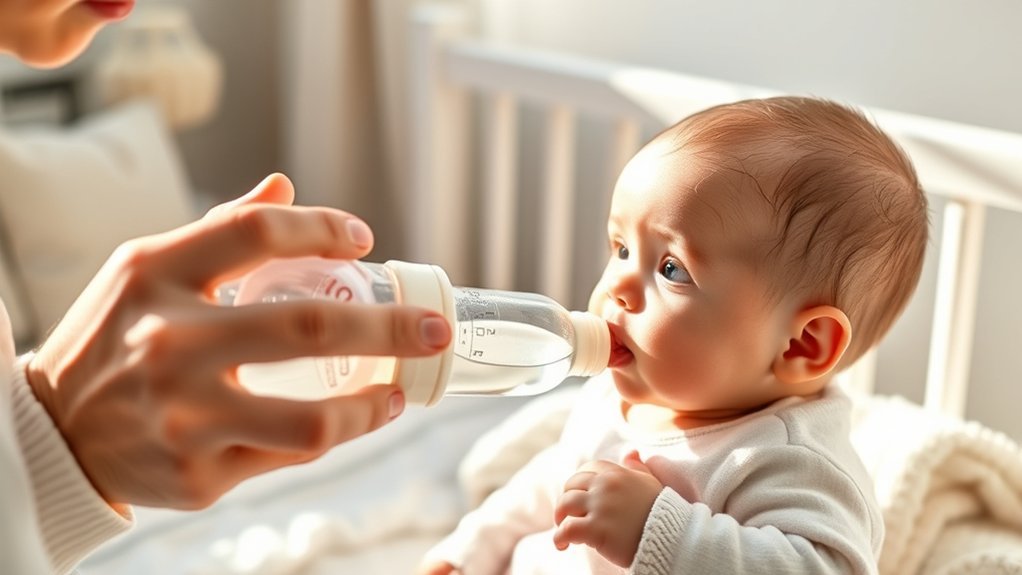
Dehydration in babies often starts when they lose more fluid than they take in, most commonly from diarrhea, vomiting, or fever. You can also see dehydration when your baby won’t drink because of mouth sores or belly pain.
Babies can become dehydrated quickly from diarrhea, vomiting, fever, or not drinking بسبب mouth sores or belly pain.
This matters especially for infants under 6 months, who depend on breast milk or formula for all hydration. Because they can’t add extra fluids, even short illness can upset their balance.
You help by offering breast milk or formula often and watching closely for signs of dehydration such as dry mouth, fewer wet diapers, or less crying tears. Recognizing early signs of dehydration can make a significant difference in your baby’s health.
These clues don’t mean panic, but they do mean you should act early. If your baby keeps losing fluids, won’t feed, or doesn’t improve within 24 hours, get medical advice promptly. Quick support protects your baby’s body and keeps you in control of the situation.
Signs of Dehydration in Babies
When your baby isn’t getting enough fluid, the signs can show up quickly, so it helps to know what to watch for.
- Dry mouth or no tears when crying
- Fewer wet diapers or very dark urine
- Skin that doesn’t spring back on the pinch test
- Lethargy or unusual irritability
- Sunken eyes, cracked lips, or a high fever
These signs can point to dehydration in a baby, and early action matters. Proper hydration is essential for overall well-being, so be vigilant about your baby’s fluid intake.
If your infant under 3 months has a fever, or if there’s been no wet diaper for over 6 hours, call a health care provider promptly.
You’re not overreacting by trusting your instincts; you’re protecting your child’s freedom to stay well.
Severe symptoms need urgent medical care, so don’t wait if your baby seems weak, hard to wake, or more dehydrated.
Watching closely helps you respond fast and confidently.
Best Drinks for Baby Hydration
What should you offer your baby to drink? The best drinks for baby hydration depend on age and health. If your baby is under 6 months, breast milk or formula gives enough fluid, so you don’t need extra water.
Once you begin solids, you can add water gradually, and it’s the safest everyday choice for baby hydration. By 1 year, your baby can usually drink more water with meals and snacks.
Once solids begin, offer water gradually; by 1 year, it can accompany meals and snacks safely.
When illness hits, oral rehydration solutions like Pedialyte can help replace lost fluids; use them as directed, and don’t mix or dilute them with formula. Additionally, be aware that excessive crying episodes may signal dehydration, so monitor your baby’s behavior closely.
For babies over 1 year, clear juices, Jello, and popsicles made from ORS can also support hydration. Keep sugary drinks limited, especially before age 1, because they can worsen dehydration.
Pair fluids with hydrating foods, and let your baby’s needs guide you.
How Much Babies Should Drink
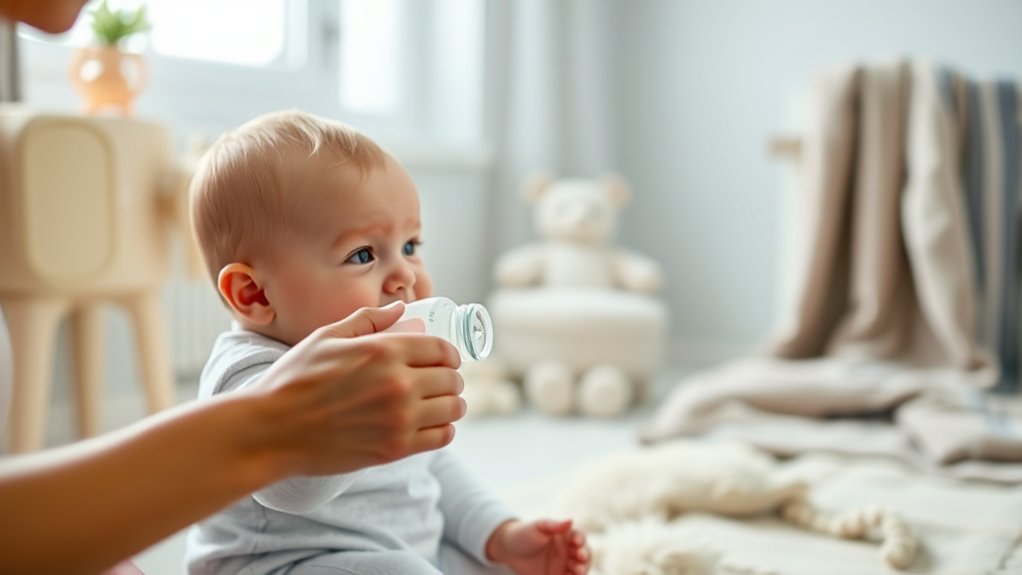
Now that you know which drinks are best, the next question is how much your baby should have each day. For babies under 6 months, breast milk or formula usually covers their fluid needs, so you don’t need to add much water.
As your baby grows, you can match intake to child needs and build healthy hydration habits without pressure.
- 0–6 months: no extra water for most babies
- 6–12 months: start with about 4 ounces daily
- Near 1 year: increase gradually to about 8 ounces
- 12 months: offer 1 to 4 cups of water, plus cow’s milk
- Under 1 year: avoid juice; age 1–3 years: limit to 4 ounces
Watch for dry lips, fewer wet diapers, or fussiness. Those signs can mean your baby needs more fluids.
Trust the basics, stay flexible, and let your baby’s cues guide you. Additionally, ensuring fresh water is always available is essential for your baby’s hydration needs.
Hydration Tips for Newborns and Infants
For newborns and young infants, breast milk or formula usually provides all the hydration they need, so you don’t need to add extra water before about 6 months. Trust that your child’s body knows what to do, and keep feeding on demand. In hot weather, offer breast milk or formula more often to keep your baby comfortable and hydrated. It’s important to monitor signs of dehydration to ensure your baby remains healthy.
| What to watch | What it means |
|---|---|
| Dry lips | Possible dehydration |
| Fewer wet diapers | Check hydration |
| Dark yellow urine | Call your pediatrician |
| Unusual fussiness | Your baby may be dehydrated |
| 6 months or older | You can begin small amounts of water |
If your baby goes 6 hours without a wet diaper, seek medical advice. Watch urine color and diaper count closely. Around 6 months, you can start about 4 ounces of water daily, then increase gradually to 8 ounces by 12 months. If you’re unsure, ask your pediatrician—support yourself with facts, not fear, and keep your child thriving.
Water and Milk for Older Babies
As your baby grows into the 6- to 12-month stage, you can begin offering small amounts of water—about 4 ounces a day at first, then gradually increasing to around 8 ounces by 12 months.
Breast milk or formula still covers most needs before 12 months, so you don’t need to push extra fluids for younger children.
- Offer water with meals.
- Use a small open cup or training cup.
- Keep juice off the menu under 1 year.
- At 12 months, switch to whole cow’s milk.
- After 1 year, aim for 1 to 4 cups per day.
You can let your child drink water throughout the day to stay hydrated without pressure. This steady, flexible approach supports healthy habits and helps you trust your instincts. Remember to pay attention to signs of dehydration, as they can help ensure your little one remains properly hydrated.
If your baby seems unusually thirsty or you have concerns, check with your pediatrician for personalized guidance.
Baby Hydration in Hot Weather
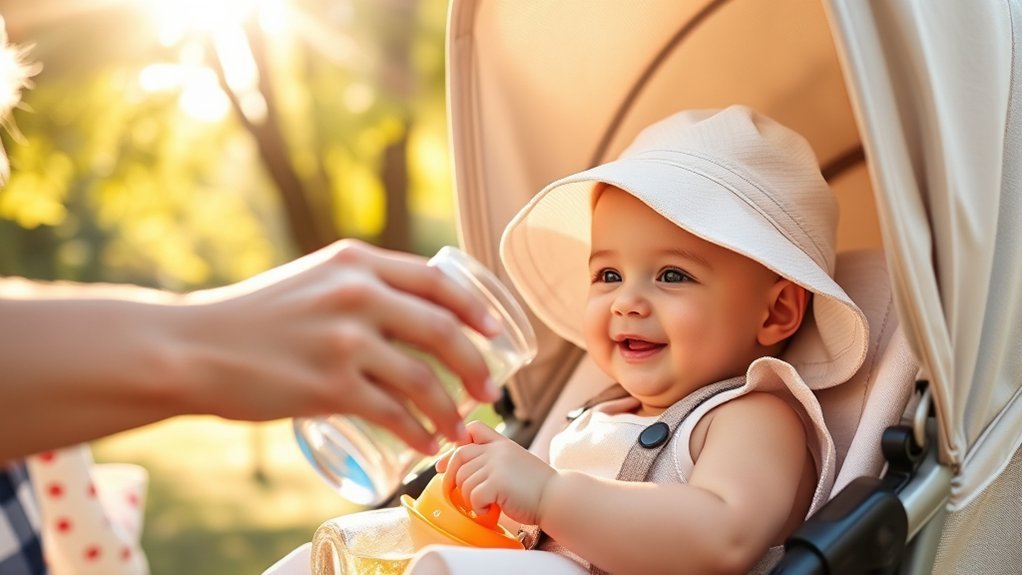
Hot weather can make it harder for babies to stay comfortable and hydrated, so it helps to adjust feeding and cooling routines a bit.
For baby hydration, breast milk or formula should remain the main source for babies under 6 months, since they don’t need extra water. If your little one is over 6 months, you can offer water gradually, beginning with about 4 ounces a day.
In hot weather, give smaller, more frequent feeds, especially if your baby eats solids. Dress your child in lightweight, breathable clothing, and skip outdoor outings when temperatures climb above 85°F.
Watch for dry lips, fewer wet diapers, or unusual fussiness, because your child may need more fluids. Staying alert helps you respond early and confidently. Hydration is vital for preventing constipation and ensuring digestive health, especially as solids are introduced.
If dehydration signs continue or you’re unsure what your baby needs, call their pediatrician for guidance.
How to Hydrate a Sick or Teething Baby
When your baby is sick or teething, offer small, frequent sips of an oral rehydration solution like Pedialyte to help keep fluids up without adding unnecessary sugar. For a sick or teething baby, this supports hydration better than sports drinks or sweet beverages.
Offer small, frequent sips of an oral rehydration solution like Pedialyte to help keep your baby hydrated.
If your child is under 1 year, give 1 to 2 teaspoons every 5 to 10 minutes; over 1 year, offer small 1/2 to 1 ounce amounts every 20 minutes.
- Hold back food and milk for 1 to 2 days during vomiting or diarrhea.
- Choose ORS over sugary drinks.
- Use chilled, soft foods if teething makes drinking hard.
- Try popsicles made from ORS for soothing relief.
- Watch for signs your child is dehydrated: dry mouth, fewer wet diapers, or unusual drowsiness. Understanding hydration is essential for preventing complications associated with constipation.
These simple steps help you protect hydration without pressure, so you can respond calmly and keep your baby supported.
When to Call the Pediatrician
You should call your pediatrician if you notice warning signs of dehydration, like a dry mouth, fewer wet diapers, or no tears when your baby cries.
If your baby hasn’t had a wet diaper in over 6 hours, seems unusually sleepy, or isn’t improving within 24 hours, get medical advice.
Seek urgent care right away for severe symptoms such as sunken eyes, hard breathing, or very dark urine, and call promptly if your infant under 3 months has a fever. Additionally, it’s important to monitor hydration levels as proper hydration helps soften stool for easier passage.
Warning Signs
If your baby seems less hydrated than usual, call your pediatrician promptly if you notice a dry mouth, fewer tears when crying, or a drop in urine output.
These signs of dehydration mean your baby may need water evaluation from your child’s doctor, not guesswork.
Watch for:
- fewer than six wet diapers in 24 hours
- brown urine or very dark urine
- sunken eyes
- hard breathing
- unusual lethargy
You know your baby best, so trust your instincts and reach out early.
If your infant is under three months and has a fever, call right away.
Prompt care helps you protect your little one and keeps you free to act before a mild fluid issue becomes a bigger problem.
Urgent Symptoms
Some symptoms mean you should call your pediatrician right away. If you notice urgent symptoms of dehydration, act fast. Dry mouth, no tears, fewer wet diapers, or no wet diaper for over 6 hours all point to trouble. Dark yellow or brown urine is another signal to contact your pediatrician.
| Symptom | Action |
|---|---|
| Dry mouth | Contact your pediatrician |
| No tears | Contact your pediatrician |
| High fever | Seek care now |
| Lethargy | Get help now |
If your baby has persistent vomiting, a high fever, or seems unusually sleepy, seek immediate medical attention. Infants under 3 months with any fever or odd behavior need prompt evaluation. Trust your instincts; you deserve clear answers and swift care.
Frequently Asked Questions
Can Babies Drink Flavored Water?
No, you shouldn’t give babies flavored water. You’ll find no real flavored water benefits, and sugar content concerns matter. Choose age appropriate choices like breast milk, formula, or plain water when your pediatrician approves.
Are Frozen Fruit Pops Safe for Hydration?
Yes, you can offer frozen fruit pops for hydration, but you should keep them unsweetened and age-appropriate. You’ll get some hydration benefits, yet watch safety concerns like choking. Try simple homemade recipes with mashed fruit.
Should Pacifier Use Affect Hydration?
Cut to the chase: pacifier use usually won’t affect hydration. You can trust Pacifier benefits and Pacifier safety, while watching Baby thirst cues. Hydration myths often mislead you; offer fluids as needed, and you’re set.
Do Wet Diapers Always Mean Good Hydration?
No, wet diapers don’t always mean good hydration. You should watch hydration signs, urine color, and dehydration symptoms too. If diapers seem fewer or urine’s dark, you can call your pediatrician.
Can Breastfed Babies Need Extra Water?
Usually, no—your 2-month-old Maya on frequent feeds doesn’t need extra water. You can trust breastfeeding patterns and hydration signs; age recommendations favor breast milk alone. Compared with formula comparisons, breastfed babies rarely need added water.
Conclusion
Keeping your baby hydrated doesn’t have to feel like walking a tightrope. Watch for early signs of dehydration, offer breast milk or formula often, and add small sips of water only when your baby is old enough. In hot weather or illness, pay close attention and act quickly if symptoms worsen. Trust your instincts—you know your baby best, and when something feels off, call your pediatrician.
