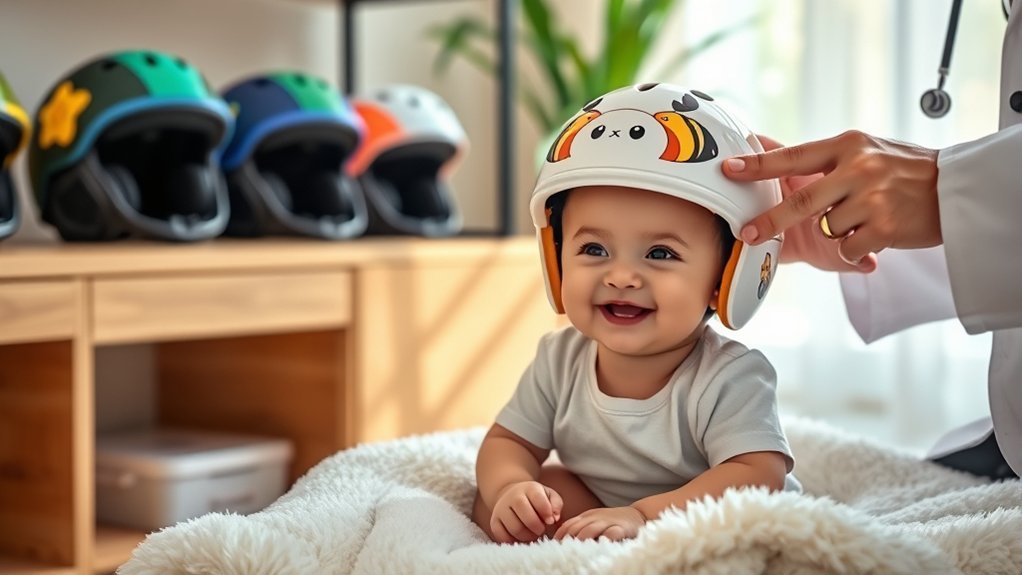
Baby helmets are widely misunderstood. Many parents run into misconceptions about these devices, leading to confusion and, sometimes, unnecessary stigma. Understanding what they actually do, and what they don’t, helps families make confident, informed decisions about their child’s care.
Quick Answer
- Baby helmets treat medical skull shape conditions like positional plagiocephaly, not cosmetic preferences.
- They do not delay development and are designed for comfort during daily wear.
- Babies with conditions beyond flat spots, such as brachycephaly, may also benefit from helmet therapy.
- Helmets vary in design, materials, and effectiveness, so proper fitting by a specialist matters.
Myth 1: Baby Helmets Are Just a Fashion Statement
Seeing a baby in a helmet might look like a style choice, but these devices serve a clear medical purpose. They treat positional plagiocephaly, a condition where a baby’s head develops a flat spot due to prolonged pressure on one area.
Baby helmets are not just a fashion statement; they play a crucial role in treating positional plagiocephaly for healthy skull development.
Pediatricians often recommend helmets to help reshape the skull during key developmental stages. The goal is healthy growth and preventing potential complications down the line.
These helmets are built for comfort and safety, providing the support a developing skull needs. Understanding their real purpose makes it easier to support families going through this common experience.
Myth 2: Wearing a Helmet Can Delay Development
Many parents worry that a helmet might slow their baby down. Research doesn’t support that concern.
These helmets are lightweight and comfortable, allowing babies to move freely through their daily activities. Studies show that babies adapt quickly and continue reaching developmental milestones on schedule.
The focus should stay on monitoring overall growth and keeping the environment stimulating, not on the helmet itself. The helmet’s job is to shape the skull safely, not to interrupt development.
Myth 3: Only Babies With Flat Heads Need Helmets
Flat spots are the most visible reason for helmet therapy, but they’re not the only one.
Conditions like positional plagiocephaly (asymmetrical head shape) and brachycephaly (a wider, flatter skull from front to back) can also call for a helmet. These devices gently guide skull growth toward a more balanced shape.
Helmet therapy can address both cosmetic concerns and potential developmental issues tied to cranial shape. A pediatric specialist can assess your baby’s specific situation and recommend the right approach. Early intervention tends to produce the best outcomes.
Myth 4: Baby Helmets Are Uncomfortable and Painful
It’s a fair concern, but most helmets are built with comfort as a priority. They use lightweight materials with ventilation to reduce heat and discomfort.
Many parents fear baby helmets are uncomfortable, but they are designed for comfort and ventilation, reducing any potential discomfort.
A properly fitted helmet should feel snug but not tight. Most babies adjust within a short period and quickly stop noticing they have it on.
Watch for any signs of discomfort during the first few days. If something seems off, a pediatrician or orthotist can check the fit and make adjustments. Getting the fit right is what matters most, and working with pediatric expertise can help address any specific health concerns around helmet use.
Myth 5: All Helmets Are the Same and Offer Equal Protection
Baby helmets differ considerably in design, materials, and effectiveness. Picking the right one matters for both safety and comfort. Here’s a general breakdown:
| Helmet Type | Material | Protection Level |
|---|---|---|
| Type A | Foam | Moderate |
| Type B | Hard Shell | High |
| Type C | Soft Fabric | Low |
| Type D | Multi-layer | Very High |
Each option offers different benefits and protection levels. Choosing one that fits your baby’s specific needs is worth the effort, and a specialist can help guide that decision.
When to Get an Evaluation
If you notice a flat spot or uneven shape on your baby’s head, bring it up at your next well-child visit. Pediatricians routinely check head shape, and early detection makes treatment more effective.
Most specialists prefer to evaluate babies between 3 and 6 months of age, when the skull is still growing quickly. Helmet therapy, if recommended, is generally most effective before 12 months.
You don’t need to wait for a problem to become obvious. If something looks off or a family member raises a concern, ask your doctor. A short evaluation can either put your mind at ease or catch something early enough to treat easily.
Frequently Asked Questions
How Long Does a Baby Typically Need to Wear a Helmet?
Most babies wear a helmet for about three to six months, depending on the condition. Regular follow-ups with your healthcare provider will track progress and help determine how long treatment should continue.
Are There Any Side Effects From Wearing a Baby Helmet?
Serious side effects are rare. Some babies experience mild skin irritation or brief discomfort in the first few days, but this usually resolves quickly with proper care and small adjustments to the fit.
Can Babies Sleep With Their Helmets On?
Yes. Helmets are designed for continuous wear, including during sleep, to support consistent head shape development. Always check with your pediatrician for guidance tailored to your baby’s specific needs.
How Do I Clean and Maintain My Baby’s Helmet?
Use mild soap and warm water, then rinse thoroughly. Check the helmet regularly for signs of wear, and store it in a cool, dry place when it’s not in use.
What Should I Do if My Baby Resists Wearing the Helmet?
Start slowly. Introduce the helmet gradually and use positive reinforcement. Distract your baby with toys or activities, and make sure the fit is comfortable, since discomfort tends to increase resistance. Most babies come around with a little patience.
Conclusion
Understanding what baby helmets actually do helps families feel less isolated in this process. These helmets aren’t accessories. They promote healthy skull growth, fit comfortably with proper care, and serve babies with a range of cranial shape conditions beyond just flat heads. Since helmets also vary in design and protection, working with a specialist makes a real difference. Clearing up these myths creates a more supportive environment for families navigating this aspect of infant care.
