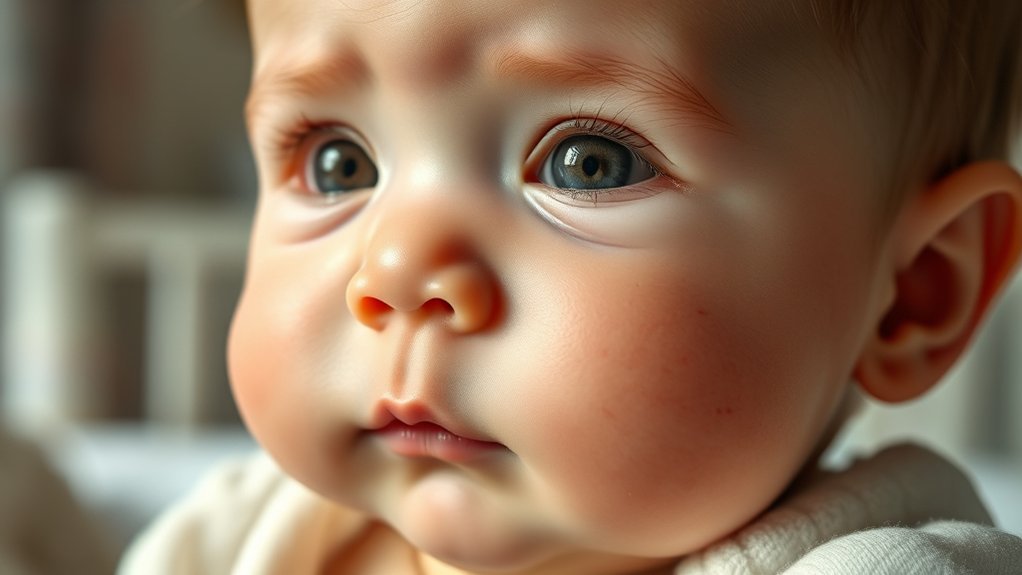
Have you noticed small red or white bumps on your baby’s skin? It’s common to feel concerned when your little one develops baby acne, especially in those early weeks. Understanding its causes, how to identify it, and the best ways to manage it can ease your worries. In this guide, we’ll explore essential information about baby acne, including when to seek professional advice and what treatments might be necessary.
What Causes Baby Acne?
While it’s important to worry when you notice tiny red bumps on your baby’s skin, understanding what causes baby acne can help ease your concerns. Baby acne typically emerges due to maternal hormones that affect your newborn during pregnancy. These hormones can stimulate your baby’s oil glands, leading to clogged pores and the characteristic red bumps. It’s important to recognize that baby acne is quite common and usually resolves on its own within a few weeks. Other factors, like friction from clothing or the use of certain products, may also contribute. Rest assured, baby acne is generally harmless and doesn’t require aggressive treatment. Maintaining gentle skin care can help support your baby’s skin during this temporary phase.
How Can I Identify Baby Acne?
How can you tell if those little red bumps on your baby’s face are acne? Baby acne typically appears as small, red or white bumps on the cheeks, forehead, and chin. These lesions often resemble tiny pimples or pustules and may be surrounded by a bit of redness. You might notice them appearing within the first few weeks after birth, and they usually resolve by the time your baby is around six months old. It’s important to observe that baby acne isn’t usually itchy or painful, and it can fluctuate in intensity. If you’re concerned, or if the bumps seem to worsen or become infected, consult your pediatrician for guidance. Remember, you’re not alone in this; many parents experience baby acne.
What Treatments Are Available for Baby Acne?
Wondering what treatments are available for baby acne? Fortunately, most cases resolve on their own without intervention. You can gently cleanse your baby’s face with mild soap and water to keep the area clean. Avoid scrubbing or using harsh products, as this can irritate the skin further.
If the acne seems persistent or severe, consider applying a small amount of over-the-counter acne cream that contains salicylic acid or benzoyl peroxide, but consult your pediatrician before doing so. Always avoid using adult acne treatments on your baby.
Lastly, remember that baby acne is common and usually temporary. Keeping your baby’s skin clean and avoiding irritants can help manage the condition effectively. Your pediatrician can provide additional guidance if needed.
When Should I Consult a Pediatrician?
When should you consider consulting a pediatrician about your baby’s acne? If your baby’s acne seems severe, persists beyond a few weeks, or worsens despite home care, it’s time to reach out to a healthcare professional. Additionally, if you notice any signs of infection, such as redness, swelling, or pus, don’t hesitate to seek advice. Sometimes, baby acne can be mistaken for other skin conditions, like eczema or milia, so getting a proper diagnosis is essential. It’s also important to consult if your baby appears uncomfortable or is experiencing unusual symptoms. Remember, your pediatrician is there to help you navigate these concerns and provide reassurance about your baby’s skin health. You’re not alone in this—professional guidance can be invaluable.
How Long Does Baby Acne Typically Last?
Most cases of baby acne resolve within three to four months after onset. You may notice the tiny red or white bumps appearing on your baby’s face, usually around two to four weeks after birth. While it can be concerning to see, it’s important to remember that baby acne is common and typically harmless. During this time, you might feel anxious or worried, but rest assured that the condition usually clears up on its own without treatment. Maintaining gentle cleansing of your baby’s skin and avoiding heavy creams can help. If the acne persists beyond four months or you notice signs of infection, consult your pediatrician for further guidance. Your baby’s comfort and health remain the top priority.
Frequently Asked Questions
Can Baby Acne Affect My Baby’s Overall Health?
No, baby acne doesn’t affect your baby’s overall health. It’s a common, temporary condition that usually resolves on its own. However, monitor for any changes or concerns, and consult your pediatrician if needed.
Is Baby Acne Contagious to Other Babies?
No, baby acne isn’t contagious to other babies. It’s a common skin condition caused by hormonal changes, and it doesn’t spread through contact. You shouldn’t worry about it affecting your baby’s health or others.
Can Certain Foods Trigger Baby Acne?
Yes, certain foods can trigger baby acne, though it’s rare. You may want to observe your baby’s reactions. If you notice flare-ups after introducing new foods, consult your pediatrician for personalized guidance.
Does Baby Acne Leave Permanent Scars?
No, baby acne typically doesn’t leave permanent scars. It usually resolves on its own within a few weeks to months. Keeping your baby’s skin clean and avoiding harsh products can help during this time.
Will Baby Acne Return After It Resolves?
Once the storm passes, baby acne typically doesn’t return. As your baby grows, their skin evolves, and the acne often resolves on its own, leaving no lasting effects. Regular check-ups can provide reassurance.
Conclusion
To summarize, baby acne is a common, temporary condition that usually clears up on its own. While it can be concerning, remember that it’s like a passing storm; it’ll soon be behind you and your little one. Keep an eye on the bumps, and don’t hesitate to reach out to your pediatrician if you notice any changes. With a little patience, you’ll soon be enjoying clear, baby-soft skin once again.
