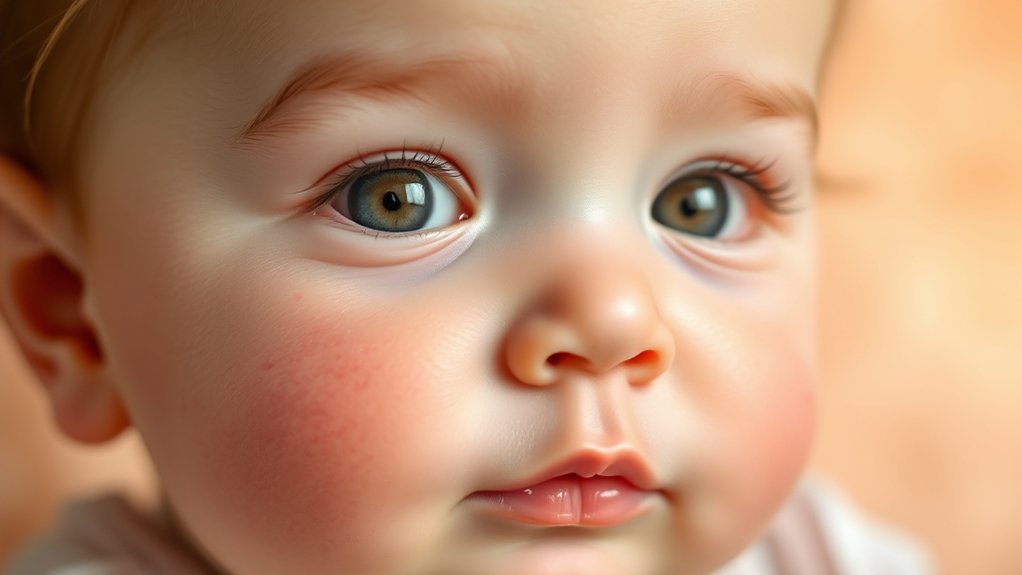
Picture your newborn’s delicate skin, suddenly dotted with tiny red bumps that seem to appear out of nowhere. This condition, known as baby acne, is more common than you might think, often caused by hormonal influences from maternal hormones. Understanding the causes and risk factors can help you navigate this phase with confidence. Let’s explore what you need to know about baby acne and how to manage it effectively.
Understanding Baby Acne
When you notice tiny red or white bumps on your baby’s skin, you might be concerned about baby acne, a common condition affecting newborns. This skin issue usually appears within the first few weeks of life and can affect various areas, including the cheeks, chin, and forehead. Baby acne is generally harmless and often resolves on its own within a few weeks or months. It’s important to remember that these bumps are not caused by poor hygiene or anything you’ve done. Instead, they result from your baby’s immature skin and its reaction to maternal hormones. Maintaining gentle cleansing with mild soap and avoiding heavy creams can help, but don’t hesitate to consult your pediatrician if you’re uncertain or concerned.
Hormonal Influences on Baby Acne
Hormonal influences play a significant role in the development of baby acne. Your newborn may be affected by maternal hormones that linger after birth, as well as their own hormonal changes. Additionally, androgens can contribute to the acne you see, making it important to understand these factors in your baby’s skin health.
Maternal Hormones Impact
Maternal hormones play a significant role in the development of baby acne, as they can influence the baby’s skin even before birth. During pregnancy, elevated levels of hormones like estrogen and progesterone can cross the placenta, affecting your baby’s sebaceous glands. This hormonal influx may lead to increased oil production, contributing to clogged pores and acne. While this is a natural process, it can understandably cause concern for new parents. It’s important to know that baby acne is usually temporary and typically resolves on its own within a few weeks or months. Keeping your baby’s skin clean and avoiding harsh products can help, but if you’re worried, don’t hesitate to consult your pediatrician for guidance and reassurance.
Newborn Hormonal Changes
After birth, your newborn continues to experience hormonal changes that can impact their skin. These fluctuations, primarily due to maternal hormones, can lead to baby acne, commonly appearing in the first few weeks of life. Understanding these changes can help you manage your baby’s skin condition effectively.
| Hormonal Change | Effect on Skin |
|---|---|
| Increase in estrogen | Stimulates oil production |
| Decrease in maternal hormones | Shift to newborn hormones |
| Fluctuations in androgens | Can contribute to acne breakouts |
These changes are typically temporary and resolve on their own. While it can be concerning to see acne on your little one’s face, it’s usually not harmful and requires minimal intervention. Always consult your pediatrician for personalized advice.
Androgen Influence on Acne
While it’s common to focus on the external factors affecting baby acne, the role of androgens can’t be overlooked. These hormones, which include testosterone, can stimulate oil production in your baby’s skin. During the first few weeks after birth, your little one’s hormones fluctuate considerably, and excess androgen can lead to clogged pores, resulting in acne. It’s important to remember that this condition is usually temporary and not a sign of any serious health issue. As a parent, you might feel concerned, but most babies outgrow this acne without treatment. Maintaining gentle skin care can help, but don’t hesitate to consult your pediatrician for advice tailored to your baby’s specific needs. Understanding these hormonal influences can provide reassurance during this phase.
The Role of Maternal Hormones
Maternal hormones play a significant role in the development of baby acne, influencing your infant’s skin even before birth. These hormonal changes can occur at various times during pregnancy and postpartum, affecting your baby’s skin health. Understanding the impact of your health and hormones can help you navigate these early skin challenges with more insight.
Hormonal Influence on Infants
When newborns enter the world, they often carry remnants of maternal hormones that can significantly impact their skin, leading to conditions like baby acne. These hormones, primarily androgens, can stimulate the sebaceous glands in your baby’s skin, causing an overproduction of oil. This excess oil can clog pores, resulting in the characteristic red, raised bumps associated with baby acne. It’s essential to remember that this condition is temporary and usually resolves on its own within a few months. As a parent, it’s understandable to be concerned, but maintaining a gentle skincare routine and avoiding harsh products can help. Always consult your pediatrician if you have questions or if the acne appears severe or persistent.
Timing of Hormonal Changes
The timing of hormonal changes in newborns plays a significant role in the development of baby acne. In the first few weeks after birth, your baby’s skin can react to maternal hormones still present in their system. These hormones, particularly androgens, can stimulate oil glands, leading to clogged pores and acne. Typically, this condition arises between two to four weeks of age, coinciding with the peak of these hormonal influences. While it might be concerning to see these changes on your baby’s skin, baby acne is usually harmless and resolves on its own within a few months. Understanding this timing helps you manage expectations and alleviates concerns during this natural phase of your baby’s development.
Maternal Health Impact
Although many factors contribute to the development of baby acne, maternal health plays a crucial role through the influence of hormones. When you’re pregnant, your body produces various hormones that can affect your baby’s skin. These hormones may stimulate the baby’s oil glands, leading to acne. Understanding this connection can help you feel more in control during this challenging time.
- You might worry about your baby’s skin, feeling helpless as a mother.
- The sight of baby acne can evoke feelings of concern and confusion.
- Knowing it’s a temporary issue can bring some relief amid the stress.
Recognizing that maternal hormones are part of the equation can provide reassurance, allowing you to focus on nurturing your little one during these early days.
Skin Type and Sensitivity
Since each baby’s skin is unique, understanding their specific skin type and sensitivity is essential in addressing concerns like baby acne. Babies can have varying skin types, ranging from oily to dry, and each type reacts differently to irritants. If your baby has sensitive skin, you might notice that their acne flares up with certain products or fabrics. It’s important to identify potential triggers to help manage their skin condition effectively. Gentle, fragrance-free cleansers are often the best choice for sensitive skin. Additionally, monitoring how your baby’s skin reacts to different environmental factors can provide valuable insights. By being attentive to your baby’s skin type, you can take proactive steps in alleviating baby acne and ensuring their comfort.
Environmental Triggers
Environmental factors can greatly influence your baby’s susceptibility to acne. Hormonal imbalances, often triggered by maternal hormones, may contribute to breakouts, while skin irritants from products or fabrics can exacerbate the condition. Recognizing these triggers can help you better manage your baby’s skin health.
Hormonal Imbalances
What factors contribute to hormonal imbalances that may trigger baby acne? Hormonal fluctuations are common during infancy, primarily due to maternal hormones. These imbalances can lead to increased oil production in your baby’s skin, causing breakouts. It’s important to recognize that this condition is generally temporary, but understanding its triggers can help you cope.
- You might feel helpless watching your little one struggle with skin issues.
- The sight of baby acne can worry new parents, leading to sleepless nights.
- Knowing it’s a natural phase can ease some anxiety, but it’s still tough to see.
If you have concerns about your baby’s skin, consult your pediatrician for guidance and reassurance.
Skin Irritants
Hormonal imbalances can set the stage for baby acne, but other factors, like skin irritants, also play a significant role. Your baby’s delicate skin can react to various environmental triggers, including harsh soaps, detergents, or even certain fabrics. These irritants can disrupt the skin’s natural barrier, leading to inflammation and breakouts. Additionally, exposure to excessive heat or humidity can exacerbate the condition, making it essential to create a comfortable environment for your little one. Pay attention to the products you use on your baby’s skin and choose gentle, hypoallergenic options. Keeping things simple and minimizing unnecessary exposure to potential irritants can help soothe your baby’s skin and reduce the likelihood of acne flare-ups.
The Impact of Skincare Products
While many parents might believe that baby acne is solely a result of hormonal changes or genetics, the use of certain skincare products can also play a significant role in its development. Many commercial products contain fragrances, oils, and harsh ingredients that can irritate your baby’s sensitive skin. It’s essential to choose gentle, hypoallergenic items designed specifically for infants.
- You want the best for your baby’s delicate skin.
- Frustration may arise from using products that worsen the condition.
- It’s heartbreaking to see your little one uncomfortable and distressed.
Common Misconceptions About Baby Acne
Many parents mistakenly believe that baby acne is a sign of poor hygiene or an allergic reaction to food. In reality, baby acne is quite common and typically arises from hormonal changes, not from anything you did or didn’t do. It often appears within the first few weeks of life and usually resolves on its own within months. Another misconception is that baby acne requires aggressive treatment; however, gentle care is all that’s needed. Washing your baby’s face with mild soap and avoiding harsh chemicals can help. Remember, it’s essential to maintain a calm perspective; your little one’s skin condition is temporary and rarely indicates a serious health issue. Understanding these facts can help ease your concerns during this stage.
When to Seek Medical Advice
When should you consider seeking medical advice for your baby’s acne? While baby acne is usually harmless, certain signs may indicate you need professional help. If you notice any of the following, don’t hesitate to reach out to your pediatrician:
- Your baby’s acne worsens or spreads rapidly, causing you concern.
- The lesions become red, inflamed, or filled with pus, which might suggest an infection.
- Your baby seems uncomfortable or in pain, as this could signal a more serious issue.
It’s always better to err on the side of caution when it comes to your baby’s health. Consulting a healthcare professional can provide peace of mind and guarantee your little one receives the care they need.
Tips for Managing Baby Acne
If you’ve consulted your pediatrician and determined that your baby’s acne is harmless, you might be looking for effective ways to manage it at home. Start by gently washing your baby’s face with mild soap and lukewarm water once daily to remove excess oils and dirt. Avoid scrubbing, as this can irritate the skin further. Keep your baby’s skin moisturized with a gentle, fragrance-free lotion to prevent dryness. Dressing your baby in breathable fabrics can also help minimize irritation. It’s essential to avoid using over-the-counter acne treatments designed for adults, as they may harm your baby’s delicate skin. Finally, resist the urge to pick at or squeeze the acne, as this can lead to scarring or infection.
The Prognosis for Baby Acne
While it can be concerning to see your baby develop acne, the prognosis for baby acne is generally very positive. Most cases resolve on their own within weeks or months, leaving no lasting effects. Understanding this can ease your worries as you navigate this common condition.
- Your baby’s skin is resilient and will heal naturally.
- Acne typically doesn’t cause pain or discomfort for your little one.
- It’s a normal part of development that many infants experience.
As a parent, it’s essential to focus on providing a gentle skincare routine and consulting your pediatrician if you have concerns. Remember, your baby’s acne is temporary, and soon, you’ll be cherishing that smooth, healthy skin once again.
Frequently Asked Questions
Can Baby Acne Occur in Infants Older Than Three Months?
Yes, baby acne can occur in infants older than three months. While it typically appears in the first few weeks, some babies may develop it later. It’s usually harmless and resolves on its own over time.
Is Baby Acne More Common in Certain Ethnicities?
Yes, baby acne can be more common in certain ethnicities, though research is limited. Understanding these variations helps you better support your child’s skin health and seek appropriate care when needed.
Can Breastfeeding Affect the Severity of Baby Acne?
Yes, breastfeeding can influence baby acne severity. Your diet may affect your milk composition, potentially impacting your baby’s skin. However, it’s important to remember that baby acne usually resolves on its own, regardless of breastfeeding.
Will Baby Acne Leave Permanent Scars on My Child’s Skin?
Ironically, baby acne rarely leaves permanent scars. Your child’s skin is resilient, and this condition typically resolves itself without intervention. You can rest easy knowing that their skin will likely return to its smooth, healthy state.
Are There Any Natural Remedies for Baby Acne?
You can try natural remedies like gentle cleansing with warm water, avoiding harsh soaps, and using breast milk on the affected areas. Always consult your pediatrician before trying any treatment to ascertain it’s safe for your baby.
Conclusion
To sum up, while baby acne can be concerning for new parents, it’s important to remember that it’s a common and harmless condition. You might worry about how it looks, but rest assured that it typically resolves on its own without treatment. Focus on gentle care and avoid harsh products to support your baby’s skin. If you notice severe irritation or if the acne persists, consulting your pediatrician can provide peace of mind and guidance.
