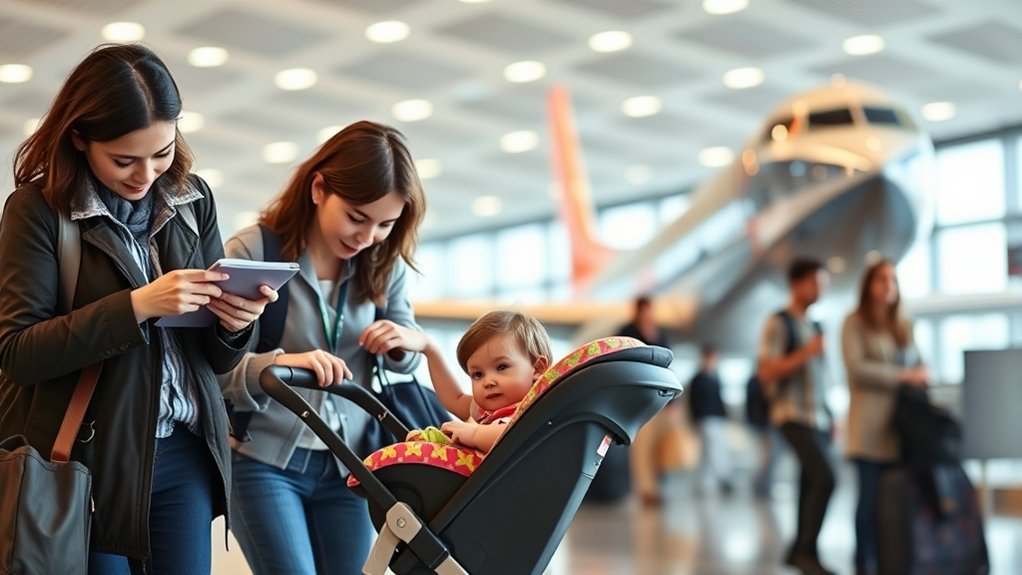
Isn’t it surprising how many parents underestimate the importance of car seats during air travel? Many believe they’re unnecessary or too cumbersome, but this notion can compromise a child’s safety. Understanding the facts behind car seat regulations and airline policies can change this perspective. As we explore the safety benefits and common misconceptions surrounding car seats, you’ll find that the right information can greatly impact your travel experience. What are the real truths behind these widely held beliefs?
Understanding the Need for Car Seats on Airplanes
When traveling by airplane, some parents might wonder why car seats are essential for their little ones.
Using a car seat during a flight guarantees your child’s safety by providing a secure environment, similar to that in a vehicle. In the event of turbulence or sudden stops, a properly installed car seat helps prevent injuries by restraining your child, reducing the risk of them being thrown around the cabin.
Additionally, familiarizing your child with their car seat can ease anxiety associated with flying. It’s also worth noting that car seats are designed to accommodate specific weight and height limits, guaranteeing that your child is properly supported.
Ultimately, investing in a car seat for air travel prioritizes your child’s safety and comfort throughout the journey.
Car Seat Regulations and Airline Policies
When traveling with a car seat, it’s essential to understand the FAA guidelines that govern their use on airplanes.
Each airline also has specific policies regarding car seats, which can vary considerably.
Familiarizing yourself with both will guarantee a smoother travel experience for you and your child.
FAA Guidelines Overview
Although steering through the complexities of FAA guidelines can be intimidating, understanding car seat regulations and airline policies is essential for ensuring your child’s safety during air travel.
The FAA recommends using a car seat that meets federal safety standards whenever possible. It’s vital that the car seat is appropriate for your child’s age, weight, and height.
Furthermore, the FAA specifies that car seats should be installed in a window seat to avoid obstruction during emergencies.
Remember, while the FAA sets the regulations, airlines may have additional policies. Always check with your airline beforehand to clarify their rules regarding car seats, including size restrictions and installation procedures.
Being informed helps you make safe choices for your child while traveling.
Airline Specific Policies
While maneuvering through airline-specific policies regarding car seats can seem intimidating, it’s vital to understand that each airline has its own regulations that may differ from FAA guidelines.
Familiarizing yourself with these policies can promote a smoother travel experience. Here are three key points to reflect on:
- Approval of Car Seats: Not all car seats are approved for air travel. Check your airline’s website for a list of approved models.
- Placement in Aircraft: Some airlines restrict car seat usage to specific seat types or rows, particularly concerning exit rows.
- Fees and Reservations: Some airlines charge fees for car seats or require you to reserve a seat in advance to use one.
Understanding these specifics can help you make informed decisions and enhance your travel experience.
Safety Benefits of Using Car Seats During Flights
Using a car seat during a flight greatly enhances your child’s safety by providing proper restraint and protection in the event of turbulence or other in-flight disturbances.
Additionally, having your child sit in a familiar car seat can reduce anxiety, making the travel experience smoother for both of you.
Understanding these benefits can help you make an informed decision about traveling with your little one.
Enhanced Child Protection
When you choose to use a car seat during flights, you’re not just following regulations; you’re greatly enhancing your child’s safety.
The benefits of using a car seat are significant:
- Crash Protection: In the unlikely event of turbulence or a sudden stop, a car seat provides essential support, minimizing injury risks.
- Proper Restraint: Car seats are designed to secure your child properly, ensuring they remain in place, unlike standard airplane seat belts that may not fit smaller children safely.
- Familiar Environment: A car seat offers a consistent seating arrangement, which can help your child feel more secure and protected during the flight.
Opting for a car seat means prioritizing your child’s safety while traveling, making your journey smoother and more secure.
Familiarity Reduces Anxiety
Familiarity breeds comfort, especially for young travelers traversing the unfamiliar environment of an airplane. Using a car seat during flights creates a consistent and secure setting for your child, reducing anxiety for both of you.
Children often feel more at ease in a familiar car seat, as it mirrors the safety and comfort they experience during car rides. This sense of security can help lessen their stress levels, allowing for a smoother travel experience.
Moreover, the structured environment of a car seat can minimize distractions and promote relaxation, which is particularly beneficial during takeoffs and landings.
Common Misconceptions About Car Seats and Air Travel
Many parents assume that car seats are only necessary for road travel, leading to misconceptions about their use during air travel.
Here are three common myths you might encounter:
- Car seats aren’t allowed on planes. In reality, most airlines permit FAA-approved car seats, guaranteeing your child’s safety in the air.
- Using a car seat on a plane is unnecessary. Experts recommend using a car seat for infants and toddlers, as it provides better support and security during turbulence.
- All car seats fit on all planes. Size and design vary, so it’s important to check your airline’s specifications to verify compatibility.
Understanding these misconceptions can help you make informed decisions about your child’s safety while flying.
Choosing the Right Car Seat for Air Travel
Choosing the right car seat for air travel becomes essential as you prioritize your child’s safety and comfort.
First, consider the car seat’s dimensions and weight; it should fit easily in the airplane seat while being lightweight enough for transport. Look for FAA-approved models, as they’ll indicate suitability for air travel. A five-point harness system is vital for ensuring your child is securely strapped in.
Additionally, evaluate the seat’s ease of installation; a user-friendly design can save you time and frustration during boarding.
Finally, think about your child’s age and size when selecting a model, since their needs change as they grow. The right car seat will make your journey safer and more enjoyable for both you and your child.
Tips for Installing a Car Seat on a Plane
While installing a car seat on a plane can seem intimidating, following a few straightforward steps can simplify the process.
Here are three tips to help you:
- Check Airline Guidelines: Before your flight, review the airline’s specific requirements for car seat installation, including size limits and approved models.
- Choose the Right Seat: Opt for a rear-facing or forward-facing car seat that fits securely in the airplane seat. Make sure it has a FAA-approved label.
- Practice Beforehand: Familiarize yourself with the installation process at home. This way, you’ll feel more confident and efficient when it’s time to install it in the airplane seat.
Alternative Options for Traveling Without a Car Seat
If you’re considering traveling without a car seat, several alternatives can guarantee your child’s safety and comfort during the flight.
One option is using an FAA-approved harness system, like the CARES harness, which secures your child in the airplane seat without bulk.
Another choice is to reserve a seat for your child, allowing them to sit securely without a car seat, especially if they meet the airline’s age and weight requirements.
You might also consider using a travel-friendly booster seat, which can be easier to transport.
Additionally, many airlines offer child safety seats for rental, providing a familiar setting for your child during the flight.
Each of these options can effectively assure your child travels safely and comfortably.
Preparing Your Child for Air Travel With a Car Seat
Preparing your child for air travel with a car seat requires careful planning to guarantee a smooth experience. To make the process easier, follow these steps:
- Familiarize Your Child: Introduce your child to the car seat at home. Let them explore it, sit in it, and understand its purpose. This reduces anxiety during travel.
- Practice Installation: Before your trip, practice installing the car seat in your vehicle and review the airline’s guidelines for using it on a plane. This makes sure you’re confident when it’s time to board.
- Pack Comfort Items: Bring along their favorite toys or blankets. Familiar items can help comfort your child and create a more relaxed atmosphere during the flight.
Frequently Asked Questions
Can I Use a Booster Seat on an Airplane?
You can’t use a booster seat on an airplane. Airlines typically require children to be secured with a regular seatbelt, so it’s crucial to check specific airline policies regarding child safety seats before traveling.
Are There Age Restrictions for Using Car Seats on Flights?
While there aren’t strict age restrictions for using car seats on flights, airlines often recommend them for children under two. Think of it as a cozy nest, ensuring safety and comfort during your journey.
How Do I Choose a Lightweight Car Seat for Travel?
To choose a lightweight car seat for travel, consider models under 15 pounds, look for easy installation features, guarantee it meets safety standards, and check if it’s compatible with your airline’s regulations for added convenience.
Can I Rent a Car Seat at My Destination?
Yes, you can rent a car seat at your destination. In fact, about 70% of rental car companies offer this service, ensuring you have a safe option for your child without the hassle of bringing one.
What if My Car Seat Doesn’t Fit in the Airplane Seat?
If your car seat doesn’t fit, you might need to contemplate alternative options. Check with the airline for guidelines, or use a different seat approved for air travel to guarantee your child’s safety.
Conclusion
In summary, using a car seat on an airplane isn’t just a choice; it’s a commitment to safety. It protects your child during turbulence, guarantees proper restraint, and familiarizes them with secure travel. By understanding regulations, debunking myths, and preparing effectively, you’re not only enhancing comfort but also embracing peace of mind. So, as you buckle up your little one, remember: safety, security, and serenity go hand in hand, making every flight a better experience for both of you.
