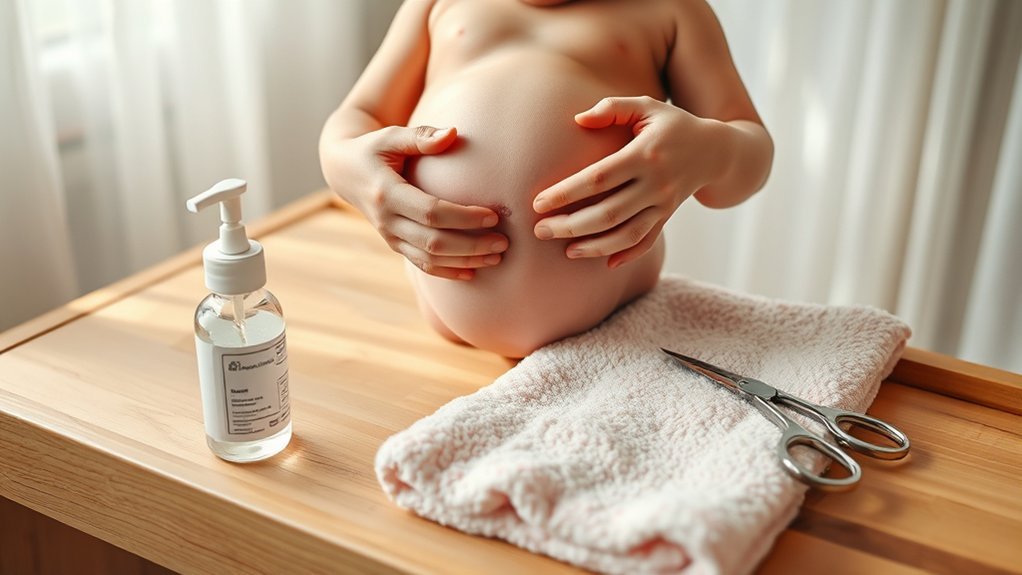
Proper umbilical cord care is mostly about keeping your newborn’s cord stump clean, dry, and protected from rubbing. You usually do not need special products or frequent cleaning. The key is knowing what normal healing looks like and which changes need prompt medical attention.
Quick Answer
Start umbilical cord care right after birth. Keep the stump clean, dry, and exposed to air; fold the diaper below it, use sponge baths, and clean only when it becomes soiled. Do not pull it off or routinely use rubbing alcohol unless your baby’s healthcare professional specifically tells you to. Most stumps fall off within 1 to 3 weeks.
Understanding the Umbilical Cord Stump
After birth, the umbilical cord is clamped and cut, leaving a short stump attached to your baby’s belly button. The stump gradually dries, shrivels, darkens, and separates on its own.
The American Academy of Pediatrics guidance on umbilical cord care recommends keeping the stump clean and dry while it heals. Routine rubbing alcohol is not needed.
As the stump dries, its color may change from yellowish or greenish to brown or black. Do not pull or twist it, even when it appears to be hanging by a small piece of tissue.
When to Start Umbilical Cord Care
Start caring for the stump as soon as your baby is born and continue until the stump has fallen off and the belly button area is dry and healed. Most of the routine involves leaving it alone while keeping urine, stool, and unnecessary moisture away from it.
Initial Care After Birth
Dry cord care is simple. Check the stump during diaper changes, keep the diaper from rubbing against it, and clean it only when needed.
| Step | Action |
|---|---|
| Keep it clean | Leave the stump alone unless it becomes soiled; clean dirt, urine, stool, or drainage gently. |
| Allow it to dry | Expose the stump to air and fold the front of the diaper below it. |
| Let it separate naturally | Do not pull, tug, or pick at the stump, even when it is nearly detached. |
Signs of Infection During Early Care
A healing stump should not develop spreading redness, marked swelling, tenderness, pus, or a strong foul smell. These changes can suggest an infection called omphalitis, which needs medical assessment.
Also watch your baby, not only the stump. Poor feeding, unusual sleepiness, marked irritability, or fever can be more concerning than the appearance of the cord alone.
Cleaning Techniques Recommended
You do not need to scrub or disinfect a normal cord stump every day. If it becomes dirty, use gentle cleaning and dry it afterward.
- Wash your hands before touching the stump.
- If the area is clean, leave it alone and let it stay dry.
- If urine or ordinary drainage soils the area, gently wipe it with clean water and a clean cloth or cotton swab.
- If stool gets on the stump, gently clean the soiled area with soap and water.
- Pat the stump dry with a clean cloth and leave it exposed to air.
- Fold the diaper below the stump so it does not rub against or cover it.
According to Mayo Clinic’s cord-care guidance, rubbing alcohol should not be used routinely unless your healthcare professional specifically recommends it.
What if the Umbilical Cord Stump Gets Wet or Dirty?
If the stump accidentally gets wet, you do not need to panic. Gently pat it dry and expose it to air. The goal is to avoid leaving the area damp rather than preventing every drop of water from touching it.
If urine or stool reaches the stump, clean the contamination promptly. Do not apply powders, oils, lotions, ointments, herbal products, or antiseptics unless your baby’s healthcare professional or local newborn-care program has specifically instructed you to use one.
Signs of Infection to Watch For
Umbilical infections are uncommon, but they can become serious in a newborn. Contact your baby’s healthcare professional promptly if the skin around the stump becomes red, warm, swollen, or tender, or if you see pus or foul-smelling discharge.
Redness spreading onto the surrounding skin, pus, foul odor, tenderness, or a sick-appearing baby should not be treated as normal cord healing.
- Redness spreading around the belly button
- Swelling, warmth, or tenderness around the stump
- Thick yellow or pus-like drainage
- A strong or foul odor
- Crying when the cord or nearby skin is touched
- Poor feeding, unusual tiredness, or marked irritability
- Fever
MedlinePlus guidance on newborn umbilical cord care notes that a cord infection can spread quickly, so concerning symptoms should be assessed rather than watched for several days at home.
When to Contact a Pediatrician
Call your pediatrician promptly for signs of infection, active or worsening bleeding, poor feeding, unusual lethargy, or a stump that is not healing normally. Newborns can become ill quickly, so changes in your baby’s overall condition deserve particular attention.
Warning: If your baby is 3 months old or younger and has a rectal temperature of 100.4°F (38°C) or higher, call your pediatrician immediately. If your baby is difficult to wake, struggling to breathe, or appears seriously ill, seek emergency medical care.
The American Academy of Pediatrics fever guidance recommends immediate medical advice for a baby 3 months or younger with a rectal temperature of 100.4°F (38°C) or higher.
Excessive Bleeding Issues
A few drops of blood around the time the stump separates can be normal, much like a small scab coming off. Active bleeding is different and needs medical advice.
Contact your baby’s healthcare professional if bleeding keeps dripping, becomes heavier, repeatedly returns, or does not settle. Also call if you see other concerning symptoms such as redness, swelling, pus, foul odor, fever, or poor feeding.
Note: This guide provides general newborn-care information. Your baby’s healthcare professional should assess symptoms that may indicate infection, abnormal bleeding, delayed healing, or illness.
What to Expect as the Stump Heals
Normal healing involves the stump drying, shrinking, darkening, and eventually falling off without help. Most stumps separate within 1 to 3 weeks.
- The stump may become brown or black as it dries.
- A small amount of clear or blood-tinged fluid around separation can occur.
- A few drops of blood when the stump falls off can be normal.
- The area should gradually become dry after separation.
- Do not pull off the stump, even if it seems ready to detach.
If the stump is still attached after 3 weeks, the American Academy of Pediatrics advises having your baby checked by a doctor. A persistent moist, red or brown bump after the stump falls off may be an umbilical granuloma, which can produce light-yellow fluid and may need pediatric treatment.
Can You Bathe a Baby Before the Cord Falls Off?
Sponge baths are generally recommended until the cord stump has fallen off and the belly button area is healing well. This makes it easier to keep the stump dry and avoids soaking it in bath water.
The American Academy of Pediatrics newborn bathing guidance recommends sponge baths while the stump remains attached. If the stump gets wet accidentally, gently dry it rather than rubbing it.
Frequently Asked Questions
Can I Use Alcohol on the Umbilical Cord Stump?
Routine rubbing alcohol is generally not recommended for a normal umbilical cord stump. Keep the area clean and dry instead. If your baby’s healthcare professional or local newborn-care program specifically tells you to use an antiseptic or another medicine, follow those instructions rather than applying products on your own.
How Long Does the Umbilical Cord Stump Usually Take to Fall Off?
Most umbilical cord stumps fall off naturally within 1 to 3 weeks after birth. Let the stump separate on its own, even if it is hanging by a small piece. If it is still attached after 3 weeks, arrange a check with your baby’s healthcare professional.
Is Bleeding Normal After the Stump Falls Off?
A few drops of blood around the time the stump falls off can be normal. The bleeding should be small and settle rather than continue dripping. Contact your baby’s healthcare professional if bleeding is active, worsening, repeatedly returns, or is accompanied by redness, swelling, discharge, fever, or illness.
Can I Give My Baby a Bath With the Cord Stump?
Use sponge baths until the stump falls off and the belly button area is healing well. This makes it easier to keep the stump dry. If the stump accidentally gets wet, that is not an emergency; gently pat it dry and avoid soaking it in bath water.
What Should I Do if the Stump Smells Bad?
A strong or foul smell can be a sign of infection, especially with yellow discharge, redness, swelling, warmth, tenderness, or fever. Contact your baby’s healthcare professional promptly rather than repeatedly cleaning the area and waiting. Keep the stump dry and avoid applying unprescribed antiseptics, powders, or ointments.
Conclusion
Good umbilical cord care is simple: keep the stump clean and dry, fold the diaper below it, use sponge baths, and let it fall off naturally. Watch your baby as well as the stump, and contact a healthcare professional promptly for infection signs, active bleeding, fever, poor feeding, unusual sleepiness, or delayed separation.
Sources
- American Academy of Pediatrics — Umbilical Cord Care in Newborns: Supports clean, dry cord care, infection signs, bleeding guidance, granuloma information, and the 3-week separation threshold.
- Mayo Clinic — Umbilical Cord Care: Supports keeping the stump dry, cleaning contamination, avoiding routine alcohol, normal minor bleeding, and the 1-to-3-week healing range.
- American Academy of Pediatrics — Bathing Your Newborn: Supports sponge bathing until the umbilical stump falls off.
- American Academy of Pediatrics — Fever and Your Baby: Supports immediate medical advice for babies 3 months or younger with a rectal temperature of 100.4°F (38°C) or higher.
- MedlinePlus — Umbilical Cord Care in Newborns: Supports clean cord care and warning signs of local or more serious infection.