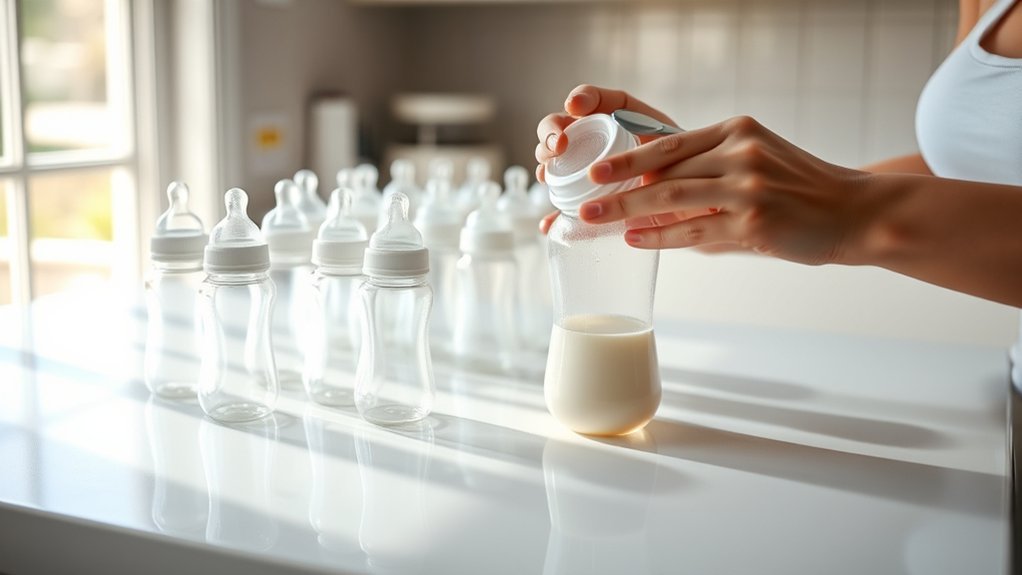
When you’re preparing bottles for your baby, it’s not just about the formula or breast milk—it’s also about ensuring your little one thrives during feedings. You might feel overwhelmed by the responsibility, especially if you notice any signs of trouble. Understanding when to seek help from a pediatrician is vital for your baby’s health. Let’s explore the essential steps for safe bottle preparation and the red flags you shouldn’t ignore.
Essential Steps for Preparing Bottles
When it comes to preparing bottles safely, there are five essential steps you shouldn’t overlook.
First, wash your hands thoroughly to prevent contamination.
Next, gather all the necessary supplies, including clean bottles, nipples, and formula or breast milk.
Third, measure the correct amount of liquid according to your baby’s age and nutritional needs.
Fourth, make certain everything is sterilized, especially for newborns, by boiling or using a sterilizer.
Finally, check the temperature of the milk by testing a few drops on your wrist—aim for body temperature.
Following these steps not only makes certain your baby’s safety but also grants you peace of mind, empowering you to nurture your little one with confidence and love.
Common Mistakes to Avoid
Even with a solid understanding of safe bottle preparation, mistakes can still happen that may compromise your baby’s health. One common error is using expired formula or milk; always check the expiration date.
Another pitfall is failing to sanitize bottles properly. You must guarantee all equipment is thoroughly cleaned to avoid bacterial contamination.
Ensure all baby bottles and equipment are sanitized properly to prevent harmful bacterial contamination.
Avoid warming bottles in microwaves, as this can create hot spots that may scald your baby. Instead, opt for warm water baths or bottle warmers.
Additionally, don’t mix different formula brands or types without consulting a pediatrician.
Finally, never leave prepared bottles out for extended periods; always refrigerate them immediately.
Recognizing Signs of Trouble
While preparing bottles safely is essential, it’s equally important to recognize signs that something may be wrong with your baby’s feeding routine. Pay close attention if your baby consistently refuses to eat or shows signs of distress during feeding.
If you notice excessive fussiness, unusual vomiting, or lethargy, these could be red flags. Watch for changes in their weight or diaper output; decreased urination can indicate dehydration.
It’s vital to stay attuned to any sudden changes in behavior or feeding patterns, as these may signal an underlying issue. Trust your instincts—if something feels off, don’t hesitate to seek guidance.
Your awareness and responsiveness can truly empower your caregiving journey, ensuring your baby’s health and comfort.
When to Consult a Pediatrician
How can you tell if it’s time to consult a pediatrician about your baby’s feeding habits? If your baby consistently refuses to eat or shows signs of distress during feeding, it’s essential to seek advice.
If your baby frequently refuses to eat or appears distressed during feeding, it’s crucial to consult a pediatrician.
Additionally, if you notice significant weight loss or your baby isn’t gaining weight as expected, don’t hesitate to reach out.
Frequent vomiting, diarrhea, or unusual lethargy can signal underlying issues that need professional attention.
If your baby’s feeding pattern drastically changes or if you have concerns about allergies, trust your instincts and call your pediatrician.
Tips for Safe Bottle Storage and Handling
To guarantee your baby’s feeding bottles remain safe and hygienic, it’s crucial to follow proper storage and handling practices.
Always wash your hands before touching bottles and verify they’re thoroughly cleaned. Store bottles in a cool, dry place, away from direct sunlight and heat sources. If you’re using formula, keep it refrigerated and use it within 24 hours.
When warming bottles, never use a microwave; opt for a warm water bath instead. Check the temperature before feeding to avoid burns.
After each use, clean and sterilize the bottles regularly. Don’t forget to replace any worn or damaged parts.
Frequently Asked Questions
Can I Use Tap Water for Preparing Baby Bottles?
You can use tap water for preparing baby bottles, but make sure it’s safe and clean. If you’re unsure about its quality, consider boiling it first or using bottled water for extra peace of mind.
How Long Can Prepared Bottles Be Stored in the Fridge?
You can store prepared bottles in the fridge for up to 24 hours. To keep your baby happy and healthy, always check the milk’s temperature before feeding. Remember, it’s better to be safe than sorry!
Is It Safe to Warm Bottles in the Microwave?
It’s not safe to warm bottles in the microwave. Microwaves heat unevenly, creating hot spots that can burn your baby. Instead, use warm water or a bottle warmer for a safe, gentle approach.
What Type of Bottle Is Best for My Baby?
Choosing glass bottles is often best, as they’re durable and free from harmful chemicals. Studies show that 70% of parents prefer glass for safety. You’ll feel empowered knowing you’re making a healthy choice for your baby.
How Often Should I Replace Baby Bottles?
You should replace baby bottles every three to four months, or sooner if you notice cracks, discoloration, or wear. Keeping bottles in good condition guarantees your baby’s safety and health, so stay vigilant.
Conclusion
As you journey through the joys and challenges of feeding your baby, think of each bottle like a small bridge connecting you to your child’s well-being. Just as a bridge needs regular checks for stability, so too does your baby’s feeding routine. If you notice any signs of trouble, don’t hesitate to reach out to a pediatrician. Trust your instincts; they’re your best guide in ensuring your little one’s health and happiness. You’re not alone in this journey.