Disclosure: As an Amazon Associate, we earn from qualifying purchases. If you buy through links on this page, we may earn a small commission at no extra cost to you.
By Editorial Team | Updated October 8, 2026
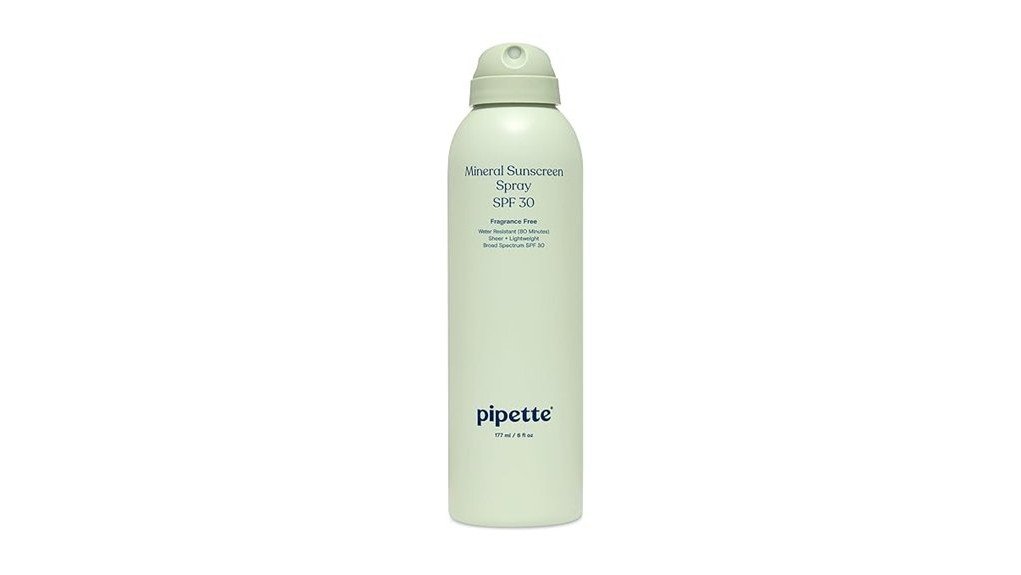
Pipette Baby Mineral Sunscreen Spray SPF 30 is a zinc oxide-based sunscreen designed for babies, children, and adults with sensitive skin. Its broad-spectrum formula uses non-nano zinc oxide and offers up to 80 minutes of water resistance. The 6-ounce container delivers a continuous spray that the brand says spreads easily across the body.
The main appeal is convenient mineral sun protection with moisturizing ingredients. However, the spray can feel thicker than expected, some buyers report a white cast, and careful application is essential. This review explains its ingredients, performance claims, owner experiences, and whether it is a sensible choice for your family.
Quick Verdict: Pipette Baby Mineral Sunscreen Spray
Editorial Rating: 7/10 Based on verified specifications, application guidance, and published owner feedback. Not hands-on testing.
Broad Spectrum
80-Minute Water Resistance
Non-Nano Zinc Oxide
Fragrance-Free
6 fl oz
Best for: Families seeking a fragrance-free mineral sunscreen for body application, particularly children aged six months and older.
Skip if: You want a clear, fine-mist spray, dislike rubbing in sunscreen, or prefer SPF 50 protection in a lotion or stick.
Bottom line: The formula has useful features, but its real-world application is less effortless than the marketing suggests. It is worth considering if you are comfortable spreading the product by hand and checking for complete coverage.
Before You Buy: Four Things to Know
- It is not a clear mist. Some owners describe a thick white spray that needs rubbing in.
- Spray carefully. Use a ventilated area, avoid breathing the mist, and never spray directly onto the face.
- Age matters. Babies younger than six months need special sun precautions. Ask a doctor before using this product on them.
- Check the label. Pipette currently lists 14% zinc oxide, while some third-party listings show a different concentration. The Drug Facts label on your container is the key reference.
Review Contents
Key Takeaways
- Mineral protection: Pipette uses non-nano zinc oxide for broad-spectrum SPF 30 sun protection.
- Water resistance: The formula is labeled water-resistant for up to 80 minutes, not waterproof.
- Skin-focused ingredients: Sugarcane-derived squalane, bisabolol, and aloe leaf juice support the formula’s moisturizing properties.
- Application trade-off: The continuous spray can simplify dispensing, but it still needs to be spread evenly across the skin.
- Mixed owner experiences: Some families praise its gentle feel and convenience. Others report a thick texture, visible white residue, or disappointing results.
- Age guidance: Sun protection for infants younger than six months should focus on shade and clothing, with medical guidance before sunscreen use.
Top Reasons Parents Choose Pipette Baby Sunscreen
Pipette Baby Mineral Sunscreen Spray combines a mineral UV filter with a continuous-spray container and moisturizing ingredients. These features make it appealing to parents who want one sunscreen for several family members.
1. Mineral-Based Sun Protection
Zinc oxide is the sunscreen’s active ingredient. It provides broad-spectrum protection against UVA and UVB radiation without relying on organic chemical UV filters as active ingredients.
The formulation may appeal to people who prefer mineral sunscreens, although mineral ingredients alone do not guarantee that a product will suit every skin type.
2. Continuous-Spray Application
The spray design lets you dispense sunscreen without squeezing a bottle. This may help when applying sunscreen to arms, legs, backs, and other larger areas.
However, spraying does not guarantee even protection. You must use enough product and spread it over all exposed skin.
3. A Formula Designed for Sensitive Skin
Pipette describes this sunscreen as fragrance-free, hypoallergenic, dermatologist-tested, and pediatrician-approved. The brand also identifies it as Leaping Bunny Certified.
These are useful product characteristics, but they do not mean allergic reactions or irritation are impossible. Check the ingredient list if you or your child has a known sensitivity.
4. Moisturizing Ingredients
Squalane, bisabolol, and aloe leaf juice are included to support skin comfort. Squalane acts as an emollient, helping skin feel softer and less dry.
These ingredients offer an additional skincare benefit, but they do not replace the sunscreen’s zinc oxide-based UV protection.
Pipette Baby Mineral Sunscreen Spray Specifications
The following specifications refer to Pipette Mineral Sunscreen Spray SPF 30, not the company’s separate SPF 50 lotion or sunscreen stick.
| Specification | Details |
|---|---|
| Product | Pipette Mineral Sunscreen Spray SPF 30 |
| SPF | 30 |
| UV protection | Broad-spectrum UVA/UVB |
| Active ingredient | Non-nano zinc oxide |
| Listed concentration | 14% on current manufacturer Drug Facts; verify your container |
| Water resistance | Up to 80 minutes |
| Container size | 6 fl oz / 177 mL |
| Application format | Continuous spray, described by the brand as non-aerosol |
| Fragrance | Fragrance-free |
| Skin suitability | Marketed for sensitive and eczema-prone skin |
| Amazon ASIN | B0CWVV8QMK |
Specification note: The manufacturer’s product page lists 14% zinc oxide. Some third-party descriptions associated with this Amazon ASIN report 21%. Check the physical Drug Facts label rather than assuming every listing is accurate.
What’s in the Box?
The standard product listing describes one 6-fluid-ounce sunscreen spray container. No separate application accessories are specified.
Check the package seal, Drug Facts, expiration information, and spray mechanism when the product arrives.
Who Should Buy Pipette Baby Mineral Sunscreen Spray?
This sunscreen makes the most sense for families who prioritize mineral UV filters and want a spray dispensing format. Its suitability depends on your child’s age, skin sensitivity, and your willingness to rub the product in thoroughly.
Who It Suits Best
- Families with children six months and older: The product provides a mineral sunscreen option for exposed skin.
- People who prefer fragrance-free products: The formula contains no added fragrance.
- Parents covering larger body areas: The continuous spray may make dispensing sunscreen across arms and legs more convenient.
- Families spending time near water: The 80-minute water-resistance labeling supports swimming and active outdoor use when directions are followed.
- Adults seeking mineral sunscreen: The product is marketed for family use, not exclusively for babies.
Who Should Consider Another Sunscreen?
- People who want a nearly invisible finish, especially on deeper skin tones.
- Children or adults who strongly dislike the feeling of thicker lotions.
- Parents who want to avoid spray products because of inhalation concerns.
- Anyone who prefers SPF 50 in a lotion or stick format.
- Caregivers shopping for a newborn without first discussing appropriate sun protection with a medical professional.
Pipette Baby Mineral Sunscreen Spray: Pros and Cons
The strongest advantage is its combination of mineral protection and convenient dispensing. The biggest weakness is that the spray format does not always translate into easy blending.
Pros
- Broad-spectrum SPF 30 with 80-minute water resistance.
- Continuous spray can speed up body application.
- Fragrance-free formula includes squalane and bisabolol.
Cons
- Thick spray may need significant rubbing to spread evenly.
- Some owners report a visible white cast and sticky feel.
- Spray format needs ventilation and careful face application.
Key Ingredients in Pipette Sunscreen and Their Benefits
Pipette Baby Mineral Sunscreen Spray uses zinc oxide as its sunscreen active ingredient. Its other ingredients help with texture, moisture, spreading, and formula stability.
Non-Nano Zinc Oxide
Zinc oxide is a mineral UV filter that protects against both UVA and UVB radiation. The manufacturer identifies the zinc oxide as non-nano and currently lists it at 14% in the sunscreen’s Drug Facts.
It is the ingredient responsible for the sunscreen’s labeled sun protection. The SPF rating describes tested UVB protection under standardized conditions, while broad-spectrum labeling addresses UVA protection as well.
Sugarcane-Derived Squalane
Squalane is an emollient that helps soften skin and supports a smoother application. Pipette sources its squalane from sugarcane.
This ingredient is especially relevant if you prefer sunscreen that combines sun protection with a moisturizing feel.
Bisabolol and Aloe Leaf Juice
Bisabolol is included for its skin-conditioning and soothing properties. Aloe leaf juice helps support moisture in the formula.
These ingredients may improve comfort, but they do not establish that the sunscreen can treat eczema or prevent every form of irritation.
Other Formula Ingredients
The published ingredient list also includes sunflower seed oil, safflower seed oil, glycerin, jojoba esters, and several ingredients used to stabilize and spread the formula.
One ingredient worth checking is butyloctyl salicylate, which acts as a skin-softening ingredient and can support sunscreen performance. People with specific ingredient allergies should inspect the complete product label.
The brand describes the sunscreen as free from added fragrance, parabens, sulfates, and phthalates. These exclusions may appeal to some shoppers, but they do not make the product automatically safer than every alternative.
How Pipette Sunscreen Protects Against UV Rays
Pipette Mineral Sunscreen Spray uses zinc oxide to reduce the amount of ultraviolet radiation reaching the skin. Zinc oxide works by absorbing and scattering UV radiation, providing protection across UVA and UVB wavelengths.
What SPF 30 Means
SPF 30 indicates protection against UVB radiation when sunscreen is tested and applied as directed. It does not mean that you can spend 30 times longer outdoors without taking other precautions.
Actual protection depends on using enough sunscreen, covering exposed skin completely, and reapplying at the correct intervals.
Water Resistance for Swimming and Sweating
Pipette labels this sunscreen water-resistant for up to 80 minutes. That makes it a possible option for pool days, beach visits, and outdoor play.
Water resistance does not mean waterproof protection. Reapply after 80 minutes of swimming or sweating, immediately after towel drying, and at least every two hours during sun exposure.
Why Shade and Clothing Still Matter
Sunscreen should be one part of a broader sun-protection routine. Hats, protective clothing, shade, and limiting strong midday sun exposure help protect areas that sunscreen might miss.
The American Academy of Pediatrics’ baby sunburn guidance emphasizes extra precautions for infants, particularly those younger than six months.
How to Apply Pipette Sunscreen Effectively
Correct application matters as much as the SPF number. Pipette gives specific directions for spray distance, ventilation, facial application, and reapplication.
- Shake the container well. This helps distribute the formula before dispensing.
- Choose a well-ventilated area. Avoid spraying in windy conditions or anywhere the mist could be inhaled.
- Hold the container 4 to 6 inches from the skin. Spray generously over exposed body areas.
- Spread the sunscreen evenly. Rub it in to cover the skin without leaving untreated spots.
- Apply to the face using your hands. Spray into your palms first, then smooth the sunscreen carefully onto the face while avoiding the eyes and mouth.
- Apply 15 minutes before sun exposure. Follow the timing listed on the label.
- Reapply as directed. Apply again at least every two hours, after 80 minutes of swimming or sweating, and immediately after towel drying.
Application Checklist
| Step | Description | Tips |
|---|---|---|
| Shake | Shake the container well | Follow the label before dispensing |
| Spray Distance | Hold 4 to 6 inches away | Avoid direct face spraying |
| Timing | Apply 15 minutes before sun | Complete coverage before going outside |
| Coverage | Apply generously and rub in | Do not rely on a light mist |
| Reapplication | At least every 2 hours | Reapply sooner after water exposure as directed |
Safety Warning: Never spray sunscreen directly toward a child’s face or allow the mist to be inhaled. Keep the container away from excessive heat, follow its pressure warnings, and do not puncture or burn it. The manufacturer also advises against use on broken skin.
Best Uses for Pipette Baby Mineral Sunscreen Spray
The sunscreen is designed for outdoor use, but different situations call for different application choices. Its spray format is most useful where there is enough space for safe dispensing and thorough rubbing.
Daily Outdoor Play
For playground visits and family outings, the continuous spray can help dispense sunscreen across exposed arms and legs.
Remember commonly missed areas such as the ears, back of the neck, and tops of the feet.
Beach and Pool Visits
The 80-minute water-resistance claim makes this product relevant for swimming and active play near water.
Use it with protective swimwear and shade. Keep track of reapplication rather than assuming a single morning application will last through the day.
Family Travel
A single family sunscreen may simplify packing when several people use the same formula.
However, the 6-ounce container is larger than the usual 3.4-ounce carry-on liquid allowance for U.S. flights. Check the applicable travel rules before placing it in hand luggage.
Sensitive-Skin Routines
The fragrance-free formula may suit people who dislike scented sunscreen or have experienced irritation from other products.
If the skin is especially reactive, test a small area first. Stop using the sunscreen and seek medical advice if irritation or a rash develops.
User Reviews of Pipette Sunscreen: What Owners Report
Published owner feedback is mixed. Some families like the formula and convenient dispensing, while others find it thick, sticky, or difficult to blend.
These are customer-reported experiences, not controlled tests of the product’s SPF performance. Individual reports may depend on skin type, application amount, weather, activity, and other factors.
What Buyers Like
- Convenient dispensing: One verified buyer on Pipette’s website reported liking the spray and applying it to the face and neck using their palms.
- Comfort on sensitive skin: Another verified Pipette customer said their family had used the formula without the breakouts experienced with other products.
- Application on active children: A verified Target customer described the spray as thick but easy to spread during outdoor play.
- Fragrance-free formulation: Positive reviews repeatedly mention the absence of added fragrance as a welcome feature.
Common Complaints
- White residue: Some Target reviewers describe a noticeable white cast, especially when the sunscreen is not fully blended.
- Heavy texture: Several customers say the spray feels more like a thick lotion than a fine mist.
- Messy dispensing: Some reviewers report that too much product comes out at once, making application harder to control.
- Reported sunburn: A small number of reviewers report getting sunburned despite applying the sunscreen. These accounts cannot independently establish the cause or whether the labeled protection failed.
What the Feedback Means for Buyers
The most consistent lesson is that this sunscreen should not be treated as a spray-and-go product. Dispensing may be quick, but thorough spreading remains necessary.
People who prioritize a clear finish may prefer another formula. Families that value fragrance-free mineral ingredients may find the trade-off acceptable.
Owner experiences were reviewed from Target’s Pipette Mineral Sunscreen Spray customer reviews and the manufacturer’s published review section.
Pipette Sunscreen vs. Other Mineral Sunscreens
Pipette’s SPF 30 spray is not the only mineral option for family sun protection. Three useful alternatives offer different application formats, SPF levels, or ingredient combinations.
| Product | SPF | Format | Water Resistance |
|---|---|---|---|
| Pipette Mineral Sunscreen Spray | 30 | Continuous spray | 80 minutes |
| Pipette Mineral Sunscreen Lotion | 50 | Lotion | 80 minutes |
| Thinkbaby Safe Sunscreen | 50+ | Lotion | 80 minutes |
| Blue Lizard Baby Mineral Sunscreen Lotion | 50 | Lotion | 80 minutes |
Pipette Mineral Sunscreen Lotion SPF 50
Pipette Mineral Sunscreen Lotion SPF 50 is the closest alternative within the brand’s own range.
It provides a higher labeled SPF and uses a lotion format instead of a spray. It is a logical option if you like Pipette’s approach but want more control over how much product reaches the skin.
Thinkbaby Safe Sunscreen SPF 50+
Thinkbaby Safe Sunscreen SPF 50+ uses mineral-based non-nano zinc oxide and offers 80 minutes of water resistance.
The lotion format avoids the need to spray sunscreen into the air. However, its ingredient list includes natural fragrance, which may matter if you specifically want a fragrance-free product.
Blue Lizard Baby Mineral Sunscreen Lotion SPF 50
Blue Lizard Baby Mineral Sunscreen Lotion SPF 50 uses zinc oxide and titanium dioxide as mineral UV filters.
It provides broad-spectrum protection and 80 minutes of water resistance. Its lotion format is worth considering for babies and young children when caregivers want to control placement without using a spray.
Which One Should You Choose?
Choose Pipette SPF 30 spray if its dispensing format is your main priority and you are comfortable rubbing it in.
Choose a mineral lotion if controlled application matters more. SPF 50 products offer a higher labeled protection level, but complete coverage and timely reapplication remain essential with every sunscreen.
Is Pipette Baby Mineral Sunscreen Spray Worth the Price?
Pipette Baby Mineral Sunscreen Spray may be worth considering if you specifically want fragrance-free, water-resistant mineral sun protection in a continuous-spray format.
Its value is less compelling if you expect an invisible mist. Several owners describe the product as thick enough that it requires noticeable rubbing. This can reduce the convenience advantage over a traditional lotion.
There are also practical differences to consider. A spray can be useful for body coverage, while a lotion or stick often gives you more control around the face and smaller areas.
Because retail pricing and inventory change, compare the current offer with mineral SPF 50 lotions before deciding. If the spray carries a meaningful premium, consider whether its dispensing format justifies the difference for your family.
How We Evaluated Pipette Baby Mineral Sunscreen Spray
This is a research-based editorial review. We did not perform independent SPF laboratory testing, conduct a controlled water-resistance test, or measure how much sunscreen the spray dispenses.
We evaluated the product using its published manufacturer specifications, Drug Facts, application directions, Amazon listing information, owner feedback, and established sun-safety guidance.
Our assessment considers five practical areas: labeled UV protection, application convenience, ingredient suitability, owner-reported limitations, and overall value compared with alternatives.
The editorial rating reflects those factors rather than a scientific measurement of sunscreen effectiveness. Product packaging and instructions should take priority if a retailer description differs from the actual label.
Frequently Asked Questions
Is Pipette Baby Sunscreen Safe for Newborns?
Pipette Baby Mineral Sunscreen Spray should not be treated as a routine first choice for newborns. Babies younger than six months should be protected mainly through shade and suitable clothing. The product label says to ask a doctor before use in this age group. Avoid spraying sunscreen near an infant’s face or breathing area.
How Long Does the Sunscreen Last After Application?
Pipette recommends reapplying the sunscreen at least every two hours during sun exposure. Its water-resistance labeling covers up to 80 minutes of swimming or sweating, followed by reapplication. You should also reapply immediately after towel drying. These time limits do not replace shade, protective clothing, or careful attention to exposed skin.
Can It Be Used on Non-Baby Skin?
Yes. Pipette Mineral Sunscreen Spray is marketed for the whole family, including adults. Its broad-spectrum SPF 30 protection and fragrance-free formula are not limited to children’s skin. Adults should follow the same application and reapplication directions. People with known ingredient sensitivities should check the label before applying it widely.
Is It Reef-Safe and Eco-Friendly?
Pipette uses non-nano zinc oxide rather than oxybenzone or octinoxate as its sunscreen active ingredient. However, that does not prove the entire formula is harmless to coral reefs. Reef-safe claims are not a guarantee of environmental safety. Protective swim clothing and reducing unnecessary product release into waterways are useful additional precautions.
What Is the Expiration Date for This Sunscreen?
Check your sunscreen container for its expiration date because the date depends on the specific product batch. The FDA advises discarding sunscreen after its printed expiration date. When a sunscreen has no expiration date, it should be considered expired three years after purchase. If you cannot determine how old it is, replace it.
Can Pipette Sunscreen Be Applied to the Face?
Yes, but never spray it directly onto the face. Pipette instructs users to spray sunscreen into their hands first and then smooth it carefully onto facial skin. Avoid the eyes and mouth, and do not inhale the mist. For young children, a lotion or stick may offer easier control around smaller areas.
Does Pipette Sunscreen Leave a White Cast?
It can. Pipette says the formula is designed to rub in sheer, but several published customer reviews mention visible white residue. Results can vary with skin tone, application amount, and how thoroughly the product is spread. If a clear finish is essential to you, consider testing the texture before committing to regular use.
Is Pipette Mineral Sunscreen Spray Water-Resistant?
Yes. Pipette Mineral Sunscreen Spray SPF 30 is labeled water-resistant for up to 80 minutes. This makes it suitable for water-related activities when applied correctly. It is not waterproof, and protection should not be assumed to continue indefinitely. Reapply after 80 minutes of swimming or sweating and immediately after towel drying.
Is Pipette Baby Mineral Sunscreen Spray Fragrance-Free?
Yes. Pipette lists the SPF 30 mineral spray as fragrance-free. This can be useful for people who prefer unscented skincare or wish to avoid added fragrance. However, fragrance-free does not mean allergy-free. Other ingredients can still cause a reaction, so review the complete ingredient list if your skin is particularly sensitive.
The Bottom Line: Should You Buy Pipette Baby Mineral Sunscreen Spray?
Pipette Baby Mineral Sunscreen Spray SPF 30 offers a useful combination of mineral UV protection, 80-minute water resistance, moisturizing ingredients, and fragrance-free formulation.
Its main limitation is application consistency. Although the continuous-spray format sounds convenient, owner reviews suggest the formula can feel thick, leave visible residue, and require considerable rubbing.
Final verdict: It is a reasonable option for families who prefer mineral sunscreen and want spray dispensing. It is less appealing if a lightweight, invisible finish is your priority. For smaller children or anyone uncomfortable with spray application, a mineral lotion or stick deserves consideration.
Considering Pipette Baby Mineral Sunscreen Spray?
Compare current availability and confirm the product label before purchasing.