Disclosure: As an Amazon Associate, we earn from qualifying purchases. If you buy through links on this page, we may earn a small commission at no extra cost to you.
By Editorial Team | Updated October 9, 2026
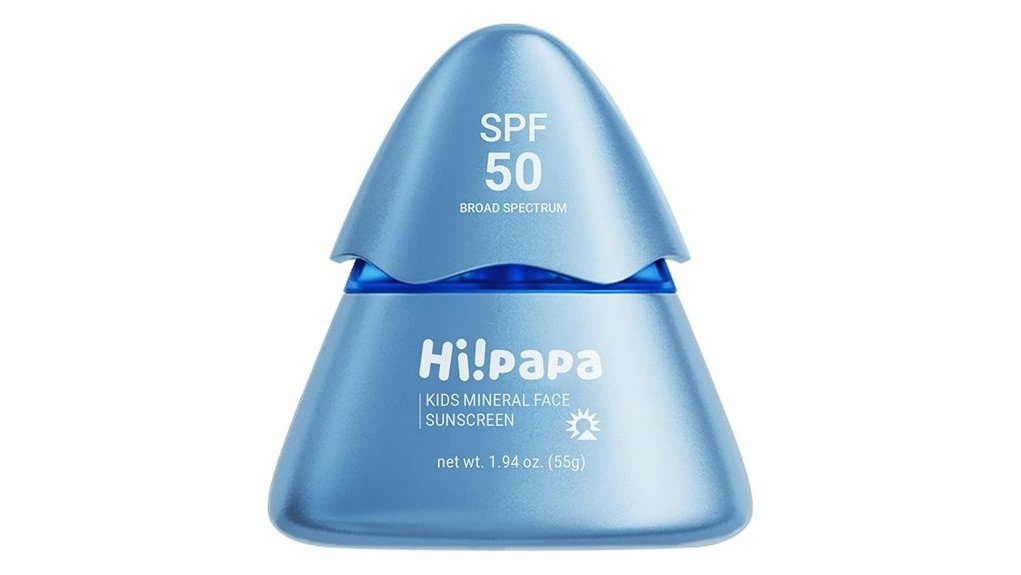
Hi!papa Kids Mineral Sunscreen SPF50 is a zinc oxide sunscreen made for children aged 6 months and older. Its formula uses 24.05% zinc oxide and comes in a compact 1.94 oz (55 g) container. The brand promotes a sheer finish, fragrance-free ingredients, and broad-spectrum sun protection.
It looks especially appealing for children’s faces and daily outdoor activities. However, its small size, premium positioning, and conflicting water-resistance information deserve attention. This review separates verified ingredients from marketing claims so you can decide whether it suits your family.
Quick Verdict
Hi!papa Kids Mineral Sunscreen SPF50
Editorial assessment: 7/10 (based on documented features and limitations, not hands-on laboratory testing).
Best for: Parents who want a compact mineral sunscreen for everyday facial use.
Skip if: You need a large bottle for frequent full-body application or clearly documented swimming protection.
Bottom line: The zinc oxide formula and fragrance-free ingredient list are promising. The main drawback is an unresolved conflict between advertised water resistance and the published drug label.
Before You Buy
- Water-resistance conflict: Amazon advertises 40 minutes, but the published DailyMed label advises using a water-resistant sunscreen for swimming or sweating. Verify your package before relying on that claim.
- Small container: At 55 g, this is more practical for faces and touch-ups than repeated whole-body application.
- White cast varies: The brand promises a sheer finish, but appearance depends on skin tone, the amount applied, and how evenly it spreads.
- Reef-safe wording: This is a marketing claim, not a standardized guarantee that a sunscreen has no environmental impact.
Review Contents
Key Takeaways
- Verified mineral active: The published drug label identifies zinc oxide at 24.05%.
- SPF 50: The product listing advertises broad-spectrum protection against UVA and UVB rays.
- Gentle-formula approach: The published ingredient list includes Centella asiatica, glycerin, and a licorice-derived compound.
- Sheer-finish claim: Selected owners describe easy blending and less visible white residue, although results may differ.
- Important limitation: The advertised 40-minute water resistance is not consistent with directions in the DailyMed label reviewed.
- Best purchase fit: The 55 g size makes more sense for daily facial protection than as a large family beach sunscreen.
Hi!papa Kids Mineral Sunscreen SPF50 Specifications
The product is a cream or lotion sunscreen marketed for children’s sensitive skin. Its strongest independently documented specification is its zinc oxide concentration. Other features, including SPF 50 and the advertised water-resistance duration, come from the retailer’s product listing.
| Specification | Details |
|---|---|
| Brand | Hi!papa |
| Product | Kids Mineral Face Sunscreen |
| Advertised SPF | 50, broad spectrum |
| Active ingredient | Zinc oxide 24.05% |
| Form | Cream / lotion |
| Size | 1.94 oz (55 g) |
| Suggested age | 6 months and older |
| Fragrance | Advertised fragrance-free |
| Water resistance | 40 minutes advertised; published label conflicts |
| Amazon ASIN | B0GBX1ZCVY |
| US drug label identifier | NDC 75779-008-01 |
The DailyMed product label confirms the zinc oxide percentage, ingredients, and registered 55 g package. DailyMed publishes submitted drug labeling; inclusion there does not establish that an individual product has received separate FDA approval.
What’s in the Package?
The listing describes one 1.94 oz sunscreen container. No applicator, travel case, or additional accessory is identified in the reviewed product information. Check the seller’s current package description if you are ordering a bundle or promotional version.
Who Should Buy Hi!papa Sunscreen?
Hi!papa is most attractive if you want a mineral-based facial sunscreen in a small, portable container. It is less compelling when you need a high-volume product for several children.
Consider it if:
- You prefer zinc oxide as the sunscreen’s active ingredient.
- You want a fragrance-free formula for a child aged 6 months or older.
- You need something compact for a diaper bag or daily outings.
- You dislike the thick white finish of some mineral sunscreens.
Consider another sunscreen if:
- You regularly cover several children’s arms, legs, and bodies.
- Swimming and heavy sweating are your main activities.
- You need the lowest practical cost per ounce.
- Your child has a diagnosed skin condition that requires individual medical guidance.
Hi!papa Sunscreen Pros and Cons
The formula has appealing qualities, particularly its documented zinc oxide content and compact design. However, the water-resistance discrepancy prevents an unqualified recommendation for swimming.
Pros
- Contains 24.05% zinc oxide as its documented active ingredient.
- Fragrance-free formulation with Centella and glycerin.
- Compact size and an advertised sheer finish for facial use.
Cons
- Conflicting information about water resistance.
- Small 55 g container may be costly for regular full-body coverage.
- White-cast and sensitive-skin results are not guaranteed for every user.
How Hi!papa Kids Mineral Sunscreen SPF50 Protects Skin
Hi!papa uses zinc oxide as its sunscreen active ingredient. Zinc oxide is a mineral UV filter that protects skin by absorbing and scattering ultraviolet radiation. It is commonly used in sunscreens intended for sensitive skin.
The product advertises broad-spectrum SPF 50, meaning protection against both UVA and UVB radiation when the finished formula meets the relevant testing requirements. UVA contributes to long-term skin damage, while UVB is a major cause of sunburn.
SPF does not tell you how many hours you can safely stay outdoors. It describes protection under standardized testing conditions, and the real benefit depends on generous application and timely reapplication.
What Does 24.05% Zinc Oxide Mean?
The active concentration is verified in the drug label. It confirms that zinc oxide supplies the formula’s sunscreen action rather than a combination of several chemical UV filters.
However, zinc oxide concentration alone does not establish the finished product’s SPF performance. The full formulation, how the ingredients are dispersed, and standardized testing all matter.
This is why the claimed SPF 50 should be assessed as a finished-product rating, not calculated from the percentage of zinc oxide.
Does Hi!papa Leave a White Cast?
The brand promotes a lightweight, sheer finish without obvious white residue. Selected buyer reports describe a creamy texture that spreads easily and becomes less visible after rubbing it in.
That is encouraging, but it is not a guarantee. Mineral sunscreen may still look pale on some skin tones, especially if applied thickly. Do not use less than the recommended amount just to make the finish disappear.
Hi!papa’s Key Ingredients: Benefits for Kids’ Sensitive Skin
The formula contains more than just zinc oxide. Its supporting ingredients include moisturizing compounds, silicone-based texture agents, and plant-derived ingredients. These may affect how comfortably the sunscreen spreads and feels on the skin.
Centella and Licorice-Derived Ingredients
Centella asiatica extract appears in the published inactive ingredient list. It is used in skincare formulations for its skin-conditioning properties. However, the presence of Centella does not prove that this specific sunscreen treats eczema, irritation, or damaged skin.
The product description also mentions licorice. The published ingredient list contains stearyl glycyrrhetinate, a compound derived from glycyrrhetinic acid associated with licorice. This is more precise than assuming the formula contains a separate licorice root extract.
These ingredients may complement the sunscreen’s feel, but zinc oxide remains its sun-protection active ingredient.
Moisturizing and Texture Ingredients
Glycerin and butylene glycol are humectants, which help retain moisture. Dimethicone contributes to a smoother feel and can help reduce moisture loss from the skin’s surface.
These ingredients explain why a mineral sunscreen can feel different from a simple zinc oxide paste. They do not guarantee that every child will tolerate the product.
Is the Formula Fragrance-Free?
The Amazon listing advertises a fragrance-free formula. The published ingredient list does not declare perfume or added fragrance under those names.
That may make Hi!papa appealing to families avoiding scented skincare. Still, fragrance-free does not mean allergy-free. Botanical ingredients and other formulation components can cause reactions in some people.
For children with unusually reactive skin, ask a dermatologist about appropriate products. Never apply sunscreen to damaged or broken skin against the package warnings.
Applying Hi!papa Sunscreen: Tips for Best Results
Correct application matters more than how attractive the sunscreen feels. The published Hi!papa directions instruct users to apply generously 15 minutes before sun exposure and reapply at least every two hours.
- Start with clean, dry skin. Make sure the skin is not visibly irritated or broken.
- Apply a generous amount. Cover all exposed areas rather than spreading a tiny amount too thinly.
- Spread evenly. Gently work the cream across the cheeks, forehead, nose, ears, and other exposed areas while keeping it out of the eyes and mouth.
- Apply 15 minutes before going outside. This follows the published directions and standard US sunscreen-label guidance.
- Reapply at least every two hours. Reapply sooner when the product has been rubbed or wiped away, and use a sunscreen with confirmed water resistance for swimming or sweating.
- Combine it with shade and clothing. Hats, protective clothing, and sunglasses remain important even when sunscreen is used correctly.
Pay special attention to commonly missed places, including the ears, back of the neck, hands, and tops of the feet. The FDA’s sun-protection guidance explains why coverage and reapplication are essential.
Important: For babies younger than 6 months, consult a healthcare professional before using sunscreen. Shade and suitable protective clothing should be the first approach. Do not assume that a product marketed for children is appropriate for newborns.
Best Uses for Hi!papa Mineral Sunscreen
The 55 g container makes Hi!papa most practical for situations where you need focused facial coverage or a portable backup. Its suitability for wetter activities is less clear because of the labeling conflict.
Daily Outdoor Play
For walks, playground visits, and ordinary outdoor errands, the formula may suit children who tolerate mineral sunscreens well. Apply it before leaving home and combine it with a hat and shade breaks.
Travel and Diaper Bags
The compact container is easier to carry than a large family-sized sunscreen bottle. That makes it useful for keeping a separate product in a bag for planned outings and reapplication.
Keep it protected from excessive heat and direct sunlight, as instructed by the drug label.
Beach and Pool Activities
This is the situation that requires the most caution. The Amazon listing advertises 40-minute water resistance, but the published DailyMed directions tell users to choose a water-resistant sunscreen when swimming or sweating.
Until the actual package labeling and supporting claim are confirmed, choose a product with clearly documented water resistance for these activities.
Is Hi!papa Sunscreen Reef Safe?
Hi!papa is marketed as reef-safe or reef-friendly because it uses mineral zinc oxide and omits some ingredients found in other sunscreen formulas. However, that label should not be interpreted as proof that the complete product is harmless to marine ecosystems.
The American Academy of Dermatology explains that reef-safe is not a standardized FDA term. Research into how sunscreen ingredients affect marine environments remains limited.
The published ingredient list is still useful when reviewing what the formula contains.
| Ingredient | What the Published Label Shows |
|---|---|
| Non-Nano Zinc Oxide | Zinc oxide 24.05% is verified; non-nano particle size is a seller claim. |
| Parabens | Not listed among the published ingredients. |
| Synthetic Fragrances | No fragrance ingredient is declared in the published list. |
| Alcohol | Ethanol is not listed; the formula does contain glycol compounds. |
These observations are relevant to understanding the formula, but they are not a certification of coral-reef safety. Sun-protective clothing and following local environmental rules can help reduce unnecessary product release into the water.
What Parents Love About Hi!papa Sunscreen
Available buyer comments offer some useful impressions of the formula’s texture and portability. They should be treated as individual experiences rather than controlled evidence of sunscreen effectiveness.
Selected publicly available customer review excerpts describe easy spreading, a comfortable feel, and less visible white residue than some other mineral sunscreens. A reviewer also liked the compact container for carrying outdoors.
The recurring appeal is comfortable application and a less noticeable white finish, while the small container raises concerns about ongoing value.
Common Positive Impressions
- Some users describe the cream as spreading smoothly.
- Some report little visible white residue after rubbing it in.
- The fragrance-free approach appeals to buyers who dislike scented sunscreen.
- The compact packaging is convenient for carrying in a small bag.
Common Complaints and Limitations
- Several selected comments describe the container as small for the price.
- Using it over large areas may require frequent replacement.
- Descriptions of successful outdoor use do not verify the labeled SPF through independent testing.
- Evidence is insufficient to guarantee the same cosmetic finish across all skin tones.
These observations come from a limited selection of publicly accessible buyer comments, including syndicated review excerpts. They are not a representative survey or proof of product performance.
Hi!papa Sunscreen vs. Alternative Kids’ Mineral Sunscreens
Hi!papa is not the only zinc oxide option for children. If your priorities include larger containers, documented water resistance, or a different application style, the alternatives below are worth comparing.
The specifications shown are taken from published manufacturer product information. These are not hands-on performance rankings.
| Sunscreen | SPF | Water Resistance | Key Difference |
|---|---|---|---|
| Hi!papa Kids Mineral Face Sunscreen | 50 | 40 minutes advertised; label conflict | Compact 55 g facial sunscreen |
| Aveeno Kids Continuous Protection Mineral Lotion | 50 | 80 minutes | Zinc oxide lotion with oat |
| Coppertone Pure & Simple Kids Mineral Lotion | 50 | 80 minutes | Fragrance-free family-use lotion |
| Badger Kids Mineral Sunscreen Cream | 40 | 80 minutes | Short ingredient list with a botanical scent |
Hi!papa vs. Aveeno Kids Mineral Sunscreen
Aveeno Kids Continuous Protection SPF 50 uses zinc oxide and includes oat in its formula. Its manufacturer gives clear instructions for reapplication after 80 minutes of swimming or sweating.
Choose Aveeno if documented swimming guidance matters more than Hi!papa’s small facial container.
Hi!papa vs. Coppertone Pure & Simple Kids
Coppertone Pure & Simple Kids SPF 50 is a mineral lotion using zinc oxide. Its manufacturer advertises 80-minute water resistance and offers a larger lotion format.
That makes it worth considering when you need sunscreen for several children or more extensive body coverage.
Hi!papa vs. Badger Kids Mineral Sunscreen
Badger Kids Mineral Sunscreen SPF 40 uses 22.5% zinc oxide and has manufacturer-stated 80-minute water resistance. Its formula contains a small ingredient list but includes fragrant botanical oils.
Badger may appeal to shoppers seeking a simpler ingredient list, while Hi!papa may be a better fit for those avoiding scented formulations.
Is Hi!papa Kids Mineral Sunscreen Worth the Price?
Hi!papa may be worth considering as a dedicated face sunscreen, especially if you value zinc oxide, fragrance-free formulation, and compact packaging. Its value becomes less attractive when you plan to apply it generously over large areas every day.
The key comparison is cost per ounce rather than just the container’s total price. A 55 g bottle may be convenient in a bag but less economical than a larger lotion for family use.
More importantly, buyers planning frequent swimming should prioritize a sunscreen whose actual package provides clear, verified water-resistance directions.
Verdict: Consider Hi!papa for daily facial use after checking the current label and seller details. For beach holidays, swimming lessons, or several children, a larger sunscreen with clear 80-minute water-resistance labeling may be a more practical purchase.
How We Evaluated Hi!papa Sunscreen
We compared the product’s Amazon listing with its published DailyMed drug label. We also reviewed official FDA and American Academy of Dermatology guidance on sunscreen application, sensitive skin, water resistance, and environmental claims.
For buyer experience, we considered a limited selection of publicly available customer comments. We compared alternative products using their manufacturers’ published specifications.
Testing limitation: We did not perform independent laboratory SPF testing, water-immersion testing, ingredient-particle analysis, or a controlled skin-tone comparison. The editorial score reflects documented features and unresolved concerns rather than firsthand measurements.
Frequently Asked Questions
Can Hi!Papa Sunscreen Be Used on Sensitive Skin Conditions?
Hi!papa may suit some children with sensitive skin because it uses zinc oxide and is advertised as fragrance-free. However, no sunscreen is guaranteed to work for every skin condition. If your child has eczema, broken skin, or a history of allergic reactions, ask a dermatologist before use.
How Often Should I Reapply Hi!Papa Sunscreen?
Reapply Hi!papa sunscreen at least every two hours during outdoor exposure, following the published drug label. Apply it generously 15 minutes before going outside. If your child is swimming or sweating, use a product with confirmed water resistance and follow its specific reapplication instructions.
Is Hi!Papa Sunscreen Suitable for Adults Too?
Yes, adults may use Hi!papa sunscreen if the ingredients suit their skin and they follow the product directions. Its mineral active and compact size may appeal to adults seeking a portable face sunscreen. However, the small container may not be economical for regular full-body use.
What Is the Shelf Life of Hi!Papa Sunscreen?
Check the expiration date printed on your Hi!papa package. Its exact product-specific shelf life was not established during this review. The FDA advises treating sunscreen without an expiration date as expired three years after purchase. Protect the container from excessive heat and direct sunlight.
Does Hi!Papa Sunscreen Leave Any Residue on Clothing?
Hi!papa sunscreen may transfer onto clothing, as mineral sunscreen products sometimes leave residue on fabric. There is not enough reliable product-specific evidence to guarantee that it will not stain. Let the sunscreen settle before dressing your child and follow garment care instructions if transfer occurs.
Can Babies Under Six Months Use Hi!papa Sunscreen?
Consult a healthcare professional before applying Hi!papa sunscreen to a baby younger than six months. The published product directions give this warning. For young infants, prioritize shade and suitable protective clothing. The American Academy of Dermatology recommends minimizing sunscreen use in this age group.
Is Hi!papa Sunscreen Water Resistant?
The Amazon listing advertises 40-minute water resistance, but the published DailyMed label directs users to choose a water-resistant sunscreen for swimming or sweating. This discrepancy was not resolved by independent testing. Confirm the actual package directions before relying on Hi!papa for water activities.
Is Hi!papa Sunscreen Really Reef Safe?
Hi!papa is marketed as reef-safe, but that does not prove the formula has no environmental impact. The FDA does not define reef-safe as a standardized sunscreen designation, and the evidence about sunscreen ingredients and marine ecosystems remains incomplete. Follow local environmental rules and use protective clothing when possible.
Conclusion
Hi!papa Kids Mineral Sunscreen SPF50 offers an appealing combination of 24.05% zinc oxide, fragrance-free formulation, and a compact size for everyday facial application. Its Centella-containing ingredient list and reported sheer finish add to its appeal.
Still, the water-resistance labeling conflict deserves attention, and the small container limits its value for full-body family use. If you mainly need a portable facial sunscreen, Hi!papa is worth comparing. If swimming protection is your priority, choose a product with clear, consistent water-resistance directions.
Interested in Hi!papa Kids Mineral Sunscreen?
Review the current listing, ingredients, and package directions before choosing it for your family.