Disclosure: As an Amazon Associate, we earn from qualifying purchases. If you buy through links on this page, we may earn a small commission at no extra cost to you.
By: Editorial Team | Updated: October 9, 2026
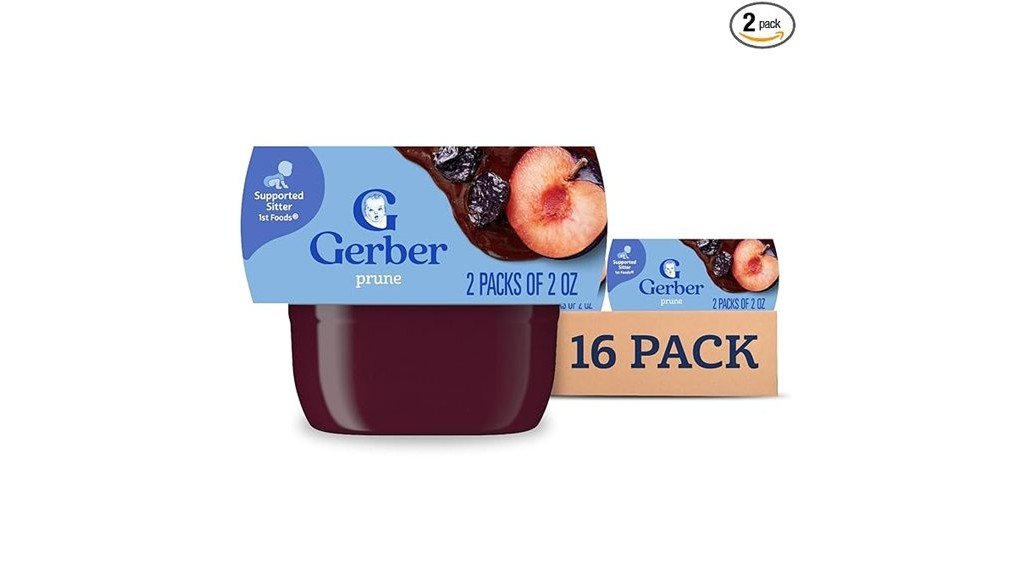
Gerber Stage 1 Baby Food Prune Puree is a smooth, ready-to-serve fruit puree designed for babies beginning solid foods. Made from water and dried prunes, it contains no added sweeteners, starch, artificial colors, or flavors. Each 2-ounce tub provides a convenient way to introduce prune flavor and dietary fiber.
Its main appeal is simplicity, particularly for parents looking for a fruit puree that may support stool regularity. However, prune puree is not a complete meal or a guaranteed constipation treatment. This review examines the ingredients, feeding suitability, packaging, storage requirements, and practical limitations before you buy.
Quick Verdict: Gerber 1st Foods Prune
Editorial rating: 8/10 Based on product specifications, feeding guidance, and published feedback. Not a hands-on test.
Best for: Babies who are developmentally ready for solids and families seeking a convenient prune-based puree.
Skip if: You need a complete meal, an iron-rich food, or medical treatment for persistent constipation.
Bottom line: A straightforward, portable prune puree with useful fiber and a short ingredient list. Its main limitations are narrow nutrition, individual taste preferences, and the need for proper handling after opening.
Before You Buy: Four Things to Know
- The recommended starting age is around 6 months, depending on developmental readiness.
- Prune puree may help with occasional firm stools, but it is not a substitute for medical advice.
- Gerber says unused, uncontaminated puree from an opened tub may be refrigerated for up to 2 days.
- The linked Amazon ASIN is described by retailer listings as a larger multipack. Verify the exact tub count before ordering.
Review Contents: Jump to a Section
- Key Takeaways
- What Is Gerber Stage 1 Baby Food?
- Ingredients and Specifications
- Benefits and Limitations
- How to Serve
- Storage and Food Safety
- Who Should Buy It?
- Pros and Cons
- What Parents Report
- Comparison With Alternatives
- Is It Worth the Price?
- How We Evaluated It
- Frequently Asked Questions
- Final Verdict
Key Takeaways
- Simple ingredients: Gerber lists prune puree made from water and dried prunes, without added sweeteners or artificial colors and flavors.
- Fiber: The product information identifies 2 grams of dietary fiber in a 2-ounce tub.
- Feeding readiness: The smooth texture suits supported sitters who are ready for complementary foods, generally around 6 months.
- Digestive support: Prunes may help with occasional constipation, but results differ between babies.
- Storage: Refrigerate uncontaminated leftovers after opening and use within 2 days, following Gerber’s instructions.
- Nutrition balance: Offer prune puree alongside a varied diet that includes iron-rich foods as feeding skills develop.
What Is Gerber Stage 1 Baby Food?
Gerber Stage 1 Baby Food, also called Gerber 1st Foods, is a line of smooth purees intended for babies who are beginning solid foods. The prune variety uses pureed dried prunes and water to create a uniform texture suitable for early spoon-feeding.
Gerber identifies this product for the supported sitter stage. That means a baby can maintain good head control and sit upright with support while learning to swallow food from a spoon.
The prune variety differs from some other early fruit purees because it provides dietary fiber. Its flavor is naturally sweet and distinctly prune-like, which some babies enjoy more than others.
Because the puree comes prepared in sealed tubs, parents do not need to cook, strain, or blend prunes before serving. This can be especially useful during short outings or busy feeding routines.
For current product details, see the manufacturer’s Gerber 1st Foods Prune information.
Gerber Prune Puree Nutrition and Ingredients
Gerber 1st Foods Prune contains prune puree made from water and dried prunes. Its short ingredient list is useful for caregivers who want to introduce a single fruit variety without unnecessary additions.
According to Gerber, the puree contains no added starch, artificial flavors, or colors. Its sweetness comes from fruit rather than added sweeteners.
Specifications at a Glance
| Specification | Details |
|---|---|
| Product | Gerber 1st Foods Prune Baby Food |
| Brand | Gerber |
| Food type | Smooth fruit puree |
| Ingredients | Prune puree (water, dried prunes) |
| Individual tub size | 2 oz (56 g) |
| Dietary fiber | 2 g per tub, according to product information |
| Texture | Smooth and spoonable |
| Feeding stage | Supported sitter, around 6 months |
| Non-GMO | Non-GMO Project Verified, according to Gerber |
| Refrigeration after opening | Use within 2 days if uncontaminated |
Does Gerber Prune Puree Have Added Sugar?
No added sweeteners are listed in the manufacturer’s product information. However, prunes contain naturally occurring sugars, so the puree is not sugar-free.
The distinction matters: an unsweetened fruit puree can taste sweet without containing added table sugar or syrup.
Is Gerber Prune Puree Organic?
Gerber’s standard 1st Foods Prune product is not presented as certified organic. Its Non-GMO Project Verified status is a separate claim and should not be confused with USDA organic certification.
Families specifically seeking certified organic baby food should choose a product with an appropriate organic certification on its label.
What’s in the Package?
Gerber’s regular retail format uses two individual 2-ounce tubs in a multipack. The Amazon product linked in this review, ASIN B077XHV8WC, is described by third-party product listings as a bundle of 16 individual tubs, arranged as eight two-tub packs.
Confirm the selected pack size on Amazon before purchasing. Product variations and listing descriptions can differ, and the number of individual tubs is important when comparing value.
Gerber Prune Puree Benefits
Gerber Prune Puree offers three practical benefits: a smooth texture for early feeding, a short ingredient list, and fiber from prunes. Its pre-portioned packaging also reduces preparation work.
1. May Help Support Stool Regularity
Prunes contain fiber and naturally occurring compounds that may help soften stool. For some babies already eating solid foods, prune puree can be a useful dietary option when stools become firm.
However, occasional changes in bowel movements are common during the transition to solids. The puree should not be treated as a guaranteed remedy.
The American Academy of Pediatrics’ infant constipation guidance identifies prunes as a fruit option for babies already eating solid foods.
2. Smooth Texture for Beginning Solids
The uniform puree does not require chewing and can be offered in small amounts from a spoon. This is helpful while babies are developing early swallowing skills.
As feeding abilities improve, babies should gradually experience other suitable textures. Remaining exclusively on smooth purees for too long can limit opportunities to practice chewing and handling food.
3. Simple, Fruit-Based Ingredients
With dried prunes and water making up the puree, the ingredient list is easy to understand.
It also gives caregivers a way to introduce a distinct fruit flavor without combining several unfamiliar foods in the same serving.
4. Convenient for Everyday Feeding
Sealed tubs are easy to place in a diaper bag or store in a pantry before opening, provided the packaging instructions are followed.
They can reduce preparation and cleanup compared with making prune puree from scratch. The trade-off is disposable packaging and the need to manage leftovers safely.
What Are the Nutritional Limitations?
Prune puree is a fruit food, not a complete infant meal. It does not replace the iron, protein, healthy fats, and other nutrients provided by a varied feeding plan.
Breast milk or infant formula remains an important source of nutrition throughout the first year. As solids become established, include suitable iron-rich foods such as iron-fortified infant cereal, meat, or legumes.
How to Serve Gerber Stage 1 Baby Food
Gerber 1st Foods Prune is ready to serve without cooking. You can offer it at room temperature, chilled, or gently warmed, depending on your baby’s preference.
The most important considerations are developmental readiness, safe food handling, and responsive feeding.
When Is a Baby Ready?
Most babies can begin trying solid foods around 6 months. Readiness matters more than the product’s stage label alone.
According to the CDC’s guidance on introducing solid foods, signs include good head and neck control, sitting with support, opening the mouth for food, and swallowing instead of pushing food out.
Introducing solids before 4 months is not recommended.
Step-by-Step Feeding Instructions
- Wash your hands: Clean your hands and the utensils used for feeding.
- Check the package: Inspect the tub and foil seal. Do not use a tub with a broken or missing seal.
- Seat your baby upright: Use a suitable high chair or supported feeding position.
- Transfer a portion: Put a small amount of puree into a clean bowl if you intend to save any leftovers.
- Offer a small spoonful: Use a soft, infant-appropriate spoon and give your baby time to swallow.
- Watch feeding cues: Stop if your baby turns away, closes their mouth, or shows signs of being finished.
- Store leftovers safely: Discard food left in the feeding bowl and refrigerate untouched puree from the original tub.
How Much Should You Offer?
Begin with a small spoonful when introducing a new food. Let your baby’s interest and feeding ability guide how much to offer rather than expecting them to finish an entire tub.
For occasional constipation concerns, ask your pediatrician for individualized guidance instead of increasing prune portions repeatedly.
Can You Mix Prune Puree With Other Foods?
Yes. Once your baby tolerates the individual ingredients, prune puree can be mixed with suitable infant cereal or another familiar puree.
Introduce unfamiliar foods separately at first so that possible reactions are easier to recognize. Avoid adding honey for babies younger than 12 months.
Storage Tips for Gerber Baby Food Tubs
Gerber instructs caregivers to refrigerate opened baby food tubs and use them within 2 days. This guidance applies to leftovers that have not been contaminated during feeding.
If a spoon that has been in your baby’s mouth touches food remaining in the tub, discard the remaining food rather than saving it.
| Storage Practice | Why It Matters |
|---|---|
| Keep unopened tubs in a cool, dry location | Protects shelf-stable food before use |
| Check the foil seal | Helps identify damaged packaging |
| Transfer food to a clean bowl | Helps prevent saliva contamination |
| Refrigerate promptly at 40°F (4°C) or below | Reduces bacterial growth |
| Use refrigerated leftovers within 2 days | Follows Gerber’s tub storage guidance |
| Discard food from the used feeding bowl | Prevents contaminated leftovers from being stored |
Can You Feed Directly From the Tub?
Yes, but only when you plan to discard whatever remains after feeding. Saliva transferred from the spoon can contaminate the food.
The FDA’s baby food safety guidance recommends placing a serving in a separate dish when you want to save the unopened portion.
Can You Heat Gerber Prune Puree?
Heating is optional. If you warm the food, move the desired portion into a microwave-safe dish, heat gently, stir well, and test the temperature before feeding.
Do not microwave a sealed tub. Uneven heating can leave hot spots even when the food feels cool elsewhere.
Who Should Buy Gerber Stage 1 Prune Puree?
Gerber Prune Puree is best suited to families who want a simple, ready-made fruit food for babies beginning solids. It can also be a useful part of a varied diet when a baby occasionally passes firm stools.
Best Uses
Introducing fruit flavors: The smooth, single-fruit-variety recipe allows a baby to become familiar with prune flavor.
Occasional feeding convenience: Pre-portioned tubs work well when there is limited time for preparation.
Adding fiber variety: Prune puree can complement other foods once the baby is developmentally ready.
Who Should Consider Something Else?
- Parents seeking complete nutrition: Choose a varied feeding plan rather than relying heavily on fruit purees.
- Families requiring certified organic food: Look for a product with confirmed organic certification.
- Babies who dislike prunes: A different appropriate fruit or vegetable puree may be easier to accept.
- Babies with ongoing constipation: Seek pediatric advice instead of depending on a specific food for treatment.
Gerber Stage 1 Prune Puree Pros and Cons
Pros
- Smooth texture for supported sitters.
- Prune puree made from water and dried prunes.
- No added sweeteners, starch, artificial colors, or flavors.
- 2 g fiber per 2 oz tub, according to product information.
- Portable sealed tubs for short outings.
Cons
- Prune flavor will not suit every baby.
- Fruit puree does not supply the iron and protein babies also need.
- Opened tubs require refrigeration and careful handling.
- Exact Amazon multipack size needs confirmation.
The strongest reason to choose this product is its combination of smooth texture, simple ingredients, and ready-to-serve convenience. The main compromise is that it serves a narrow nutritional purpose rather than functioning as a complete meal.
What Do Parents Report About Gerber Prune Puree?
Published feedback from retailers such as Walmart and iHerb commonly discusses the product’s smooth consistency, convenient portions, and potential usefulness for occasional constipation.
These are individual customer experiences, not controlled medical evidence or results from hands-on testing for this review.
What Parents Like
- Easy texture: Some caregivers describe the puree as smooth and simple to spoon-feed or combine with familiar foods.
- Digestive usefulness: Several caregivers report that prune puree helped when their babies had firm stools.
- Convenient packaging: The small tubs make portions easier to manage than preparing a batch from dried fruit.
Common Watch-Outs
- Taste preference: Some babies reject the distinctive prune flavor, even though others enjoy it.
- Leftover portions: A full tub may be more than a new eater wants during a single sitting.
- Individual results: Digestive responses vary, so a positive experience reported by one parent does not guarantee the same outcome for another.
Gerber Stage 1 Prune Puree vs. Alternatives
Gerber Prune Puree is a useful choice when prune flavor and fiber are the priorities. Other Gerber purees may work better for introducing additional tastes or combining familiar fruits.
| Product | Main Difference | Best Reason to Choose |
|---|---|---|
| Gerber 1st Foods Prune | Water and dried prunes | Introducing prune flavor and dietary fiber |
| Gerber 2nd Foods Prune Apple | Prune and apple blend with added vitamin C | Offering a mixed-fruit flavor after the ingredients are tolerated |
| Gerber 1st Foods Pear | Pear-focused early fruit puree | Introducing another fruit variety |
| Gerber Natural 1st Foods Banana | Banana puree with lemon juice concentrate and vitamin C | Trying a different fruit flavor |
Gerber Prune vs. Gerber Prune Apple
Gerber 1st Foods Prune has a simpler ingredient profile centered on one fruit variety. Gerber 2nd Foods Prune Apple combines prunes with apples and vitamin C for a different flavor.
Choose the plain prune version when introducing prunes separately. The blend may suit babies who already tolerate both fruits.
Gerber Prune vs. Gerber Pear
Both are fruit-focused choices for early feeding. Prune puree has a particularly useful reputation as a fiber-containing option when stools become firm, while pear provides another fruit flavor to explore.
Neither should replace variety across all the important infant food groups.
Gerber Prune vs. Gerber Banana
Gerber’s Natural 1st Foods Banana offers a different fruit taste and includes banana, lemon juice concentrate, and vitamin C. It is not an equivalent replacement for prune puree when prune-specific dietary benefits are the main goal.
For general flavor exploration, either may fit a baby’s feeding plan once the individual foods are appropriate.
Is Gerber Stage 1 Prune Baby Food Worth the Price?
Gerber 1st Foods Prune may be worth buying if convenience matters more than preparing a homemade batch. Its short ingredient list and pre-portioned tubs are practical for everyday use.
The main value question is how many individual tubs you receive. Compare the total number of ounces in the selected package rather than judging a listing by its multipack label alone.
Good reasons to buy: You want ready-to-serve prune puree, small containers, and minimal preparation.
Reasons to skip: You regularly prepare homemade purees, need certified organic food, or expect one fruit puree to provide complete nutrition.
Overall, this is a reasonable convenience purchase for families who already have a balanced infant feeding routine.
How We Evaluated Gerber Prune Puree
We evaluated this product through published manufacturer specifications, ingredient information, food safety guidance, and available retailer feedback. No independent laboratory testing, controlled feeding trial, or first-hand product trial was conducted for this review.
Our editorial assessment considered:
- Ingredient transparency: Whether the recipe clearly identifies its components and additions.
- Feeding suitability: Whether its texture and intended feeding stage align with established guidance.
- Nutritional usefulness: What the puree contributes and what other foods must provide.
- Safety and storage: Manufacturer instructions and public health recommendations.
- Practical value: Portion handling, preparation time, packaging, and reported limitations.
The editorial rating reflects the product’s suitability for its intended use. It is not a clinical effectiveness score or a measurement of how reliably it treats constipation.
Frequently Asked Questions
What age can babies start Gerber Stage 1 Prune Puree?
Most babies can begin trying Gerber Stage 1 Prune Puree around 6 months, once they show signs of readiness for solid foods. They should have good head control, sit with support, and be able to swallow spoon-fed food. Ask your pediatrician if you are unsure about readiness.
Does Gerber Prune Puree help with constipation?
Gerber Prune Puree may help some babies who have firm stools because prunes contain fiber and naturally occurring compounds that support bowel movements. The effect varies between children. If constipation continues, causes significant discomfort, or is accompanied by concerning symptoms, contact your pediatrician rather than relying only on puree.
How much prune puree should I give my baby?
Start with a small spoonful when introducing prune puree and follow your baby’s appetite and feeding cues. There is no single serving amount that suits every baby. If you are using prunes because of constipation, ask your pediatrician how much is appropriate for your child’s age and symptoms.
How long does Gerber Prune Puree last after opening?
Gerber instructs caregivers to refrigerate opened baby food tubs and use uncontaminated leftovers within 2 days. This applies when food has been removed with a clean utensil. If your baby eats directly from the tub, discard what remains because saliva can introduce bacteria into the food.
Does Gerber Stage 1 Prune Puree contain common allergens?
Gerber lists prune puree made from water and dried prunes, without any major food allergen listed as an ingredient. However, a short ingredient list does not guarantee that every child will tolerate the product. Check the current packaging for allergen statements and follow medical advice for known sensitivities.
Is Gerber Stage 1 Prune Baby Food certified organic?
No, the standard Gerber 1st Foods Prune product is not presented by the manufacturer as certified organic. Gerber identifies it as Non-GMO Project Verified, which is different from organic certification. If organic production is essential to your purchasing decision, look for a product with a verified organic label.
How many tubs come in the Gerber Prune package?
The linked Amazon ASIN is described by third-party retailer listings as a 16-tub bundle, with each individual tub containing 2 ounces of puree. Amazon may display different package variations, so confirm the selected number of individual tubs before ordering. Do not assume that every Gerber multipack contains the same quantity.
Can Gerber Prune Puree be served cold?
Yes, Gerber Prune Puree can be served cold, at room temperature, or gently warmed. Heating is not required for this ready-to-eat product. If you warm a portion, transfer it to an appropriate dish, stir thoroughly, and test the temperature before feeding to prevent burns from hot spots.
Is Gerber Stage 1 Prune Puree suitable for travel?
Yes, unopened Gerber Prune Puree tubs are convenient for travel because they are compact and do not require preparation. Keep them protected from excessive heat and packaging damage. After opening, follow refrigeration instructions and avoid saving food that has come into contact with a used feeding spoon.
Conclusion: Is Gerber Stage 1 Prune Puree a Good Choice?
Gerber 1st Foods Prune Baby Food is a practical option for babies beginning solids who can benefit from a smooth, fruit-based puree. Its simple ingredients, dietary fiber, and ready-to-serve packaging make it convenient for home feeding and travel.
The main considerations are individual taste preferences, safe handling after opening, and balanced nutrition. It may help with occasional firm stools, but persistent constipation needs professional attention. For families seeking a convenient prune puree rather than a complete meal, it is a reasonable product to consider.
Gerber 1st Foods Prune Baby Food
Smooth prune puree, simple ingredients, and practical portion sizes for babies ready for solids.
Confirm the selected package quantity and product details before ordering.