Disclosure: As an Amazon Associate, we earn from qualifying purchases. If you buy through links on this page, we may earn a small commission at no extra cost to you.
By Editorial Team | Updated October 8, 2026
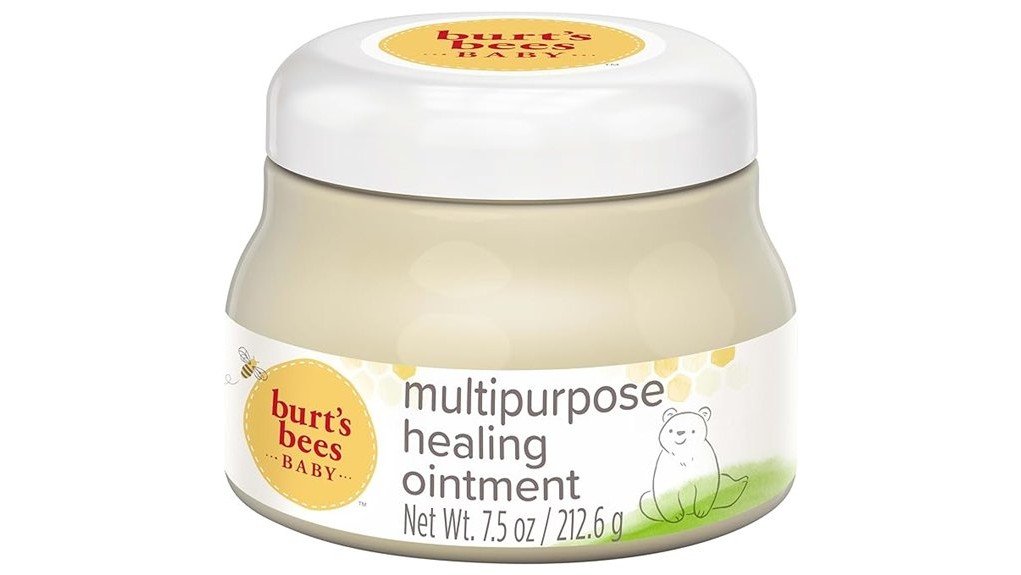
Burt’s Bees Baby Multipurpose Healing Ointment is a 7.5-ounce, petroleum-free balm designed to protect delicate skin from dryness. Its formula includes coconut oil, castor oil, beeswax, and shea butter. These ingredients help form a protective layer that reduces moisture loss.
The ointment works as an everyday moisturizer for the face, body, and diaper area. However, its natural fragrance deserves attention, especially if your baby has eczema, allergies, or easily irritated skin. This review explains what the ointment does well, where it falls short, and when another product may be a better choice.
Quick Verdict: Is Burt’s Bees Baby Ointment Good?
Good Multipurpose Moisture Barrier
Editorial Rating: 7.5/10
Research-based editorial assessment, not hands-on testing or an Amazon customer rating.
100% natural origin
Petrolatum-free
Coconut oil and beeswax
Contains natural fragrance
Best for: Families wanting one rich balm for everyday dry skin and routine diaper-area moisture protection.
Skip it if: Your baby needs strictly fragrance-free skin care, reacts to ingredients in the formula, or has a diaper rash that needs targeted treatment.
Bottom line: This ointment offers useful moisture protection and several everyday uses. Its main drawbacks are added fragrance, a heavy texture, and the lack of zinc oxide for treating diaper rash.
Check current price, packaging, ingredients, and availability before ordering.
Before You Buy
- It contains fragrance. The manufacturer’s published ingredient list includes natural fragrance, despite some retailer descriptions suggesting otherwise.
- It is not a zinc oxide cream. This multipurpose balm can act as a moisture barrier, but it does not contain the active ingredient found in many dedicated diaper rash treatments.
- Natural does not mean allergy-free. Check for reactions to fragrance, plant oils, or beeswax, particularly with sensitive skin.
- The texture is rich. Some owners report stickiness or a heavier feel than expected.
Jump to Review Sections
Key Takeaways
- Burt’s Bees Baby Multipurpose Healing Ointment uses a rich blend of plant oils, beeswax, and shea butter to reduce moisture loss.
- Its 7.5-ounce jar is designed for multiple areas, including the face, body, and diaper region.
- The manufacturer describes it as pediatrician-tested and made without parabens, phthalates, petrolatum, or sodium lauryl sulfate (SLS).
- The published ingredient list includes natural fragrance, making it less suitable for babies who need strictly fragrance-free products.
- It can support routine diaper-area protection, but a zinc oxide cream is generally a better starting point for an established irritant diaper rash.
- Its value depends on how often you will use the multipurpose formula and whether your baby’s skin tolerates its ingredients.
What Burt’s Bees Baby Ointment Is
Burt’s Bees Baby Multipurpose Healing Ointment is a thick, oil-and-wax-based moisturizer. Its main purpose is to keep skin comfortable by forming a protective layer over dry areas.
Unlike a thin lotion, an ointment sits on the skin and helps slow the escape of moisture. This makes the product useful after bathing and on areas exposed to dry air or gentle friction.
The manufacturer calls the formula 100% natural origin and identifies it as petroleum-free. That describes its ingredient source, not proof that it is safer than every petroleum-based alternative.
Product Specifications
| Specification | Details |
|---|---|
| Brand | Burt’s Bees Baby |
| Product | Multipurpose Healing Ointment |
| Size | 7.5 ounces (approximately 210 grams) |
| Form | Rich ointment or balm |
| Key ingredients | Castor oil, coconut oil, beeswax, shea butter |
| Fragrance | Contains natural fragrance |
| Petrolatum | Not included in the published formula |
| Zinc oxide | Not included in the published formula |
| Intended areas | Face, body, and diaper area |
| Packaging | Wide-mouth jar |
| Product testing | Pediatrician-tested, according to the manufacturer |
What’s in the Box?
The standard product consists of one 7.5-ounce jar of multipurpose ointment. It is a ready-to-use topical balm. No mixing, batteries, special applicators, or additional equipment are required.
Check the size and ingredient panel when your order arrives, especially if you have used an older version of the product.
Burt’s Bees Baby Ointment Ingredients and Safety
The ointment combines oils, waxes, and moisturizing ingredients to help shield skin from dryness. Its main ingredients work together to form a rich barrier rather than a lightweight, water-based moisturizer.
The official manufacturer’s ingredient list identifies castor seed oil, coconut oil, hydrogenated castor oil, beeswax, shea butter, sunflower seed wax, sweet almond oil, soybean oil, tocopherol, and natural fragrance.
| Ingredient | Purpose and consideration |
|---|---|
| Castor seed oil | Helps soften skin and contributes to the ointment’s rich consistency. |
| Coconut oil | Acts as an emollient that helps reduce dryness. |
| Beeswax | Helps create a protective layer that slows moisture loss. |
| Shea butter | Softens dry skin and adds richness to the formula. |
| Sunflower seed wax | Contributes to texture and barrier formation. |
| Sweet almond and soybean oils | Help condition skin; check with a clinician if your child has a relevant contact allergy. |
| Tocopherol | A form of vitamin E used in skin-care formulations. |
| Natural fragrance | Adds scent but may irritate fragrance-sensitive skin. |
Is the Formula Fragrance-Free?
No. The current published formula includes natural fragrance. This is one of the most important details to understand before buying the ointment for sensitive baby skin.
Some retailer descriptions use wording that suggests the product is fragrance-free. However, the manufacturer’s ingredient list specifically includes fragrance.
Natural fragrance can come from botanical sources, including essential oil derivatives. Those ingredients can still trigger skin reactions in susceptible people.
The American Academy of Dermatology recommends fragrance-free products for children whose eczema-prone skin may react to scented skin care.
What Does Pediatrician-Tested Mean?
Burt’s Bees describes the ointment as pediatrician-tested and clinically shown to be non-irritating. These are manufacturer claims, not a guarantee that every baby will tolerate it.
The publicly available product information does not establish how every individual skin condition or allergy was evaluated. If your baby has very sensitive skin, check the full ingredient list and ask your pediatrician before widespread use.
Safety Note: Stop using the ointment if redness, swelling, itching, or a rash appears or worsens after application. Seek medical advice for persistent irritation, broken or infected-looking skin, or any significant reaction. For serious allergic symptoms, seek urgent medical care.
Burt’s Bees Baby Ointment Pros and Cons
Pros
- Rich barrier texture helps slow moisture loss.
- Works on dry patches and the diaper area.
- No petrolatum, parabens, phthalates or SLS.
- One jar serves several everyday skin-care needs.
- Contains moisturizing oils, beeswax, and shea butter.
Cons
- Contains natural fragrance, which may bother sensitive skin.
- A thick, somewhat sticky feel may bother some families.
- Not a zinc oxide diaper rash treatment.
- Wide-mouth packaging requires clean handling.
- Not the simplest choice for babies with known ingredient sensitivities.
The biggest advantage is versatility. The biggest limitation is that a fragrance-containing multipurpose balm is not ideal for every baby or every skin problem.
Who Should Buy Burt’s Bees Baby Ointment?
This ointment makes the most sense if you want a rich, multipurpose moisturizer and your baby’s skin tolerates the formula. It is especially practical when you prefer one product for several dry areas rather than separate creams for every use.
Best For
- Parents looking for a thick moisturizer for ordinary dry skin.
- Families who prefer petroleum-free skin-care products.
- Caregivers wanting one balm for the body and routine diaper-area care.
- Adults looking for an additional moisturizer for dry hands or other rough patches.
Who Should Skip It?
- Babies who need strictly fragrance-free skin care.
- Children with known reactions to an ingredient in the ointment.
- Babies with severe, persistent, or infected-looking diaper rashes requiring medical assessment.
- Families who prefer a lighter lotion or a product without a sticky finish.
For babies with eczema or recurring unexplained rashes, a simple fragrance-free ointment is often a more suitable first option.
How to Use Burt’s Bees Baby Ointment Daily
Apply Burt’s Bees Baby Ointment to clean skin wherever extra moisture protection is needed. The correct amount depends on whether you are moisturizing a dry patch or protecting the diaper area.
The manufacturer recommends applying the ointment as needed and using it liberally on the diaper area after cleaning and drying the skin.
Step-by-Step Application
- Wash your hands. Start with clean hands to avoid introducing dirt into the jar.
- Clean the area gently. Use an appropriate mild cleanser or water when needed.
- Pat the skin dry. Avoid rubbing irritated skin.
- Take out the ointment. Use clean fingers or a clean spatula.
- Spread it gently. Apply a small amount to ordinary dry patches. For diaper-area barrier protection, follow the manufacturer’s directions for more generous application.
- Reapply when needed. Use it after bathing or diaper changes, depending on the area and your baby’s comfort.
Using It After a Bath
A rich ointment can help trap moisture after bathing. Gently pat your baby’s skin dry, then apply the balm to areas that need extra protection.
The American Academy of Dermatology advises using a fragrance-free moisturizer for babies with eczema, since fragrance may worsen irritation.
Using It During Diaper Changes
For routine moisture protection, first clean the diaper area and allow it to dry. Then apply the ointment according to the manufacturer’s directions.
If an active rash develops, use a suitable barrier treatment based on the type of rash and your pediatrician’s advice. A thick zinc oxide paste or petrolatum product is commonly recommended for irritant diaper rash.
What Burt’s Bees Baby Ointment Helps With
Burt’s Bees Baby Ointment is mainly a moisturizing barrier product. It can help protect dry skin and reduce exposure to moisture and friction, but it does not replace treatment for infections, serious rashes, or other diagnosed skin conditions.
Its practical value depends on understanding which concerns benefit from basic moisture protection and which need more targeted care.
| Skin concern | How it may help | Important limitation |
|---|---|---|
| Dry skin | Helps reduce moisture loss and soften rough areas. | Stop use if irritation develops. |
| Routine diaper-area protection | Creates a protective layer against wetness. | Does not contain zinc oxide. |
| Chapped external skin | Helps seal moisture into dry patches. | Keep away from eyes and avoid ingestion. |
| Eczema-related dryness | May provide moisture support if tolerated. | Fragrance may trigger reactions; it is not an eczema medication. |
| Minor friction | Provides an additional barrier over intact skin. | Not a substitute for evaluating wounds or infection. |
Does It Work for Diaper Rash?
It may help protect skin from moisture during routine diaper care. However, it should not be confused with Burt’s Bees Baby Diaper Rash Ointment, which is a separate product containing 40% zinc oxide.
According to the American Academy of Pediatrics, zinc oxide and petrolatum are common barrier ingredients for irritant diaper rash. Thick barrier application, gentle cleaning, and frequent diaper changes are important parts of care.
If a rash spreads, becomes painful, develops blisters or sores, occurs with fever, or fails to improve, contact your child’s healthcare professional.
Best Everyday Uses
Because the formula is rich, it is best suited to areas where a thin moisturizer may not provide enough protection. Use it only on skin that tolerates the ingredients.
Dry Cheeks and Body
Small dry patches on cheeks, arms, or legs are practical places for a moisture barrier. Apply gently and avoid the eyes, inside the mouth, and irritated areas that react to the product.
For drool-related irritation, keeping the skin gently clean and dry remains important.
Diaper-Area Moisture Barrier
The ointment can provide an additional barrier against wetness. It is more appropriate for routine protection than for a persistent or severe rash requiring treatment.
Adult Dry Skin
Adults may also use the balm on dry hands, elbows, and similar areas. A multipurpose household ointment can be convenient when several family members tolerate the same formula.
Use clean hands when sharing a jar, and avoid introducing moisture or dirt into the container.
What Owners Report About Burt’s Bees Baby Ointment
Customer feedback shows why some families continue buying this ointment while others prefer a different formula. Owners often praise its moisture protection and versatility, but scent and texture are recurring concerns.
These comments are individual experiences, not controlled medical evidence. They should help you understand possible trade-offs rather than predict how your baby’s skin will respond.
What Customers Like
- Moisture protection: Some reviewers report softer skin and less visible dryness after applying the ointment.
- Several uses: Families describe using it on dry body patches and for routine diaper-area care.
- Rich consistency: Buyers who prefer heavier balms often appreciate its protective texture.
- Adult use: Some owners find it useful for their own dry skin as well as family skin care.
Common Customer Complaints
- Noticeable fragrance: Some buyers find the scent stronger than expected.
- Sticky feeling: A few owners report that the balm remains on the surface and makes dressing less convenient.
- Formula changes: Longtime customers have reported differences in scent and consistency compared with earlier versions.
- Mixed results: Not every reviewer finds it effective for stubborn dry patches.
These themes appear in Target customer reviews and manufacturer responses, as well as reviews displayed on the Burt’s Bees Baby product page.
One manufacturer response confirms that the fragrance uses botanical essential oils or their derivatives. Another response acknowledges a prior reformulation. This makes it especially useful to examine the ingredient label if you are replacing an older jar.
What the Feedback Means
The ointment appears to satisfy many buyers looking for rich moisture protection. However, fragrance sensitivity and texture preferences can change the experience substantially. The most reliable choice is the formula your baby’s skin tolerates, not simply the product with the most positive reviews.
Burt’s Bees Baby Ointment vs. Alternatives
Burt’s Bees is not the only option for protecting dry baby skin. Several alternatives use petrolatum rather than a plant-oil-and-wax base, and some are specifically fragrance-free.
The best choice depends on whether you prioritize petroleum-free ingredients, a simpler formula, fragrance avoidance, or diaper rash treatment.
| Product | Main formula feature | Best reason to choose it |
|---|---|---|
| Burt’s Bees Baby Multipurpose Ointment | Plant oils and beeswax; natural fragrance | Petroleum-free multipurpose moisture care |
| Aquaphor Baby Healing Ointment | 41% petrolatum, glycerin, and panthenol; fragrance-free | Fragrance-free protection for dry or chapped skin |
| CeraVe Baby Healing Ointment | Petrolatum, ceramides, and hyaluronic acid; fragrance-free | Barrier support and diaper-area protection without fragrance |
| Vaseline Original Healing Jelly | 100% white petrolatum; fragrance-free | Simple single-ingredient moisture barrier |
| Burt’s Bees Baby Diaper Rash Ointment | 40% zinc oxide with supporting ingredients | A dedicated zinc oxide product for diaper rash |
Aquaphor Baby Healing Ointment
Aquaphor uses 41% petrolatum as its skin-protecting ingredient and includes moisturizing ingredients such as glycerin and panthenol. The manufacturer describes it as fragrance-free and preservative-free.
Choose it over Burt’s Bees if fragrance avoidance matters more than using a petroleum-free formula. The two products feel and spread differently, so texture preference still matters.
CeraVe Baby Healing Ointment
CeraVe Baby Healing Ointment combines petrolatum with ceramides and hyaluronic acid. It is formulated without fragrance or lanolin and is specifically marketed for helping prevent and treat diaper rash.
It is worth comparing if your baby needs a fragrance-free moisture barrier or has skin that requires careful ingredient selection.
Vaseline Original Healing Jelly
Vaseline Original Healing Jelly contains 100% white petrolatum. Its straightforward formula is useful when you want a simple barrier without added fragrance or plant oils.
It does not offer the same botanical ingredient blend as Burt’s Bees, but that simplicity may appeal to families avoiding complex formulas.
Burt’s Bees Baby Diaper Rash Ointment
This is a different product from the multipurpose ointment reviewed here. Its 40% zinc oxide formula is specifically intended for diaper rash treatment and prevention.
Choose the appropriate type of product based on the skin problem. Also check the dedicated diaper ointment’s own ingredient list because it contains additional ingredients that may not suit every child.
Is Burt’s Bees Baby Ointment Worth It?
Burt’s Bees Baby Multipurpose Ointment can be worth buying if you want one rich, petroleum-free moisturizer for several everyday uses. Its value is strongest when your family regularly uses protective balms and tolerates its formula.
The 7.5-ounce tub provides more product than a small travel-size ointment. However, a larger container is not automatically the better purchase if your baby needs a different ingredient profile.
When It Offers Good Value
- You regularly use a protective ointment for dry skin.
- You prefer plant oils and beeswax instead of petrolatum.
- You need one product for multiple family skin-care needs.
- You already know the fragrance and texture work for your household.
When Another Product May Be Better Value
- You specifically need a fragrance-free formula.
- Your baby has an active rash requiring targeted treatment.
- You want a single-ingredient skin barrier.
- You prefer lighter creams that absorb or spread more easily.
Compare the total price and cost per ounce with alternatives. More importantly, compare ingredient suitability, intended use, and the likelihood that you will finish the jar.
How We Evaluated Burt’s Bees Baby Ointment
This review is based on published product information, ingredient analysis, pediatric skin-care guidance, and customer feedback. It does not claim that we personally applied the ointment, tested it in a laboratory, or observed clinical results.
We checked the manufacturer’s formula and intended uses, compared them with alternative skin-protecting products, and examined owner comments about texture, scent, and moisture protection.
We also considered guidance from the American Academy of Pediatrics and American Academy of Dermatology regarding diaper rash, fragrance sensitivity, and infant skin care.
The 7.5/10 editorial rating reflects the ointment’s versatile moisture-barrier function and useful jar size, balanced against its fragrance content, heavy texture, and limits as a diaper rash treatment. It is a subjective editorial assessment, not a measured performance score or customer rating.
Frequently Asked Questions
Can Burt’s Bees Baby Ointment Be Used on Newborns?
Burt’s Bees markets this as a baby skin-care product, but the published information does not establish a specific minimum newborn age. Because the formula contains fragrance, ask your pediatrician before using it on a newborn with sensitive skin or an existing rash. A simple fragrance-free moisturizer may be preferable.
Does the Ointment Have Any Scent or Fragrance?
Yes. The current manufacturer ingredient list includes natural fragrance. Some buyers describe the scent as pleasant, while others find it too strong. Natural fragrance can still irritate sensitive skin. If your baby has a history of fragrance reactions, choose a verified fragrance-free product instead.
Is It Safe for Sensitive or Allergy-Prone Skin?
It may be tolerated by some babies with sensitive skin, but no product is guaranteed to be allergy-free. This ointment contains fragrance and several botanical ingredients. Review the label carefully and ask your pediatrician about known allergies or recurring reactions before using it on large areas.
How Often Can You Reapply It in a Day?
The manufacturer recommends applying the ointment as needed. For routine diaper-area use, it advises applying after cleaning and drying the skin, including at diaper changes and bedtime. For ordinary dry patches, use enough to maintain comfort without unnecessary buildup. Stop if irritation develops.
Can Adults Use Burt’s Bees Baby Ointment Too?
Yes. Adults can use the balm as a moisturizer for dry patches, hands, elbows, and similar external areas if they tolerate the ingredients. Its oil-and-wax formula provides the same basic moisture-barrier function on adult skin. Avoid use if you have a known sensitivity to an ingredient.
Does Burt’s Bees Multipurpose Ointment Contain Zinc Oxide?
No. The published formula does not list zinc oxide. It forms a moisture barrier using oils and waxes instead. Burt’s Bees sells a separate Baby Diaper Rash Ointment with 40% zinc oxide. If your baby has an active diaper rash, select an appropriate treatment rather than assuming both products serve the same purpose.
Can Burt’s Bees Baby Ointment Be Used for Eczema?
The ointment may help reduce moisture loss from dry skin, but it is not a substitute for prescribed eczema treatment. Its fragrance may aggravate sensitive or eczema-prone skin. Dermatologists generally recommend fragrance-free moisturizers for babies with eczema. Ask your child’s healthcare professional which formula and treatment routine are appropriate.
Is a Petroleum-Free Ointment Better for Babies?
Not necessarily. Petroleum-free simply describes a formulation choice. Properly refined petrolatum is widely used as a skin-protecting ingredient and is recommended in many diaper rash care routines. Burt’s Bees may suit families who prefer plant oils and beeswax, while simple fragrance-free petrolatum products may suit others better.
The Bottom Line
Burt’s Bees Baby Multipurpose Healing Ointment is a practical option for families who want rich moisture protection from a petroleum-free balm. Its coconut oil, castor oil, beeswax, and shea butter help form a barrier over dry skin.
However, natural fragrance is an important limitation. For babies with known fragrance sensitivity, eczema, or recurring irritation, a fragrance-free alternative may be more appropriate. For an active diaper rash, consider a dedicated barrier treatment and follow pediatric guidance.
If the ingredients suit your family, the 7.5-ounce jar offers a convenient multipurpose moisturizer for everyday care. The best purchase is the one that fits your baby’s actual skin needs.
Check Burt’s Bees Baby Ointment on Amazon
Review the current ingredient label, package size, shipping information, and price before making your decision.