Disclosure: As an Amazon Associate, we earn from qualifying purchases. If you buy through links on this page, we may earn a small commission at no extra cost to you.
By: Editorial Team | Updated: October 9, 2026
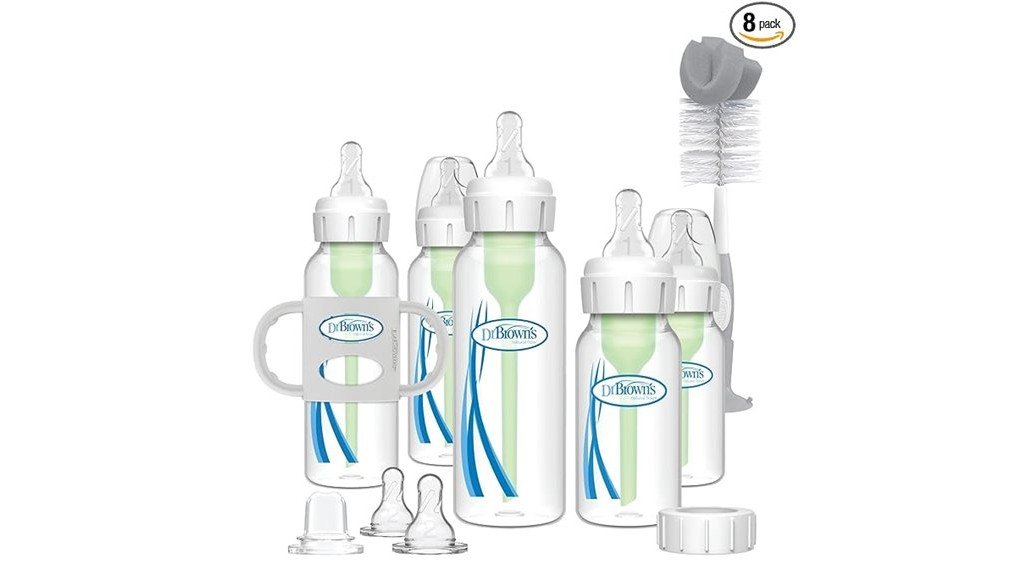
Dr. Brown’s Anti-Colic Bottle Gift Set combines the brand’s popular internal vent system with everything needed to move from early bottle feeding toward independent sipping. The Natural Flow Options+ Narrow Bottle-to-Sippy Gift Set includes five bottles in two sizes, multiple nipple-flow options, a silicone sippy spout, removable handles, and cleaning accessories.
Its biggest advantage is a feeding system that can adapt as your baby grows. The main trade-off is maintenance: the removable vents introduce more parts to wash, dry, and assemble than simpler baby bottles. This review explains the actual contents, feeding benefits, limitations, safety considerations, and alternatives before you buy.
Dr. Brown’s Options+ Bottle-to-Sippy Gift Set
Editorial assessment: 8/10
Specification-based editorial rating. This is not a hands-on test or an Amazon customer rating.
4 oz + 8 oz
Removable Vent
2 Nipple Levels
Sippy Conversion
BPA-Free
Best for: Parents who want several anti-colic bottles and accessories for different feeding stages.
Skip if: You prioritize the fewest possible cleaning parts or prefer wide-neck bottles.
Bottom line: A versatile bottle-feeding set with a useful transition path, provided you’re comfortable cleaning its internal vents.
Before You Buy: 4 Things to Know
- The linked product is a gift set: It contains multiple narrow-neck bottles, not one standard bottle.
- The vents need cleaning: Every vent component should be washed after each feeding.
- Flow level matters: Level 1 nipples are a starting point, not a guarantee that the flow suits every newborn.
- Sippy accessories are for later: The included sippy spout is intended for approximately 6 months and older, depending on readiness.
Article Contents: Expand to Jump to a Section
- Key Takeaways
- Specifications and Box Contents
- Who Should Buy It?
- Pros and Cons
- How the Anti-Colic Vent Works
- Breastfeeding and Bottle Feeding
- Growing With Your Baby
- Cleaning and Safety
- Sustainability
- Best Uses
- How to Use the Bottle
- What Owners Report
- Alternatives
- Is It Worth the Price?
- How We Evaluated It
- Frequently Asked Questions
- Final Verdict
Key Takeaways
- Dr. Brown’s Options+ bottles use an internal vent system designed to reduce swallowed air, spit-up, burping, and gas.
- The linked gift set contains three 8 oz bottles, two 4 oz bottles, seven nipples across two flow levels, and sippy-transition accessories.
- The silicone nipples and vacuum-free design support consistent feeding, but a smooth breast-to-bottle transition is not guaranteed.
- The removable Options+ vent allows the same bottle to be used without the internal vent when appropriate.
- The bottles are BPA-free and suitable for top-rack dishwasher cleaning and approved sterilization methods.
- Extra cleaning parts and possible leakage are the main disadvantages to consider.
Dr. Brown’s Anti-Colic Bottle Specifications
The linked product is the Natural Flow Anti-Colic Options+ Narrow Bottle-to-Sippy Gift Set. It is designed to cover several feeding stages, starting with traditional bottle feeding and later supporting basic cup-transition skills.
| Specification | Details |
|---|---|
| Brand | Dr. Brown’s |
| Product line | Natural Flow Options+ |
| Bottle type | Anti-colic, narrow-neck |
| Bottle sizes | 4 oz/120 mL and 8 oz/250 mL |
| Bottles included | 5 |
| Nipple material | Silicone |
| Included nipple flows | Level 1 Slow Flow; Level 2 Medium Flow |
| Vent system | Removable Options+ internal vent |
| Sippy conversion | Silicone spout and removable handles |
| Cleaning | Top-rack dishwasher safe; manufacturer-approved sterilization |
| BPA | BPA-free |
| Amazon ASIN | B09NCJL76C |
What’s in the Box?
The published contents of this 16-piece gift set are listed below. This is the narrow-neck Bottle-to-Sippy version, not the larger All-in-One Gift Set that includes a warmer and other accessories.
| Included Item | Quantity |
|---|---|
| 8 oz/250 mL narrow bottles | 3 |
| 4 oz/120 mL narrow bottles | 2 |
| Level 1 slow-flow nipples | 5 |
| Level 2 medium-flow nipples | 2 |
| Silicone sippy spout | 1 |
| Removable silicone handle accessory | 1 |
| Storage/travel cap | 1 |
| Bottle brush | 1 |
Important distinction: Some Dr. Brown’s gift sets include Level 3 nipples, pacifiers, a formula dispenser, or a bottle warmer. Those extras should not be assumed to come with this specific set.
Who Should Buy Dr. Brown’s Anti-Colic Bottle Gift Set?
This set is best suited to families who expect to use bottles regularly and want several sizes in one purchase. It is especially worth considering if your baby appears to swallow excess air during feeding or already accepts Dr. Brown’s narrow nipples.
Who It’s Best For
- Parents building a newborn bottle-feeding setup.
- Families combining breastfeeding with expressed-milk bottle feeds.
- Formula-feeding households that want multiple clean bottles available.
- Parents who prefer a removable anti-colic vent system.
- Caregivers who want to reuse familiar bottles with sippy accessories later.
Who Should Skip It?
- Parents who want bottles with fewer parts to clean.
- Families who prefer wide-neck bottles for filling and handwashing.
- Parents who only need one or two bottles.
- Caregivers whose babies already feed comfortably with simpler bottle systems.
A bottle’s design can influence feeding comfort, but no single shape or vent system works equally well for every infant. If feeding problems persist, a pediatrician or qualified feeding specialist can help identify the cause.
Dr. Brown’s Anti-Colic Bottle: Pros and Cons
Pros
- Five narrow bottles cover smaller and larger feeds.
- Internal vent is removable for later feeding stages.
- Sippy spout, silicone handles, brush and cap come in the set.
- Top-rack dishwasher and sterilizer compatibility.
Cons
- Extra vent pieces take longer to wash and dry.
- Some owners report leaks during use.
- Narrow nipples and accessories require model-specific replacements.
The main trade-off is straightforward. You get a more elaborate vent system and several accessories, but you also take on extra cleaning and assembly work.
Why Dr. Brown’s Anti-Colic Bottle Works
Dr. Brown’s Anti-Colic Bottle uses an internal airflow mechanism that separates incoming air from the milk pathway. As your baby drinks, air travels through the vent instead of entering through the nipple opening in the usual way.
This creates vacuum-free feeding, meaning your baby does not have to overcome increasing negative pressure inside the bottle. The brand says the system helps reduce swallowed air and symptoms such as spit-up, burping, and gas.
How the Internal Vent System Works
- Your baby sucks milk or formula through the silicone nipple.
- Air enters through the vent opening near the bottle collar.
- The internal vent directs that air toward the back of the bottle.
- This reduces vacuum buildup and helps maintain a consistent milk flow.
The design is useful in principle because swallowed air can contribute to feeding discomfort. However, colic has multiple possible causes, and reducing swallowed air does not guarantee that crying or digestive symptoms will disappear.
The American Academy of Pediatrics notes that anti-colic bottles may be worth trying when excess swallowed air is a concern. Persistent colic or unusual feeding symptoms still deserve medical evaluation.
Does the Vent Preserve Milk Nutrients?
Dr. Brown’s says its vent system limits contact between incoming air and bottle contents, which may help preserve certain nutrients affected by oxidation. The company specifically discusses vitamins such as C, A, and E.
That is a manufacturer-reported benefit, not proof that babies using these bottles have better long-term nutrition or health outcomes. Proper milk storage, safe preparation, and suitable feeding practices remain more important than a nutrient-preservation marketing claim.
How Dr. Brown’s Bottle Supports Breastfeeding Transitions
Vacuum-free feeding and a controlled nipple flow can help make bottle feeding feel more predictable. Dr. Brown’s silicone nipples are designed to encourage a comfortable latch and support a consistent flow during feeding.
For babies who alternate between breastfeeding and bottle feeding, nipple speed may matter as much as nipple shape. A slower flow often allows more time for sucking, swallowing, breathing, and pauses.
A breast-like nipple and controlled flow may support feeding transitions, but your baby’s latch, coordination, and preferences determine how well a bottle works.
Choosing the Right Nipple Flow
The gift set includes Level 1 and Level 2 nipples. Level 1 is generally the starting point for newborn feeding, while Level 2 provides a faster flow when feeding skills develop.
According to Dr. Brown’s nipple-flow guidance, you should watch your baby’s behavior instead of changing nipple levels based only on age.
| Feeding Sign | What It May Mean |
|---|---|
| Coughing, gulping, or choking | Flow may be too fast. |
| Milk leaking from the mouth | Flow may exceed the baby’s swallowing ability. |
| Frustration and very long feeds | Flow may be too slow, or another feeding problem may exist. |
| Calm feeding with regular pauses | The current flow may be appropriate. |
If your infant regularly coughs, chokes, tires during feeds, or struggles to transfer milk, ask a pediatrician or feeding specialist for guidance rather than simply increasing nipple speed.
How the Bottle Grows With Your Baby
The Options+ system is designed for more than the newborn stage. The gift set includes different bottle capacities, two nipple levels, and sippy accessories that support later feeding skills.
Stage 1: Early Bottle Feeding
The 4 oz bottles are convenient for smaller feeds, while the included Level 1 nipples provide a slow-flow starting option. Use the internal vent according to the manufacturer’s directions.
Stage 2: Larger Feeds
The 8 oz bottles provide additional capacity as feeding needs change. If your baby begins struggling with a flow that previously worked, evaluate the feeding pattern before considering a Level 2 nipple.
Stage 3: Using the Bottle Without the Vent
The green Options+ vent can be removed when feeding has developed enough that the extra venting is no longer needed. Dr. Brown’s states that these bottles work best with the vent installed, but the Options+ design permits vent-free use.
This is different from older Dr. Brown’s Natural Flow bottles with blue vents, which require the internal vent system during feeding.
Stage 4: Introducing Sippy Skills
When your baby is developmentally ready, the included silicone sippy spout can replace the bottle nipple. The removable silicone handles help your child practice gripping the familiar bottle.
The sippy spout is intended for approximately 6 months and older. Remove the vent for the sippy configuration according to the applicable accessory instructions, and supervise every feeding.
The included transition accessories are useful, although they do not replace all the skills involved in learning to drink from an open cup.
Cleaning, Sterilizing, and Safety Tips
Dr. Brown’s bottles are designed for routine cleaning, but the internal vent makes proper disassembly especially important. Milk residue can collect in narrow passages if parts are only rinsed or cleaned while assembled.
The bottles and compatible components are suitable for top-rack dishwasher cleaning. Manufacturer-approved electric or microwave steam sterilizers and boiling-water methods may also be used.
How to Clean the Bottle After Every Feeding
- Wash your hands before handling feeding equipment.
- Separate the bottle, nipple, collar, internal vent parts, and cap.
- Rinse the components under running water.
- Wash them in a dedicated clean basin with hot, soapy water, using suitable brushes for narrow openings.
- Rinse thoroughly to remove soap and visible residue.
- Place the parts on a clean surface and allow them to air-dry completely.
- Reassemble only when the components are fully dry.
You can also use the dishwasher if the components are approved for that method. Place small parts in a secure dishwasher basket so they cannot fall into the machine’s filter.
The CDC recommends cleaning bottles and feeding parts after every use, rather than merely rinsing and reusing them.
When Is Sterilization Necessary?
Daily sanitizing is particularly important if your baby is younger than 2 months, was born prematurely, or has a weakened immune system. For older, healthy infants, thorough cleaning after every use may be sufficient.
If you use boiling water to sanitize approved components, the CDC describes a five-minute boiling method after the parts have been cleaned. Follow the bottle manufacturer’s instructions as well.
A dishwasher cycle using hot water and heated drying or a sanitizing setting can remove the need for an additional sanitizing step when the items are dishwasher safe.
Safety Warning: Never microwave breast milk or formula inside the bottle. Microwave heating can produce hot spots that burn a baby’s mouth. A microwave sterilizer uses a separate, approved process and should not be confused with heating the milk itself.
How Often Should You Replace Nipples and Vents?
Inspect nipples before every feeding for cracks, tears, changes in shape, discoloration, or unusual flow. Replace damaged nipples immediately. Dr. Brown’s also recommends checking nipples regularly as they wear with repeated use.
There is no single guaranteed lifespan for the internal vent. Replace vent parts if they crack, deform, stop fitting correctly, or become impossible to clean properly.
How to Reduce Bottle Leaks
- Keep liquid below the bottle’s maximum fill marking.
- Make sure the vent components are seated and connected properly.
- Check that the nipple and collar are correctly fitted.
- Follow the manufacturer’s warming instructions to prevent pressure buildup.
- Use an appropriate storage or travel cap rather than assuming the feeding nipple is leakproof during transport.
If leakage continues after cleaning and correct assembly, inspect every seal and component for damage. A visibly cracked or deformed part should be replaced before further use.
How Dr. Brown’s Bottles Support Sustainability
Dr. Brown’s presents reuse and recyclability as environmental advantages of its Options+ bottle line. The removable vent and available nipple options may let some families keep using the same bottle bodies through multiple stages.
The company has also promoted a collaboration with Plastic Bank, an organization involved in reducing plastic waste. However, broader environmental commitments should not be confused with verified recycling outcomes for an individual bottle.
- Reusable bottle bodies: Designed for repeated feeding and cleaning.
- Replaceable components: Some nipples and vent parts can be replaced separately.
- Adaptable feeding design: Sippy accessories can extend the usefulness of compatible bottles.
- Recyclability: The brand identifies its bottles as recyclable, but local acceptance depends on the materials and recycling facilities.
Not every silicone or plastic accessory will be accepted through household curbside recycling. Check local recycling rules, and do not assume the full assembled bottle belongs in one recycling stream.
From a practical perspective, getting longer use from a bottle already owned may be more meaningful than making an unsupported claim about precise plastic-waste savings.
Best Uses for the Dr. Brown’s Bottle-to-Sippy Set
Newborn Feeding at Home
The smaller bottles and Level 1 nipples make this set a practical starting point for routine newborn feeds. You can keep extra bottles clean and ready while others are being washed and dried.
Expressed Breast Milk Feeding
The silicone nipples and controlled flow options may suit families combining direct breastfeeding with expressed milk. Use paced feeding, watch swallowing patterns, and allow breaks rather than encouraging your baby to finish the entire bottle.
Daily Formula Feeding
The larger bottles provide flexibility for changing feed volumes. Prepare formula according to the formula manufacturer’s instructions, and do not leave prepared or partially consumed formula at room temperature beyond recommended safety limits.
Early Cup-Transition Practice
The silicone handles and sippy spout make this set relevant when your child begins practicing independent drinking. The familiar bottle body may help with the change, but adult supervision remains essential.
How to Use Dr. Brown’s Anti-Colic Bottle Correctly
Proper assembly matters because the internal vent system has several connected components. The process becomes more familiar with practice, but rushing assembly can lead to leaks or inconsistent feeding.
- Clean the parts: Before first use, wash and sanitize the components according to the manufacturer’s instructions. Continue cleaning after every feeding.
- Prepare the milk: Add expressed breast milk or properly prepared formula to the bottle without exceeding the fill marking.
- Assemble the vent: Connect the vent insert and reservoir as directed, making sure the pieces fit securely.
- Fit the nipple: Seat the appropriate nipple inside its collar.
- Secure the collar: Attach the collar over the assembled vent system according to the instructions.
- Check temperature: Make sure the milk is not too hot before feeding.
- Feed responsively: Hold your baby during feeding, allow pauses, and watch for swallowing or breathing difficulties.
- Clean afterward: Disassemble, wash, rinse, air-dry, and store every reusable component safely.
Never prop the bottle or leave your baby alone with it. If your child is struggling, stop the feed and check the nipple flow, assembly, and feeding position.
What Owners Report About Dr. Brown’s Anti-Colic Bottles
Owner experiences with Dr. Brown’s Options+ narrow bottles reveal a clear trade-off between feeding performance and maintenance. Feedback varies by baby, bottle size, and individual setup, so these observations should not be treated as controlled test results for this exact gift set.
Commonly Reported Benefits
- Some parents report more comfortable feeds or less noticeable gas.
- Others appreciate the narrow nipple shape and availability of different flow levels.
- The ability to buy several bottles together appeals to families feeding frequently.
Commonly Reported Complaints
- The vent system adds several small parts to daily washing.
- Some parents report leakage, including cases where they believe the bottle was assembled correctly.
- A few describe nipple-flow or feeding difficulties despite trying different configurations.
These themes appear in customer feedback on baby-product retailers, including Babylist’s Options+ bottle reviews. They reflect individual experiences and do not establish how frequently any problem occurs.
Practical takeaway: A baby who accepts the nipple and feeds comfortably may benefit from this system. However, its extra parts and reported leakage make it less attractive for parents who value the quickest possible cleaning routine.
Dr. Brown’s Anti-Colic Bottle vs. Alternatives
Dr. Brown’s is not the only bottle designed to manage airflow or support breastfeeding transitions. The following options offer different combinations of nipple design, cleaning convenience, and venting mechanisms.
| Bottle | Main Design | Best Reason to Consider | Main Trade-Off |
|---|---|---|---|
| Dr. Brown’s Options+ Narrow | Removable internal vent | Multiple bottle sizes and sippy conversion | More parts to clean |
| Philips Avent Natural Response | Active-drinking nipple with anti-colic valve | Simple assembly and milk flow that pauses with the baby | Baby may need time to adapt to nipple flow |
| MAM Easy Start Anti-Colic | Vented base | Microwave self-sanitizing design | Multi-part base must be cleaned and assembled correctly |
| Lansinoh NaturalWave | Flexible nipple with air ventilation | Simpler bottle assembly and breast-to-bottle feeding focus | Does not include the same bottle-to-sippy accessory package |
Philips Avent Natural Response
Philips Avent Natural Response bottles use a nipple that releases milk when your baby actively drinks. Its integrated anti-colic valve is designed to reduce swallowed air, and the wide-neck bottle has relatively few components.
This may be a better choice if easy cleaning is your top priority. You may need to experiment with nipple-flow levels before finding one your baby accepts comfortably.
MAM Easy Start Anti-Colic
MAM Easy Start bottles use a vented base instead of Dr. Brown’s long internal vent tube. The bottle’s self-sanitizing design is useful for caregivers who want an approved microwave sanitizing method without a separate sterilizer.
However, its base still requires thorough washing and correct assembly. It is not a completely maintenance-free option.
Lansinoh NaturalWave
Lansinoh NaturalWave bottles use a soft, flexible nipple designed to support natural sucking movements. Their simpler assembly makes them worth comparing if your baby alternates between breastfeeding and bottle feeding.
They do not offer the same included sippy-transition accessories as the Dr. Brown’s gift set, so they serve a slightly different buying need.
Is Dr. Brown’s Anti-Colic Bottle Gift Set Worth the Price?
The value depends on how many of the included pieces you will actually use. Five bottles, multiple nipple levels, a brush, a travel cap, and sippy accessories can be practical for a family building a feeding setup from scratch.
If your baby already uses Dr. Brown’s narrow bottles, the set may also offer convenient matching accessories. However, families who only need a replacement bottle or nipple may find a smaller purchase more sensible.
Reasons It May Be Worth Buying
- You need multiple 4 oz and 8 oz bottles.
- You want to try a removable internal vent system.
- You expect to use the included sippy spout and handles.
- You prefer coordinated bottles and accessories from the same product line.
Reasons to Consider a Different Option
- You want fewer components in your daily cleaning routine.
- You already own enough compatible bottles.
- You prefer a wide-neck design.
- Your baby feeds well with a simpler bottle.
Value verdict: The gift set makes the most sense when you need a complete collection. Its value becomes less compelling if you will use only one or two of the bottles and leave most accessories unused.
How We Evaluated This Bottle
This is a research-based editorial review, not a hands-on laboratory or household product test. We evaluated the gift set using its published listing, available manufacturer guidance, recognized infant-feeding safety advice, and feedback about the related Options+ narrow bottle system.
Our main criteria were:
- Product accuracy: Matching the affiliate-linked ASIN to the correct gift-set variation and contents.
- Feeding design: Reviewing the vent system, nipple-flow options, and transition accessories.
- Practical maintenance: Considering washing, drying, sanitizing, and assembly requirements.
- Safety: Checking cleaning and feeding recommendations against public health guidance.
- Long-term usefulness: Evaluating whether the bottle system supports changing feeding needs.
- Competitive value: Comparing relevant features with alternative baby bottle systems.
The editorial assessment does not represent measured feeding outcomes, clinical testing, or direct experience with this specific box. Actual performance depends on your baby’s feeding ability and the way the bottle is used.
Frequently Asked Questions
Does the Bottle Fit All Standard and Wide-Neck Nipples?
No. Dr. Brown’s narrow and wide-neck nipples are not universally interchangeable. This gift set uses narrow-neck bottles, so you should choose nipples and replacement components intended for the compatible Dr. Brown’s narrow bottle line. Verify the specific bottle and accessory version before purchasing replacements.
Can I Use It With Breast Milk and Formula?
Yes. Dr. Brown’s Options+ bottles can be used for expressed breast milk or properly prepared infant formula. Follow the appropriate milk storage and formula preparation instructions. Clean every bottle component after feeding, and never add fresh milk to a used bottle without washing it first.
Is the Bottle Compatible With Bottle Warmers?
Yes, many bottle warmers can accommodate Dr. Brown’s narrow bottles, but compatibility depends on the warmer model. Follow the warming and vent-assembly instructions to prevent pressure-related leakage. Never microwave milk inside the bottle, and always check its temperature before offering it to your baby.
How Long Does the Anti-Colic Vent System Last?
The vent system does not have one guaranteed lifespan for every household. Its useful life depends on cleaning, handling, wear, and damage. Check the pieces regularly for cracks, deformation, or poor fit. Replace damaged parts rather than continuing to use a vent that no longer assembles correctly.
Are Replacement Parts Sold Separately?
Yes. Dr. Brown’s offers replacement nipples and certain compatible bottle accessories separately. Availability varies by component and retailer. Identify whether your bottle uses the Options+ narrow or wide-neck system before ordering, especially when replacing vents, collars, sippy spouts, or other model-specific accessories.
Can I Use Dr. Brown’s Options+ Bottles Without the Vent?
Yes. The removable green vent system in Options+ bottles can be taken out as your baby’s feeding develops. Dr. Brown’s recommends using the vent for its intended anti-colic benefits. Older Natural Flow bottles with blue vents are different and should not be used without their required vent system.
Do Dr. Brown’s Anti-Colic Bottles Stop Colic Completely?
No. The internal vent is designed to reduce swallowed air and may improve comfort for some babies, but it cannot prevent every cause of colic. Persistent crying, poor feeding, vomiting, or concerning changes in behavior should be discussed with a pediatrician rather than attributed only to bottle choice.
When Can My Baby Start Using the Sippy Spout?
The included silicone sippy spout is intended for babies around 6 months and older. Readiness matters more than reaching an exact birthday. Your baby should have suitable head and trunk control and be ready to practice supported drinking. Always supervise and follow the spout’s assembly instructions.
Can the Bottles Go in the Dishwasher?
Yes. Dr. Brown’s Options+ bottles and compatible parts are designed for top-rack dishwasher cleaning. Separate the components first and secure small pieces in a dishwasher basket. Let everything dry fully before reassembly. If residue remains inside a vent passage, clean it with a suitable brush.
Conclusion: Is Dr. Brown’s Anti-Colic Bottle a Good Choice?
Dr. Brown’s Natural Flow Anti-Colic Options+ Bottle-to-Sippy Gift Set is a practical choice for parents who want multiple feeding bottles and a gradual transition to sippy skills. The internal vent system is its main attraction, while the selection of bottle sizes, nipple flows, and silicone accessories adds flexibility.
Its biggest weakness is the extra maintenance required by the vent components. Although the bottle may help some infants feed more comfortably, the system is not a guaranteed solution to colic or feeding difficulties.
Final verdict: The set is most appealing to families who want a complete, adaptable bottle-feeding setup and do not mind washing several small parts. If cleaning speed and simple assembly matter more, a less complex bottle system may be a better fit.
Ready to Compare the Gift Set?
Review the included accessories, bottle sizes, and current listing details before making your decision.