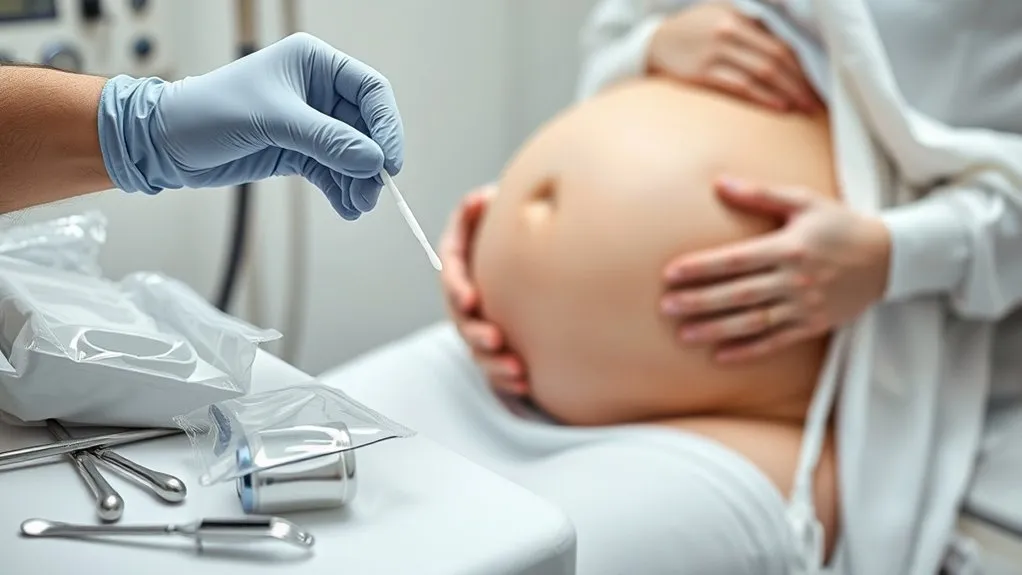
The GBS test in pregnancy checks whether Group B Streptococcus is present in your lower vagina and rectum near the end of pregnancy. The result helps your birth team decide whether you need antibiotics during labor to reduce your newborn’s risk of early-onset GBS disease. A positive result means you carry the bacteria; it does not usually mean you are sick.
Quick Answer
In the United States, routine GBS screening is recommended at 36 0/7 through 37 6/7 weeks of pregnancy. A sterile swab samples the lower vagina and rectum. If the result is positive, your care team will usually give IV antibiotics during labor rather than treating routine colonization earlier in pregnancy.
Key Takeaways
- GBS can come and go, which is why screening is done close to delivery and repeated during each pregnancy.
- A positive swab means GBS colonization, not a sexually transmitted infection or proof that you or your baby are ill.
- GBS found in urine or a previous baby with GBS disease can change the plan and may make another late-pregnancy swab unnecessary.
- GBS-specific antibiotics are generally not needed for a planned cesarean birth performed before labor starts while the membranes are still intact.
What Is the GBS Test in Pregnancy?
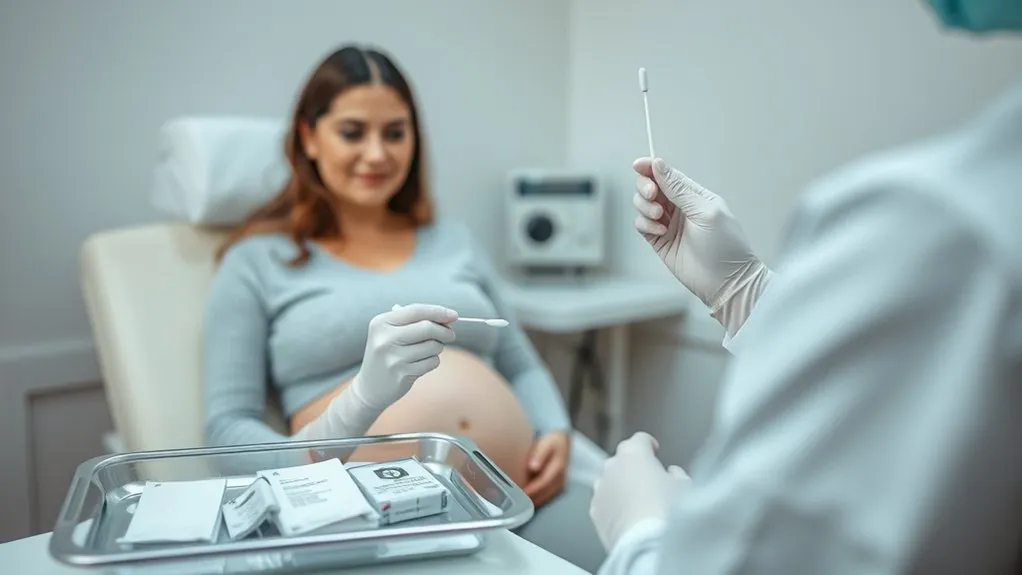
The GBS test is a routine prenatal screening for Group B Streptococcus, also called group B strep or GBS. The bacterium can live normally in the digestive and genital tracts without causing symptoms.
According to ACOG’s patient guidance on Group B Strep, about 1 in 4 pregnant women carry GBS. It is not the same bacterium that causes strep throat, and carrying GBS does not mean you have a sexually transmitted infection.
The main concern is exposure around birth. GBS can pass from a pregnant person to a baby during labor or after the membranes rupture. Most exposed babies do not become ill, but early-onset GBS disease can cause serious infections such as sepsis, pneumonia, or meningitis.
Screening identifies who is more likely to benefit from preventive antibiotics during labor. That makes the test a prevention tool rather than a diagnosis that you are personally sick.
Note: This article follows U.S. ACOG and CDC guidance. Your plan may differ if you live elsewhere or have GBS in your urine, a previous baby with GBS disease, preterm labor, ruptured membranes, fever during labor, or a serious antibiotic allergy. Follow the instructions from your obstetrician or midwife.
When to Get Screened for GBS
For routine U.S. prenatal care, ACOG recommends a vaginal-rectal GBS culture between 36 0/7 and 37 6/7 weeks. Testing during this window makes the result more likely to reflect your GBS status when labor begins.
The ACOG clinical guidance for preventing early-onset GBS disease considers a negative culture valid for about five weeks. The recommended screening window therefore covers most births through at least 41 weeks.
GBS colonization can change over time, so testing close to delivery gives your care team more useful information than testing much earlier.
You should normally be screened during each pregnancy, even if a previous pregnancy was GBS negative. You should also be screened if you are planning a cesarean birth because labor or rupture of membranes could occur before the scheduled surgery.
There are important exceptions. If GBS has already been found in your urine during this pregnancy, or if a previous baby had invasive GBS disease, your care team generally already has an indication to give GBS prophylaxis during labor and may not need the routine 36- to 37-week culture.
How the GBS Swab Is Collected
The GBS swab is collected by gently sampling the lower vagina and rectum with a sterile swab. The collection itself is brief and normally causes little or no pain, although you may notice mild pressure or momentary discomfort.
A clinician can collect the sample, but some practices allow you to collect it yourself after giving you the correct swab and instructions. ACOG reports that properly instructed patient-collected vaginal-rectal specimens can produce culture yields similar to clinician-collected samples.
| Step | What you’ll notice | Why it matters |
|---|---|---|
| 1 | The lower vagina is swabbed | Collects bacteria from a common GBS colonization site |
| 2 | The rectal area is swabbed | Improves detection compared with vaginal sampling alone |
| 3 | The sample goes to a laboratory | Determines whether GBS is present |
You usually do not need complicated preparation. Follow the instructions from your clinic or collection kit rather than cleansing the area in a special way or improvising your own collection method.
Laboratory turnaround varies. MedlinePlus notes that GBS culture results are often available within a few days. Ask your care team how you will receive the result and make sure it is available to the hospital or birth center.
What a Positive GBS Test Means
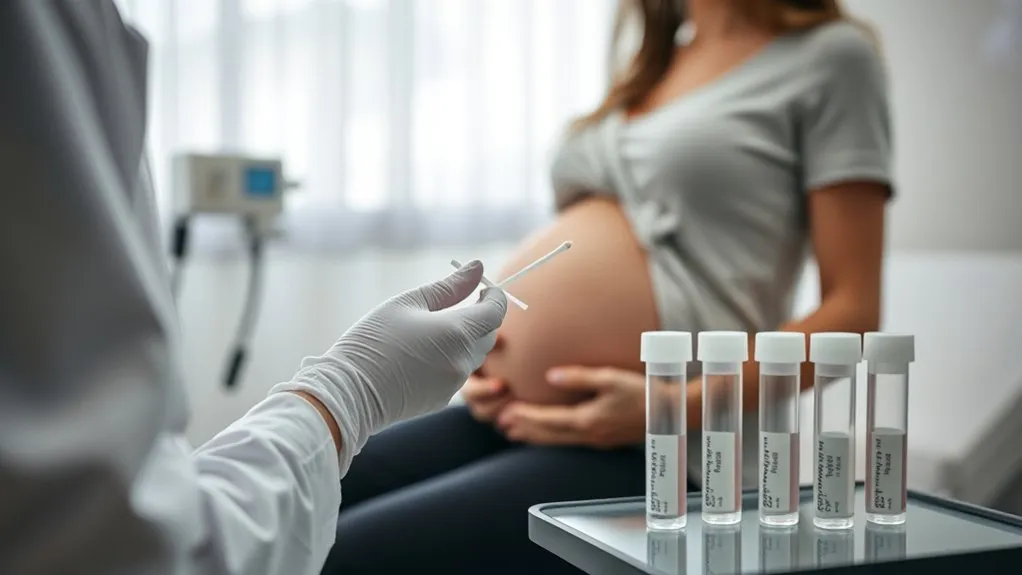
A positive GBS test means the bacteria were found in your vaginal-rectal sample. It usually describes colonization rather than an active infection, so most people who test positive have no symptoms and do not feel ill.
A positive result does not mean your baby will develop GBS disease. Instead, it tells your birth team that preventive antibiotics during labor can substantially reduce the chance of early-onset infection.
In most cases, routine GBS colonization is not treated with oral antibiotics weeks before labor. The bacteria can return after treatment, so prevention focuses on having an effective antibiotic in your bloodstream while your baby is being exposed during labor and birth.
Tell your labor team that you tested positive, especially if your records may not be immediately available. Also tell them about any previous reaction to penicillin, cephalosporins, or other antibiotics so they can choose the appropriate medication.
How Antibiotics Prevent GBS in Newborns
For someone who needs GBS prophylaxis, antibiotics are given through an IV during labor. Penicillin is the preferred antibiotic for many patients, with other options available when a clinically important penicillin allergy is present.
The CDC’s GBS prevention guidance illustrates the benefit clearly: for a GBS-positive mother, it estimates a baby’s risk of GBS disease at about 1 in 200 without labor antibiotics compared with about 1 in 4,000 when antibiotics are given.
Starting prophylaxis at least four hours before birth provides the greatest documented benefit. However, even about two hours of exposure can lower vaginal GBS levels and reduce some neonatal infection risk. Necessary obstetric care should not be delayed simply to complete four hours of antibiotics.
| Measure | Effect | Timing |
|---|---|---|
| Late-pregnancy screening | Identifies GBS colonization before birth | 36 0/7–37 6/7 weeks |
| IV antibiotics | Reduces newborn exposure and early-onset disease risk | During labor |
| Penicillin | Preferred prophylaxis for many patients | Started during labor |
| GBS found in urine | Establishes the need for labor prophylaxis | Documented during pregnancy |
| Adequate antibiotic exposure | Provides the strongest protection when time allows | Ideally at least 4 hours before birth |
Antibiotics given during labor are aimed at preventing early-onset GBS disease. They do not eliminate every possibility of GBS infection later in infancy.
Separately, maintaining adequate calcium intake supports general pregnancy nutrition, but calcium does not replace GBS screening or antibiotics when prophylaxis is indicated.
When the Usual GBS Plan Changes
Not every pregnancy follows the simple pattern of “swab, then antibiotics if positive.” GBS in urine, a previous affected baby, unknown test results during labor, or a planned cesarean can change what your team recommends.
GBS Found in Your Urine
If GBS is found in your urine at any concentration during pregnancy, ACOG considers that an indication for GBS antibiotics during labor. You generally do not need another routine vaginal-rectal culture later solely to decide whether labor prophylaxis is needed.
Whether you also need treatment at the time the urine result is found depends on the amount of bacteria and whether you have urinary symptoms. ACOG’s urinary tract infection guidance recommends treatment for GBS bacteriuria at 100,000 CFU/mL or more; lower counts still remain an indication for prophylaxis during delivery.
A Previous Baby Had GBS Disease
If you previously gave birth to a baby who developed invasive GBS disease, that history itself is an indication for antibiotics during labor in a later pregnancy. Routine late-pregnancy screening is not needed to establish that indication.
Your GBS Status Is Unknown When Labor Starts
If you enter labor before your result is available or were not screened, your care team considers other risk factors. These include labor before 37 weeks, membranes ruptured for 18 hours or more, or a temperature of at least 100.4°F (38°C) during labor.
Your prior pregnancy history can matter as well. If your current status is unknown but you were GBS positive in a previous pregnancy, your clinician may recommend prophylaxis based on the circumstances.
You Plan a Cesarean Birth
You should still have routine GBS screening before a planned cesarean. However, GBS-specific intrapartum prophylaxis is generally not needed if the cesarean happens before labor starts and while the amniotic membranes remain intact.
If labor begins or your water breaks before the scheduled cesarean, tell the hospital about your GBS result. Your obstetric team can then select antibiotics that fit both GBS prevention and the surgical plan.
Frequently Asked Questions
Can I do the GBS swab at home?
Yes, self-collection may be an option if your healthcare practice provides the proper swab, laboratory order, and instructions. Properly instructed self-collected vaginal-rectal samples can perform similarly to clinician-collected samples. Do not substitute a household swab or an unapproved home method.
Does the GBS test hurt?
The GBS test usually does not hurt. You may feel brief pressure or mild discomfort as the swab touches the lower vagina and rectum. Tell your clinician if you are anxious, have pelvic pain, or need help finding a more comfortable position.
What should I avoid before my GBS swab?
Follow the preparation instructions from the clinic or laboratory performing your test. Routine GBS screening usually does not require complicated preparation. If you are using vaginal medication, have recently taken antibiotics, or received different instructions with a self-collection kit, ask your clinician before collecting the sample.
Can GBS go away before labor?
Yes, GBS colonization can come and go, but a positive late-pregnancy culture is still used to guide your labor plan. You should not assume the bacteria disappeared because you feel well. Routine antibiotics before labor are not used simply to try to clear normal GBS colonization.
Will I need another GBS test later?
You need a new GBS assessment during each pregnancy, but you do not normally repeat a positive late-pregnancy swab just to see whether it became negative. A negative culture is considered valid for about five weeks, so repeat screening may be needed if more than five weeks pass before delivery.
Do I need GBS antibiotics for a planned C-section?
GBS-specific antibiotics are generally not required when a planned cesarean happens before labor starts and the amniotic membranes are still intact. You should still have routine GBS screening because labor or rupture of membranes could happen before surgery. Standard antibiotics used for cesarean surgery are a separate issue.
Conclusion
The GBS test in pregnancy gives your birth team information they can use to protect your baby during labor. If your result is positive, remember that carrying GBS is common and usually causes no symptoms. Discuss your result, antibiotic allergies, and labor plan with your provider so the right prevention steps are ready when labor begins.
Sources
- American College of Obstetricians and Gynecologists: Group B Strep and Pregnancy: GBS prevalence, meaning of a positive result, screening, and treatment.
- ACOG Committee Opinion No. 797: screening window, self-collection, culture validity, cesarean exceptions, and intrapartum prophylaxis.
- Centers for Disease Control and Prevention: Preventing Group B Strep Disease in Newborns: IV antibiotics during labor and estimated treated versus untreated newborn risk.
- ACOG: Urinary Tract Infections in Pregnant Individuals: management of GBS bacteriuria and the 100,000 CFU/mL treatment threshold.
- MedlinePlus: Group B Streptococcus and Pregnancy: specimen testing, laboratory turnaround, risk factors, and newborn complications.