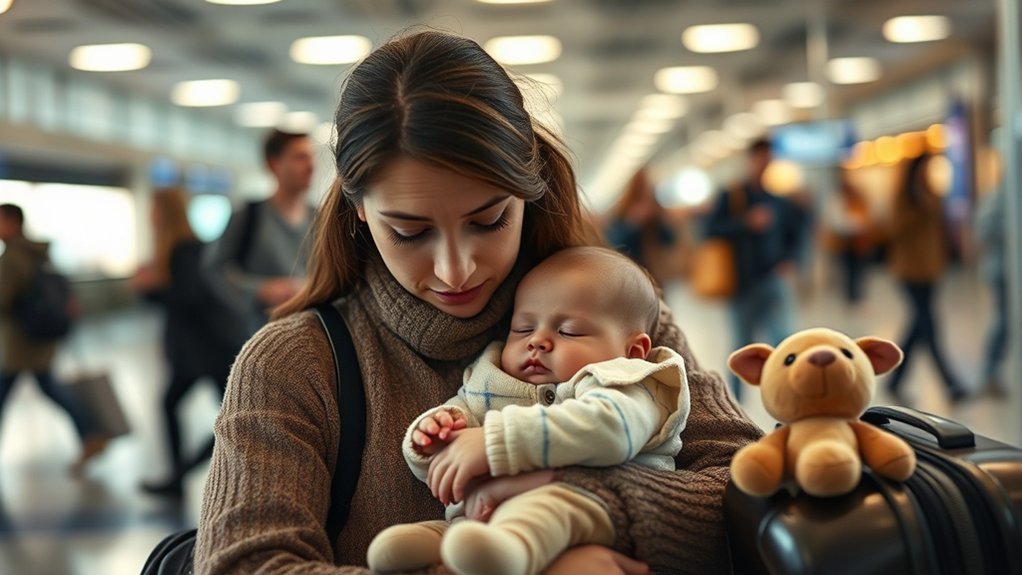
Baby jet lag symptoms usually appear after travel across several time zones, when your baby’s sleep-wake rhythm is still aligned with home time. You may notice unusual night waking, daytime sleepiness, fussiness, or changes in feeding. Most cases are temporary, but illness symptoms such as fever or persistent vomiting should not automatically be blamed on jet lag.
Quick Answer
Common baby jet lag symptoms include trouble settling at the new local bedtime, frequent night waking, unusual daytime sleepiness, shorter or mistimed naps, irritability, and temporary changes in feeding. Symptoms should gradually improve as your baby’s body clock adjusts. Fever, marked lethargy, dehydration, or persistent vomiting needs separate medical attention.
Key Takeaways
- Sleep timing is usually the clearest sign: your baby may seem ready to sleep or wake according to the time at home rather than the local clock.
- Fussiness and feeding changes can accompany jet lag, but they are not specific enough to diagnose it by themselves.
- Daylight, familiar routines, and a gradual shift toward local sleep and meal times can make adjustment easier.
- Do not assume fever, dehydration, severe lethargy, or persistent vomiting and diarrhea are simply jet lag.
Understanding Jet Lag in Babies
Jet lag happens when your baby’s internal body clock is out of sync with the light, sleep, and activity schedule at the destination. The CDC Yellow Book guidance for infants and children confirms that travel across time zones and schedule disruption can disturb children’s sleep patterns.
Your baby’s circadian rhythm helps organize periods of sleep and wakefulness across the day. These rhythms mature during infancy, so sleep patterns can already vary considerably from one baby to another even before travel.
After a rapid time-zone change, your baby may become sleepy when it is still daytime locally or wake ready for activity during the night. Feeding times and bowel habits can also feel temporarily out of step because the whole daily routine has shifted.
Common Baby Jet Lag Symptoms
The strongest baby jet lag symptoms involve a sudden change in sleep timing after crossing time zones. Mood and digestive changes may occur too, although those signs are less specific and can have many other causes.
Mayo Clinic’s jet lag guidance lists disturbed sleep, daytime fatigue, mood changes, and gastrointestinal changes among recognized effects of circadian disruption. In a baby, you usually see these effects through behavior rather than a verbal complaint.
- Trouble settling: Your baby may resist sleep at the destination’s normal bedtime because their body still expects to be awake.
- Night waking: A baby who normally sleeps for longer stretches may wake more often or stay awake for an unusually long period overnight.
- Early waking: Your baby may start the day several hours earlier than expected.
- Mistimed naps: Naps may happen earlier, later, or for a different length than usual.
- Daytime tiredness: Your baby may appear sleepier, less active, or ready for a nap at unfamiliar times.
- Fussiness: Sleep loss and an unfamiliar routine can make your baby more irritable or harder to settle.
- Temporary feeding changes: Hunger may appear at unusual times because feeding cues can remain linked to the previous schedule.
Sleep Disruptions in Infants
Sleep disruption is usually the most noticeable part of baby jet lag. The pattern often makes sense when you compare the destination time with the time at home.
For example, a baby who becomes wide awake in the middle of the local night may simply be experiencing what their body still interprets as daytime. Likewise, a baby who becomes unusually sleepy in late afternoon may still be following the bedtime rhythm from home.
Look at the whole 24-hour pattern rather than one difficult bedtime. Jet lag is more likely when the changes began immediately after a substantial time-zone shift and involve several parts of the baby’s normal sleep schedule.
Mood Changes and Irritability
Increased irritability can accompany jet lag because your baby may be tired at times when the new schedule expects them to be awake. Travel itself can also add unfamiliar sounds, rooms, people, and routines.
You may notice more crying, clinginess, difficulty settling, or lower tolerance for normal activities such as feeding and diaper changes. These behaviors should improve as sleep becomes better aligned with local time.
Fussiness alone does not prove that your baby has jet lag. Pain, illness, hunger, overheating, overstimulation, or another travel-related problem can look similar.
Behavioral Changes to Watch For
Behavior gives you useful clues because a baby cannot describe feeling tired or disoriented. Compare what you see with your baby’s usual sleep, feeding, and activity patterns rather than expecting every baby to react the same way.
Sleep Disruptions and Patterns
A temporary shift in the timing of sleep is more suggestive of jet lag than simply sleeping badly in an unfamiliar room. Watch for a cluster of changes that began after the time-zone change.
- Different bedtime: Your baby becomes sleepy much earlier or later than the destination bedtime.
- Frequent night waking: Previously settled stretches of sleep become fragmented.
- Changed naps: Naps occur at unusual local times or become shorter or longer.
- Difficulty resettling: Your baby wakes alert because their internal clock is signaling daytime.
An unfamiliar hotel or sleep space can also disrupt sleep without true jet lag. The connection to a time-zone shift is therefore an important part of the pattern.
Increased Irritability and Fussiness
A jet-lagged baby may be noticeably fussier during periods when they would normally be asleep at home. Overtiredness can make settling more difficult, which can then create additional night waking.
Keep familiar parts of the bedtime routine where practical. Quiet feeding, a familiar sleep sack, dim lighting, and the same pre-sleep sequence can give your baby recognizable cues even though the clock and surroundings have changed.
Changes in Appetite Levels
Feeding times can temporarily shift because hunger and sleep cues do not immediately reset to destination time. Some babies may want a full feed at what is locally an unusual hour, while others may seem less interested because they are tired.
Continue following your baby’s feeding cues rather than withholding a needed feed simply to force a new schedule. Breastfed and formula-fed babies should continue their normal milk feeds, and older babies can continue their usual age-appropriate foods and fluids.
A mild temporary change in timing can fit with jet lag. Persistent refusal to feed, repeated vomiting, or markedly fewer wet diapers deserves more attention.
Physical Signs of Discomfort
Physical signs associated with jet lag are usually related to tiredness or temporary disruption of normal daily rhythms. They should remain mild and improve as your baby’s schedule settles.
Your baby may rub their eyes, yawn, become less active, or appear sleepy at an unusual local time. Appetite and bowel timing may also temporarily change after a major shift in routine.
Constipation or loose stools can occur alongside travel and schedule changes, but diarrhea has many causes in traveling children. Do not assume significant diarrhea, repeated vomiting, or fever is caused by jet lag.
Warning: Seek medical advice rather than blaming symptoms on jet lag if your baby is difficult to wake, has trouble breathing, cannot keep feeds down, develops signs of dehydration, or has a concerning fever. A baby younger than 3 months with a rectal temperature of 100.4°F (38°C) or higher needs prompt medical evaluation.
Tips for Easing Jet Lag Symptoms
The goal is to help your baby’s body clock recognize the destination’s daytime and nighttime without making them severely overtired. Light, routine, sleep timing, and feeding cues can all support that transition.
- Shift the schedule before departure when practical. The American Academy of Pediatrics’ family travel guidance suggests adjusting a child’s sleep schedule during the two to three days before departure to help reduce jet lag.
- Use daylight after arrival. Spend time outdoors or in brightly lit areas during the local daytime. Light is one of the strongest signals that helps the body clock adjust.
- Move toward local meal and sleep times. For a longer stay, begin using the destination schedule while still responding to your baby’s genuine hunger and sleep needs.
- Keep the bedtime routine familiar. Use the same calming sequence you normally use at home. Keep nighttime interactions quiet and lights low when your baby wakes.
- Protect normal feeding and hydration. Offer regular breastmilk or formula feeds and your older baby’s normal age-appropriate fluids and foods. The AAP’s dehydration guidance lists reduced urination, a dry mouth, fewer tears, excessive sleepiness, and a sunken soft spot among warning signs parents should watch for.
- Reduce stimulating light near bedtime. Keep screens and other bright light away from the sleep routine so the environment clearly signals nighttime.
Do not try to keep an exhausted baby awake for hours just to reach the new bedtime. Gradual adjustment is usually easier than forcing a large change in a single day.
Warning: Do not give a baby melatonin or another sleep aid for jet lag unless your pediatrician specifically recommends it. The American Academy of Pediatrics advises parents to discuss melatonin with their child’s pediatrician rather than starting it on their own.
When to Seek Professional Advice
Jet lag should be temporary and should trend toward improvement as your baby’s sleep becomes aligned with local time. Symptoms that are severe, worsening, or clearly suggest illness deserve medical attention rather than waiting for the body clock to adjust.
Contact your pediatrician if sleep disruption remains pronounced without improvement, your baby is feeding poorly, or you are unsure whether the symptoms fit normal travel adjustment.
Seek prompt medical care for repeated vomiting, significant diarrhea with dehydration signs, difficulty breathing, unusual lethargy, or a baby who is difficult to wake. The AAP’s fever guidance also advises immediate medical contact for a baby younger than 3 months with a temperature of 100.4°F (38°C) or higher.
The CDC’s pediatric travel guidance notes that infants and children can become dehydrated more quickly than adults when diarrhea or vomiting occurs, so these symptoms need particular attention during travel.
Note: Jet lag can explain a timing-related change in sleep, but it cannot rule out illness. If your baby’s behavior seems substantially different from ordinary tiredness or you are concerned about feeding, hydration, breathing, fever, or alertness, contact a pediatric healthcare professional.
Frequently Asked Questions
Can jet lag affect breastfeeding schedules?
Yes. A time-zone change can shift when your baby feels sleepy or hungry, so nursing times may temporarily move earlier or later. Continue responding to hunger cues rather than delaying a needed feed solely to force the destination schedule. Feeding times usually become easier to realign as sleep and wake periods adjust.
How long does jet lag typically last in babies?
Baby jet lag often improves over several days, but there is no reliable infant-specific rule that predicts exactly how long adjustment will take. The number of time zones crossed, direction of travel, the baby’s normal routine, daylight exposure, and sleep lost during the trip can all influence recovery.
Are some babies more prone to jet lag?
Babies can respond very differently to the same trip. A baby with a predictable sleep routine may show an obvious schedule shift, while another may adjust with less disruption. There is not enough evidence to predict from a baby’s temperament alone who will experience the strongest jet lag symptoms.
What travel strategies help minimize jet lag impact?
Gradually shifting sleep before departure, using daylight during the destination daytime, keeping familiar bedtime cues, and moving sleep and feeding toward local time can help. Avoid making a severely tired baby stay awake for long periods just to follow the clock, because overtiredness can make settling harder.
Can jet lag impact a baby’s growth and development?
There is no established evidence that a brief episode of travel-related jet lag harms a baby’s growth or development. The main short-term concerns are disrupted sleep, tiredness, irritability, and altered feeding. If poor sleep or feeding continues well beyond the travel adjustment period, discuss it with your pediatrician.
Conclusion
Baby jet lag is mainly a temporary mismatch between your baby’s internal clock and the destination schedule. Watch the pattern of sleep, mood, and feeding, use daylight and familiar routines to support adjustment, and give the process time.
Most importantly, do not let the jet lag label hide signs of illness. Fever in a young infant, dehydration, persistent vomiting or diarrhea, breathing problems, or unusual lethargy should be assessed on their own merits.
Sources
- CDC Yellow Book: Traveling Safely with Infants and Children: pediatric travel, sleep disruption, feeding, dehydration, and medical warning signs.
- Mayo Clinic: Jet Lag Disorder: recognized jet lag symptoms, circadian disruption, appetite and bowel changes, and general recovery patterns.
- American Academy of Pediatrics: Family Travel Tips: adjusting a child’s sleep schedule before travel and using daylight after arrival.
- American Academy of Pediatrics: Melatonin for Kids: pediatric guidance on discussing melatonin with a pediatrician before use.
- American Academy of Pediatrics: Signs of Dehydration in Infants and Children: dehydration warning signs including reduced urination, dry mouth, fewer tears, and excessive sleepiness.
- American Academy of Pediatrics: Fever—When to Call the Pediatrician: fever warning signs and the 100.4°F (38°C) threshold for babies younger than 3 months.